

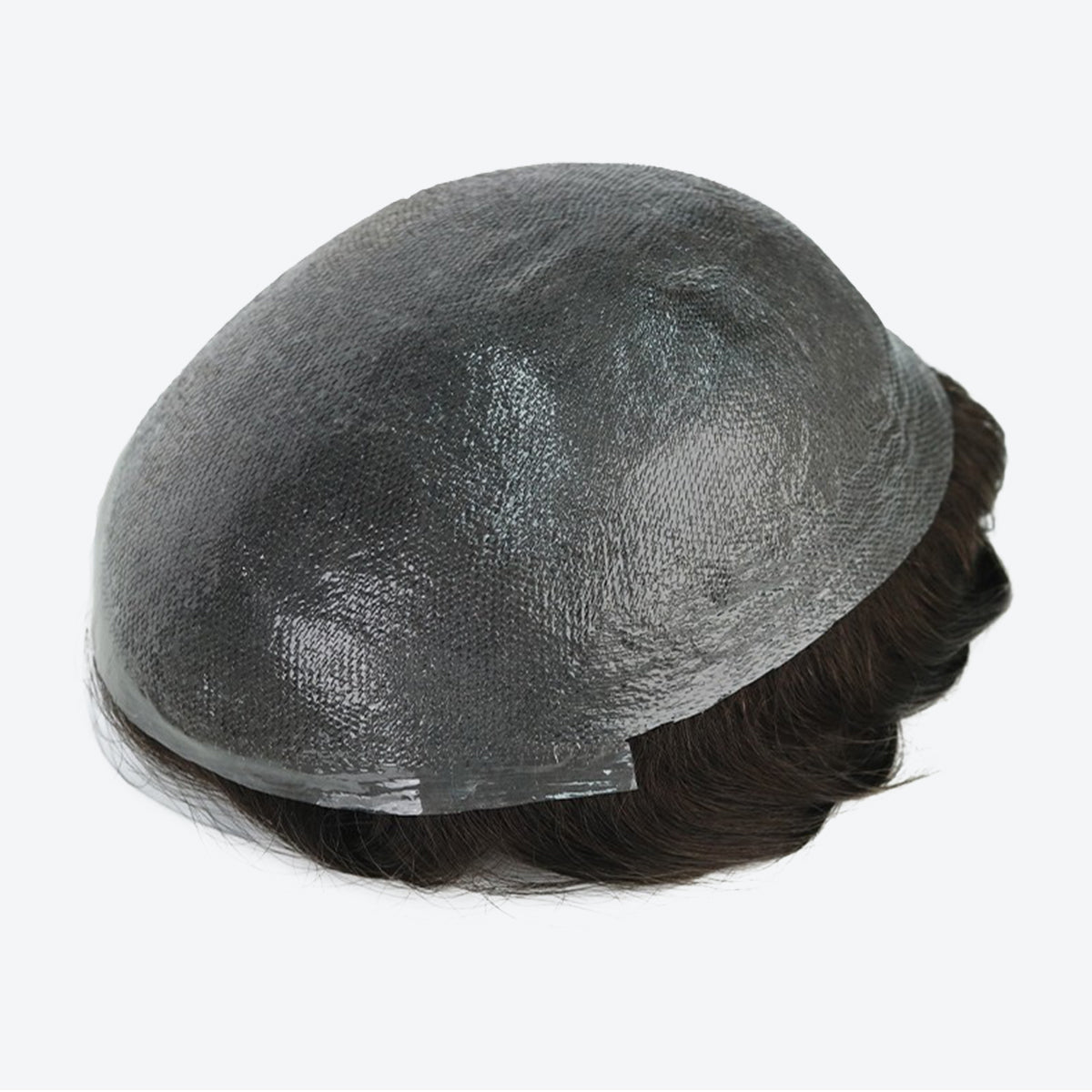
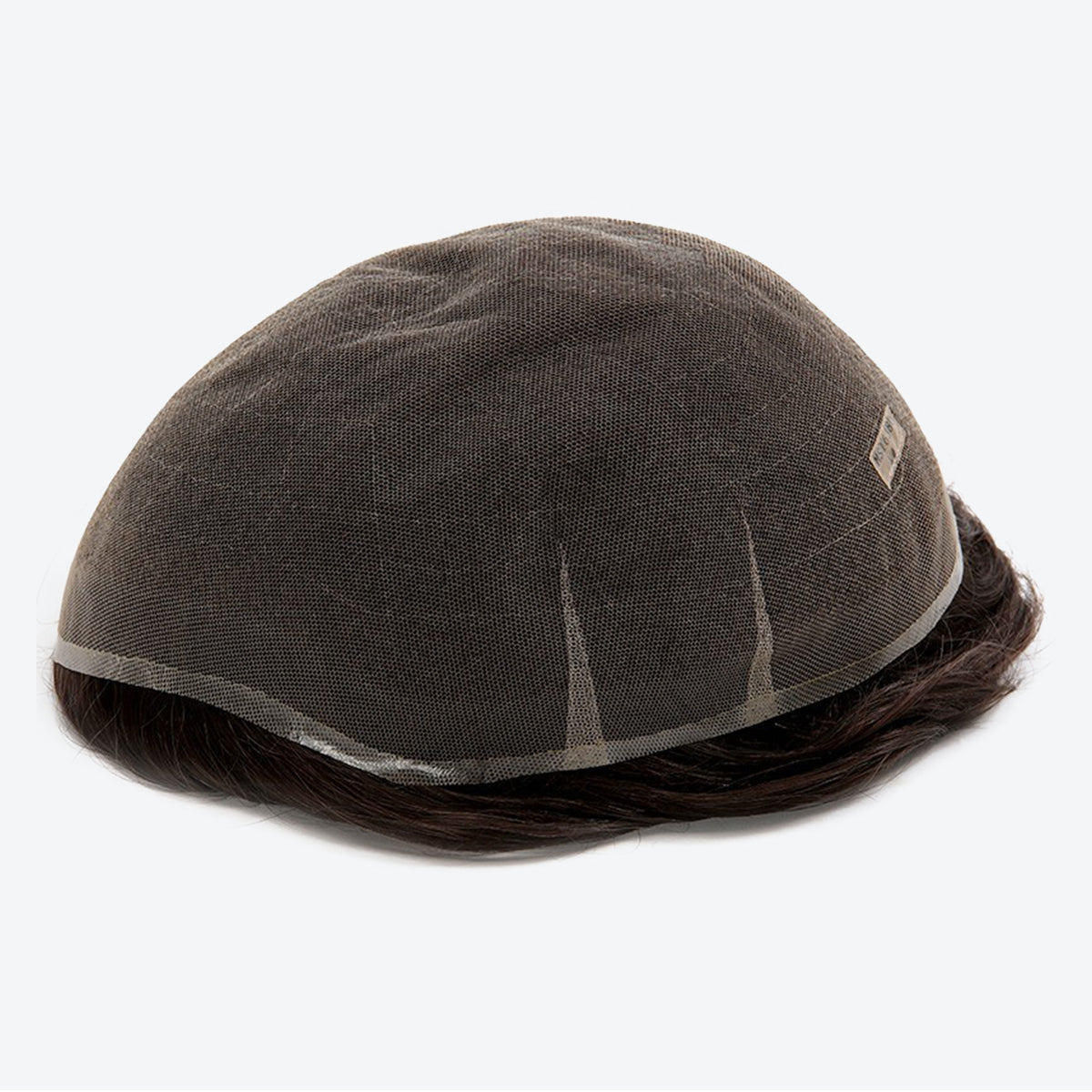
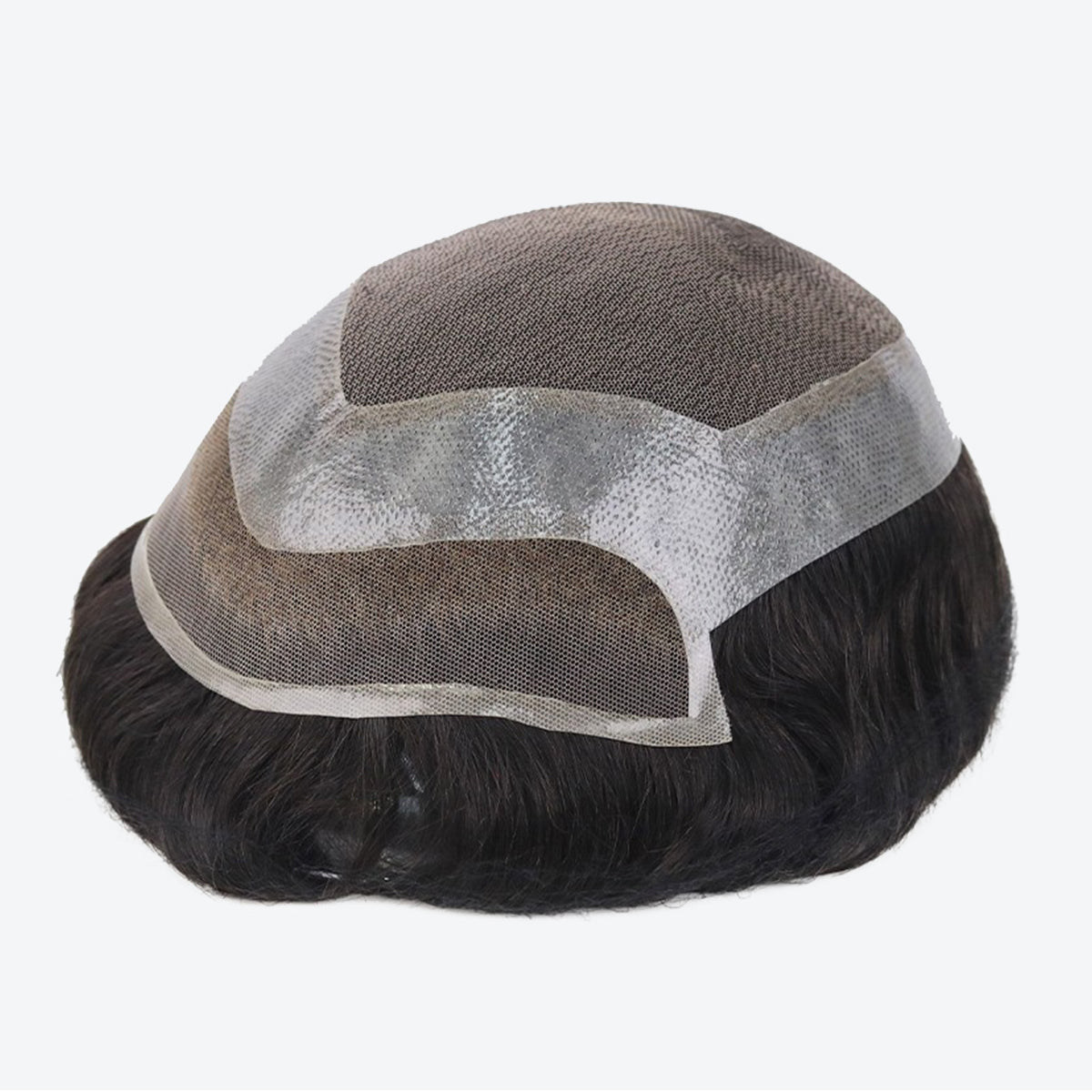


A useful way to evaluate a natural-looking hair system is to ask whether its hairline, density, color, texture and movement, and fit with the final style agree with one another. No single feature can carry the result: a refined front can still look out of place if the color breaks at the temples or the cut does not blend. If this feels like a lot to judge, that is normal. Many first-time wearers focus on one specification, but in our experience the clearer path is to find the most visible mismatch and address that first. This is a practical evaluation framework, not a scientific test.
Quick Answer
A natural-looking result usually depends on more than one feature. This five-factor check asks whether the hairline sits and transitions convincingly; density agrees with the visible side and back hair; color holds up in natural light; texture and direction read as one hairstyle; and the base fit and cut-in keep the whole shape balanced. The aim is consistency among these details, not maximizing any single specification. Start with the area people will see most in your normal style, address the clearest mismatch first, and then review the result from the front, sides, and in motion.
Quick Takeaways
- Natural appearance comes from coordination, not one headline feature.
- Start with the part of the system your everyday style exposes most.
- Match density, color, and texture to the hair that remains visible at the sides and back.
- Check the result in natural light, from more than one angle, and while the hair moves.
- Refine one mismatch at a time instead of changing every specification at once.
Which Factor Should You Prioritize First?
Start with the detail that is most visible in the hairstyle you actually plan to wear. There is no useful universal order because an exposed front and a covered front ask different questions.
| Your everyday look | First priority | Then check | Why this order helps |
|---|---|---|---|
| Front hairline exposed | Hairline transition and front density | Color, direction, fit, and cut | The front edge stays visible during normal conversation |
| Hair brushed forward or partly covering the front | Overall density and color | Texture, movement, fit, and the front underneath | The silhouette and blend do more visual work than a fully exposed edge |
| Strong side and back hair remains visible | Color and texture match | Density, perimeter blend, hairline, and style | The join between system hair and your own hair becomes the main reference |
| Little side or back hair is available as a reference | Hairline placement and balanced overall shape | Density, color, movement, and styling | The result must read as one intentional hairstyle without relying on a side-hair match |
This order is a starting point, not a score. A visible mismatch in any one factor can pull attention away from four details that are working well.
How Do the Five Natural-Looking Hair System Factors Work Together?

1. Hairline: Does the Front Look Like Part of the Same Hairstyle?
The hairline is not only the edge of the base. This framework looks at placement, outline, the transition from skin to hair, front density, root visibility, and the direction of the front style.
A front can look disconnected when its placement, outline, or density does not agree with the intended style and face. There is no universal measurement for that visual judgment, so assess it at a normal viewing distance. Chasing a finer-looking front can also bring a trade-off in handling tolerance or maintenance comfort.
On a knotted front, knot size, visibility, and treatment can affect how the root area reads. A "bleached knots" specification is one input, not a natural-look promise; inspect the actual front and current product details rather than judging the whole result from that label.
If the front will stay covered, it still needs to sit flat and support the style, but it does not need to carry the whole natural-look decision by itself.
2. Density: Does the Fullness Agree With the Visible Hair Around It?
Density looks natural when it makes sense beside your side and back hair and within the shape of the haircut. More hair is not automatically more convincing, and less hair is not automatically the right answer.
The practical check is the transition. Look at the system from the side: does the top appear suddenly heavier than the temple area? From the front, does the change in volume feel consistent with the intended style? A stylist may be able to soften excess bulk, but removing too much is harder to reverse.
This article keeps density deliberately concise. For density levels, terminology, and a fuller choice process, use the hair system density guide.
3. Color: Does It Blend in More Than One Kind of Light?
Color matching is more than choosing a dark or light swatch. Use the hair that will remain visible at the sides and back as the main reference, then check the result near a window or outdoors as well as indoors. Pay attention to warmth, coolness, gray distribution, and any difference between the top and the temples.
An exact flat shade is not always the goal. Natural hair can show variation across the head. What matters is that any variation reads as part of one head of hair rather than a separate block of color. If you are deciding between close shades, record a current hair sample and natural-light photos for discussion with a stylist or support team; screens and lighting can still shift how color appears.
4. Texture and Movement: Does the Hair Behave as One Style?
Texture includes straightness, wave or curl pattern, strand separation, direction, and how the hair responds when you turn your head or move through normal light. A color match can still look disconnected if one section lies straight while another forms a stronger wave, or if the system hair moves as a single stiff shape while the sides separate naturally.
Styling products can change how hair separates and settles. If movement is a concern, compare the result before and after product rather than assuming the unstylized or more controlled version is automatically better. The goal is not motion for its own sake. It is a consistent response across the top, sides, and front.
5. Fit and Style: Does the Whole Shape Sit and Blend Correctly?
Fit and style finish the work the other factors begin. The base should match the intended coverage area, follow the head without obvious buckling, and support the planned part or direction. The cut-in then connects the length, weight, and outline of the system to the visible hair around it.
A strong hairline cannot compensate for a base that does not sit flat. A close color cannot compensate for a cut that leaves a shelf between the top and sides. Professional shaping can be useful, especially for a first system, because small adjustments to weight and outline may change the whole impression without changing the underlying system.
Your first cut-in or daylight review may reveal something to refine. That is part of calibration, not a failed choice. Make one controlled adjustment, then look again before changing another factor.
What Trade-Offs Come With Each Factor?
Every natural-look choice has a trade-off. The aim is not to maximize every specification; it is to choose a combination that stays coherent in your real routine.
| Factor | Question to ask | Useful trade-off to recognize | Reconsider when |
|---|---|---|---|
| Hairline | Will it be exposed in my normal style? | A finer-looking front may need more careful handling | The placement or outline draws attention before the hairstyle does |
| Density | Does the top agree with the sides and back? | More fullness gives styling coverage but can make the transition heavier | The top looks separate from the temple or side profile |
| Color | Does it blend indoors and in natural light? | A single exact-looking swatch may miss natural tonal variation | The join becomes obvious near the temples or under daylight |
| Texture and movement | Do the top and sides respond as one style? | More control can reduce natural separation and movement | The hair looks stiff, changes direction abruptly, or forms two patterns |
| Fit and style | Does the base lie flat and the cut create one outline? | A dramatic cut may demand more precise blending and upkeep | The edge, crown, or side transition changes the shape of the head |
In the long term, a repeatable match you can maintain is usually more useful than one impressive detail that makes the rest of the system harder to balance.
How Can You Check the Whole Look in Real Life?
Use a short consistency check after the system has been shaped and styled:
- Check the front at conversation distance. Look at placement, transition, and whether the first rows become full too quickly.
- Turn to both side profiles. Compare density, color, and the line where system hair meets your own hair.
- Move near natural light. Look for a color or root transition that only appears by a window or outdoors.
- Turn your head and touch the style lightly. See whether the top and sides separate and settle in a similar way.
- Take a front, side, and back photo. A still image can show a shape break that is easy to miss in a mirror.
- Change only the clearest mismatch. Recheck the full result before adjusting another factor.
This is your decision. You can review the photos in private and at your own pace. Take your time; there is no need to decide today.
Who Does This Five-Factor Check Fit?
This framework may fit if you:
- are comparing natural-looking results without wanting a product ranking;
- know your usual hairstyle and want clearer evaluation criteria;
- have side or back hair that needs to blend with a partial system; or
- want to explain a visible mismatch to a stylist or support team.
Use another guide if your main task is to:
- compare named products or create a shortlist;
- choose density levels from a full chart;
- decide among complete base categories with a base comparison guide;
- follow an installation or maintenance procedure; or
- compare hair origins or source-specific texture claims.
Do not use this article as a complete density, base, product, or installation guide. Its narrower job is to help you see which appearance factor is breaking the overall match.
If You Are Not Sure, Where Should You Start?
If you are not sure, start with the part people will see in your everyday style.
- For an exposed front: begin with hairline placement, the front transition, and front density. Then check color and movement.
- For a covered or forward style: begin with overall density and color. Then check whether texture, direction, and fit support the silhouette.
- For a system that blends into visible sides and back: begin with color and texture at the join. Then balance density and the final cut.
- When little reference hair remains: begin with a conservative hairline position and balanced overall shape, then refine density, color, and direction with a stylist.
Your first result may need a few small refinements. Choose a combination you can adjust over time instead of expecting one specification to settle every detail on the first day.
FAQ
What Makes a Hair System Look Natural From the Front?
The front looks natural when the placement, outline, transition from skin to hair, front density, visible roots, and hair direction agree with the rest of the style. The base label alone does not decide the result.
Is Lower Density Always More Natural?
No. Density needs to agree with the visible side and back hair, the planned haircut, and the front transition. A lighter result can still look mismatched, while a fuller result may work when the surrounding hair and style support it.
Should Hair System Color Exactly Match My Side Hair?
It should blend with the hair that remains visible, but that does not always mean one flat shade. Check warmth, coolness, gray distribution, and tonal variation in natural light as well as indoors.
Why Can a Hair System Look Good in a Mirror but Less Natural in Motion?
Movement can reveal differences in wave, direction, stiffness, or the way the cut settles. Check the result while turning your head, then compare how the hair separates and settles before and after styling product.
Can Styling Make Any Hair System Look Natural?
Styling can improve shape, separation, and blending, but it cannot fully correct a poor fit, a major color mismatch, or density that conflicts with the surrounding hair. Those underlying factors need to be addressed first.
What Is the Next Step After You Find the Mismatch?
Once you know which factor needs the most attention, the men's collection becomes a way to compare options against a clear set of criteria rather than guess from one feature. Keep the same priorities in view: where the front will sit, how much hair remains to blend, which color and texture references you have, and how much styling precision fits your routine.

