



LaVivid Selection Guide
Hair System Density Guide: How to Choose the Right Density
Hair system density describes how much hair is ventilated into the base. The most natural-looking choice is not automatically the highest percentage. It is the density that blends with your remaining hair and works with your base, hairstyle, and preferred fullness.

Quick Answer
Hair system density is usually shown as a percentage. Lower percentages create a lighter visual result with more scalp visibility, while higher percentages add fullness and styling volume. Start by matching the hair at your sides and back. Then check whether the base, hairstyle, texture, and front transition support that density.
Age can provide context, but it should not decide the number by itself. Density scales also vary by supplier, so compare LaVivid percentages with LaVivid examples rather than assuming another brand's 90% will look identical.
Before you choose
- Match your remaining hair first.
- Check what the base can carry.
- Account for cut, style, curl, and wave.
- Separate density from breathability.
- Choose a look you can repeat daily.
LaVivid Hair Density Standards
LaVivid uses eight reference levels from 60% to 180%. These images help you compare visual fullness within the LaVivid range; they are not a universal conversion chart for every manufacturer.
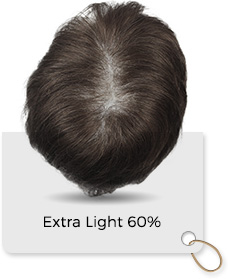
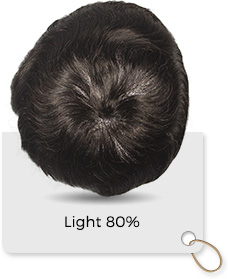
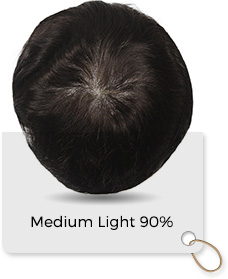
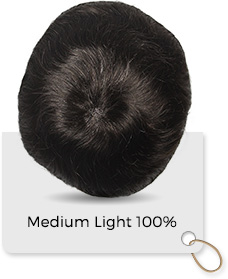
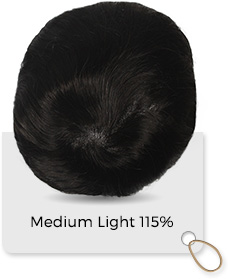
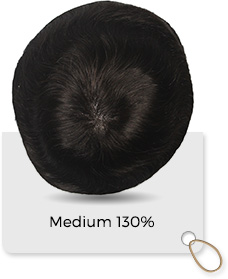
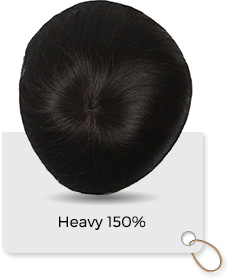
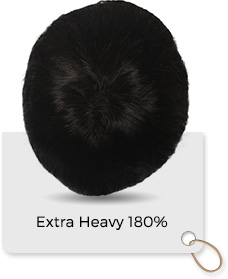
Important: the percentage is only one part of the result. Curl, wave, hair direction, color contrast, ventilation method, lighting, and the final haircut can all change how dense a system appears.
How Do 80%, 90%, and 100% Compare?
These three levels cover many first-system decisions, but none is a universal default.
| Density | Visual direction | What to check | Do not assume |
|---|---|---|---|
| 80% | Softer outline, lower visual bulk, and more scalp visibility | Whether it blends with lighter side hair and supports your planned cut | That less hair makes every base breathable |
| 90% | Restrained balance between scalp visibility and fullness | The front transition, side blend, and finished haircut | That it is automatically right for every first-time wearer |
| 100% | More volume and stronger styling structure | Whether dense top coverage overpowers finer sides | That more hair always creates a more natural result |
What Should Decide Your Density?
1. Your remaining hair
Look at the sides and back in natural light. If that hair is fine or visually light, a dense top can create a sharp boundary even when the color matches. If your remaining hair is naturally dense, you may have more room for volume. Ask your stylist to judge the density after considering the planned cut length; uncut stock hair often looks fuller before it is shaped and blended.
2. Your base construction
Ultra-thin skin, lace, hybrid, mono, and silk bases do not support or display hair in the same way. Density controls fullness. Base material and construction are the main drivers of airflow, attachment area, and how the ventilation sits.
If your base is lace
Judge density together with knot visibility, hair direction, mesh openness, and the planned hairline. Lace may feel more open because of its construction, not simply because the density is lower.
If your base is skin
Judge density together with skin thickness and ventilation method. The same stated percentage can sit and move differently from hair ventilated into lace.
3. Your hairstyle and texture
An exposed hairline needs a soft front transition. Layered or higher-volume styles may need more body, while a short, understated cut may work better with less. Curl and wave can create more perceived volume than straight hair at the same stated percentage.
4. Your age, used only as context
Natural hair often becomes less dense over time, but two people of the same age can have very different side hair, face proportions, and style preferences. Start with what is visible on you rather than forcing your choice into an age bracket.
5. Your daily conditions
A lighter system may reduce visual and physical bulk, which some wearers prefer in warm weather. It is not automatically more breathable. If heat or sweat is your main concern, evaluate the base and attachment routine alongside density.
How Does Low Density Work Across Different Bases?
These current LaVivid systems show why the same light-to-medium-light range can behave differently on hybrid, lace, and skin bases. Use them as construction examples rather than universal recommendations.

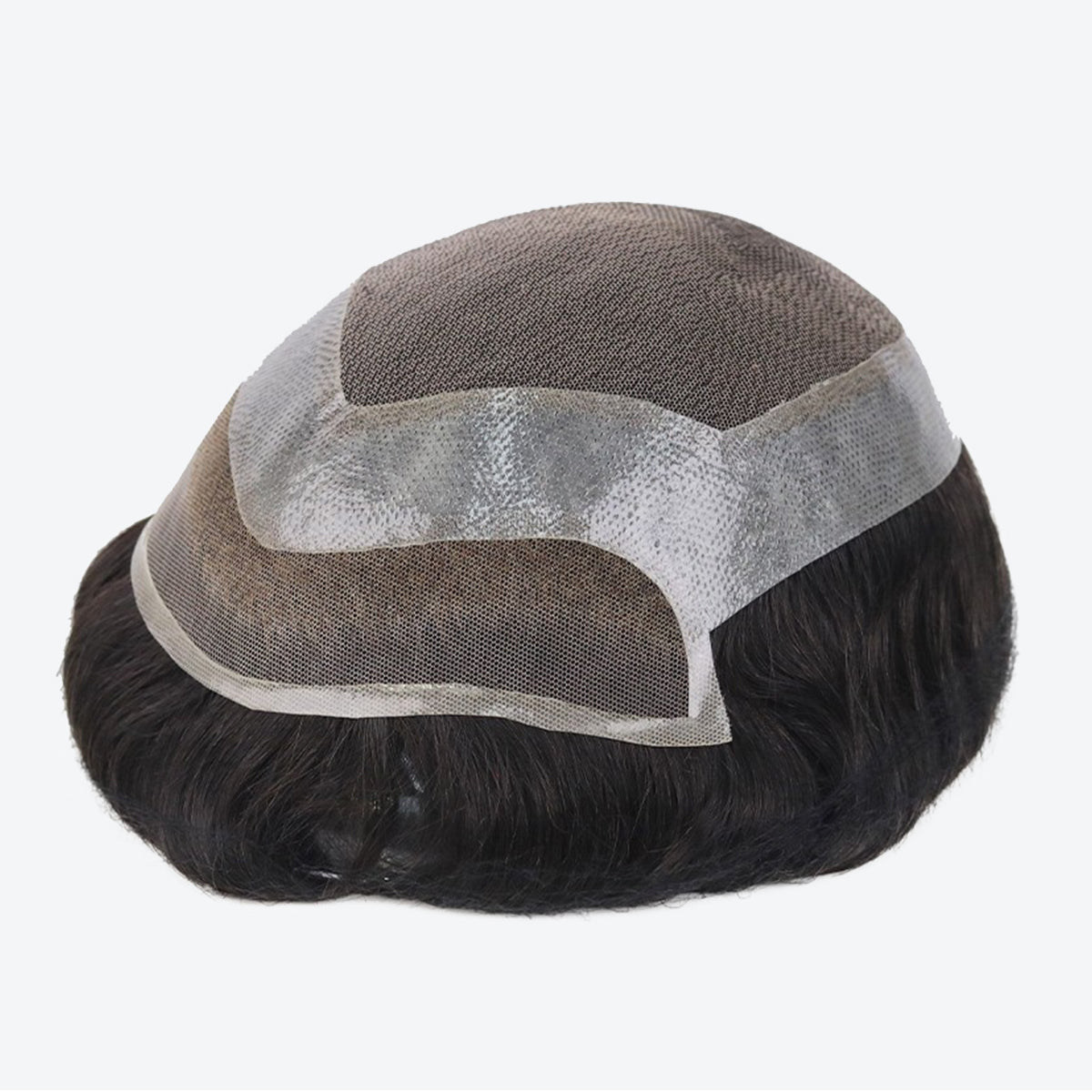
Light Simois
Lace front and center with a skin perimeter
May fit: lighter side hair and a preference for lace through the center with a defined attachment perimeter.
Consider: the lace and skin areas affect airflow, attachment, and cleaning differently.

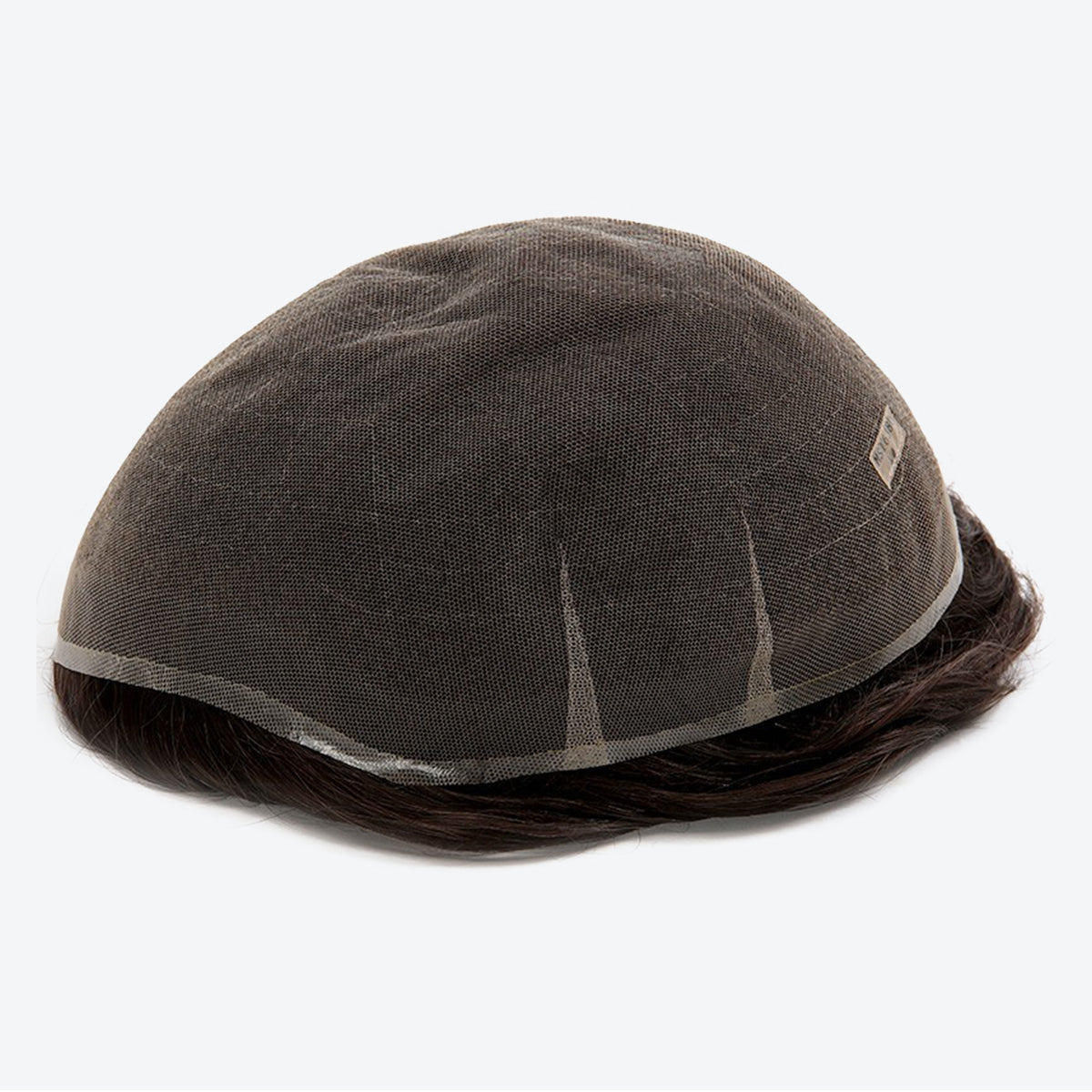
Mars
Full Swiss lace with a graduated front transition
May fit: a softer front transition and a full-lace construction are both priorities.
Consider: full lace uses a different attachment and cleaning routine from a broad skin perimeter.

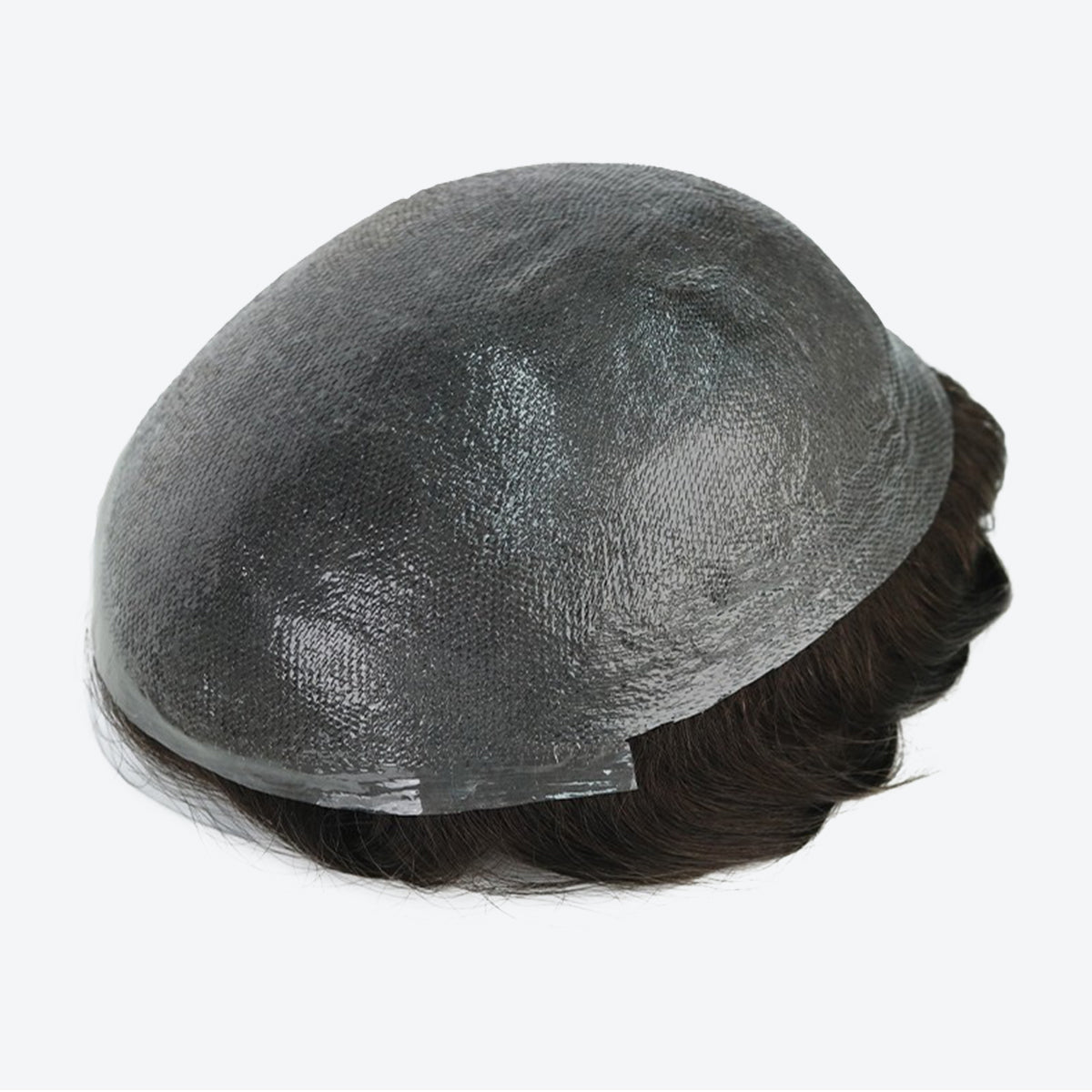
Upgrade Eros
0.02-0.03 mm C-through Bio Skin base
May fit: an ultra-thin skin finish and a restrained density are more important than lace airflow.
Consider: ultra-thin skin is a delicate construction, and lower density does not make it ventilated like lace.
Match the Sides and Back First
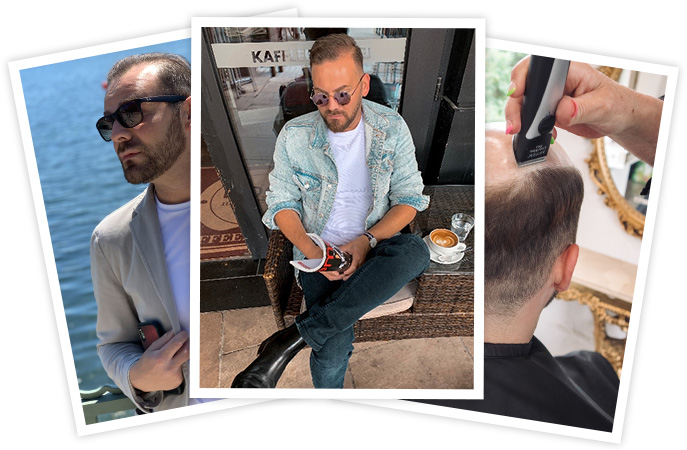
Many people with male pattern hair loss still have hair around the sides and back. That visible hair is the best starting reference for density. A successful result creates continuity between the system and the surrounding hair rather than concentrating all the fullness on top.
Take clear photos in natural light from the front, both sides, the back, and above. Include the hairline and the transition into your remaining hair so a stylist can judge both density and cut-in requirements.
When Does Custom Density Make Sense?
One uniform number is not always the best match. A custom system can be useful when you need a softer front, different fullness through the top or crown, or a gradual transition into uneven remaining hair.
More density in one area should solve a visible styling need. If you need different densities by area, review the custom hair system path. If your priority is specifically lighter fullness, compare the dedicated low-density hair system options.
Final Density Checklist
- Does the density blend with the hair at the sides and back?
- Can the selected base support that density and hairstyle?
- Does the front transition suit an exposed or covered hairline?
- Does the texture make the system appear fuller than the percentage suggests?
- Are you choosing for a repeatable daily look rather than a one-time dramatic change?
If two options still seem close, choose the one that is easier to blend and maintain consistently. You can make a better-informed adjustment after seeing the first system cut and styled.
Hair System Density FAQ
Which hair system density looks the most natural?
The most natural-looking density is the one that blends with your remaining hair and works with the base, hairstyle, texture, and cut. There is no single percentage that looks most natural on everyone.
Is 90% density a good starting point for a first hair system?
It can be a restrained starting point for some wearers, but it is not a universal beginner setting. Compare it with the density of your sides and back and confirm that the base and hairstyle support the result.
Is a lower-density hair system more breathable?
Not automatically. Lower density can reduce bulk, but airflow depends mainly on the base material and construction. Lace, skin, hybrid, mono, and silk bases behave differently even at a similar density.
Are density percentages the same across every hair system brand?
No. Density scales and visual standards can vary by supplier. Use LaVivid's chart and examples when choosing a LaVivid system instead of converting another brand's percentage directly.
Can one hair system have different densities in different areas?
Yes. A custom system can use a softer front and different density through the top or crown when that creates a better match. Confirm the requested distribution during the custom-order process.
Explore Other Hair System Ordering Guides
Continue with the next detail that affects how your hair system looks and fits.




Compare Systems With a Clearer Starting Point
Once you know the density range that fits your remaining hair, base, and style, compare LaVivid systems without treating fullness as the only decision.
Compare Men's Hair Systems


