

Lace vs Skin vs Mono vs Hybrid Hair Systems: How to Choose a Base
Compare lace, skin/poly, mono, and hybrid hair system bases by hairline realism, breathability, durability, cleanup, density support, and beginner fit.

Quick Answer
Quick Takeaways
Lace vs Skin/Poly vs Mono vs Hybrid: At a Glance
| Base type | May help with | What the material does not solve | Hairline fit | Maintenance condition |
|---|---|---|---|---|
| Lace | A lighter feel and a softer visible front | Sweat and humidity can still affect the bond; adhesive in mesh may take more care to clean | Often considered when part of the front is exposed | Needs patient attachment, removal, and mesh cleanup |
| Skin/poly | A smoother attachment surface and clearer residue cleanup | It does not create the airflow of an open mesh base or remove edge-visibility concerns | Can work with a covered or semi-covered front; a very exposed edge has less margin for error | Thickness and removal method matter; a fine edge still needs care |
| Mono | Structure for density or repeated daily handling | It does not make a fully exposed front as soft or invisible as a fine front material | Usually better where the edge is less exposed or another front material does the visual work | More structure can be useful, but it should serve a real density or handling need |
| Hybrid | Different zones can do different jobs | It does not erase the trade-offs of each zone or make the delicate zone permanent | Depends on which material is used at the front | You need to understand which zone needs the most careful cleaning or service |
This is a comparison of trade-offs, not a material ranking. The next step is to decide which trade-off fits your hairstyle and routine.
What do mesh, polymer, knots, V-loop, and injection mean?
These terms describe different parts of the construction. They should not be treated as a single quality ladder.
| Term | What it describes | Why it matters when choosing |
|---|---|---|
| Mesh | An open textile structure used in lace and more structured mono materials | The openness can change airflow, edge behavior, and how adhesive residue is cleaned from the base. |
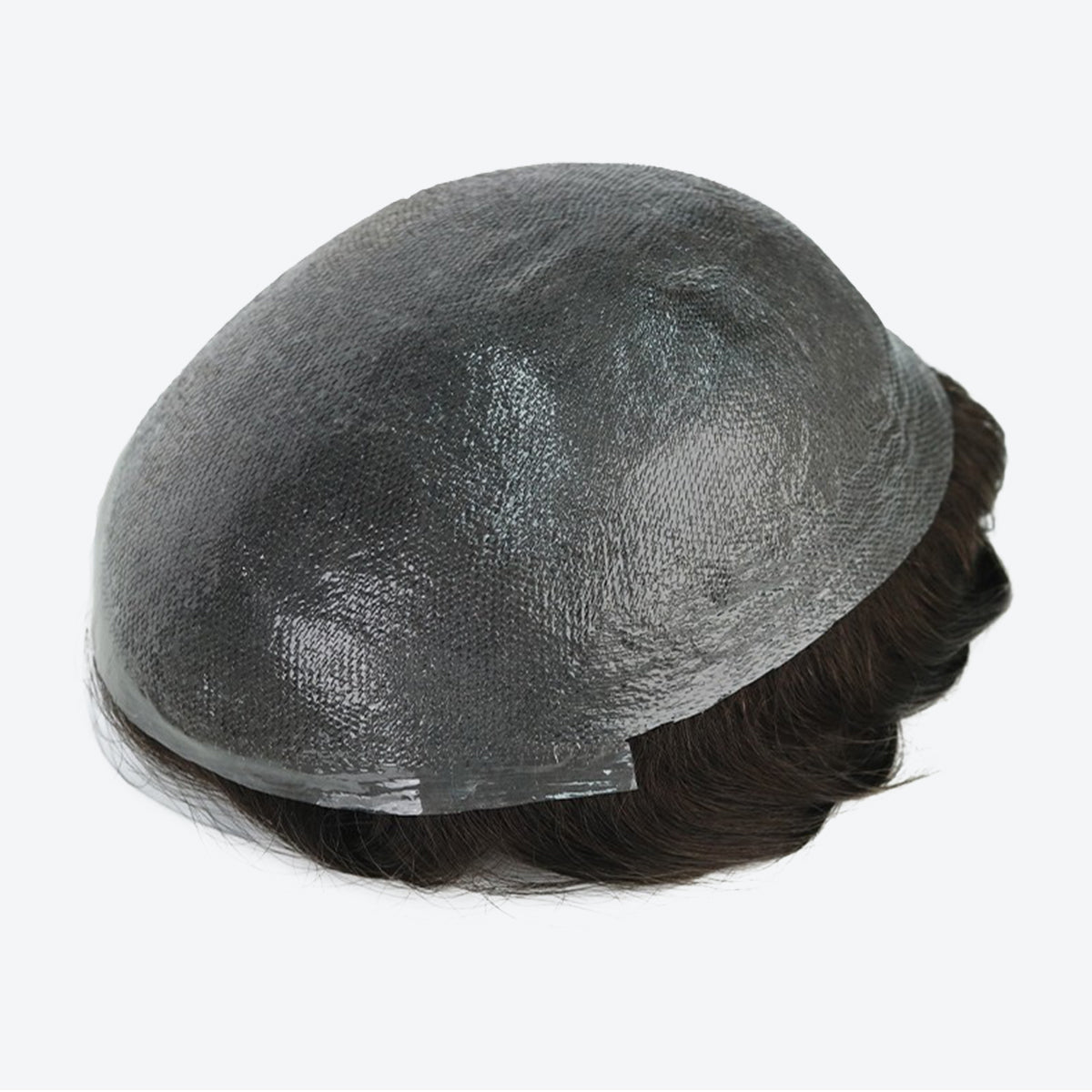
| Polymer, poly, or polyurethane | A smooth film-like base material commonly described as skin | The solid surface changes attachment, cleanup, warmth, and edge handling compared with open mesh. |
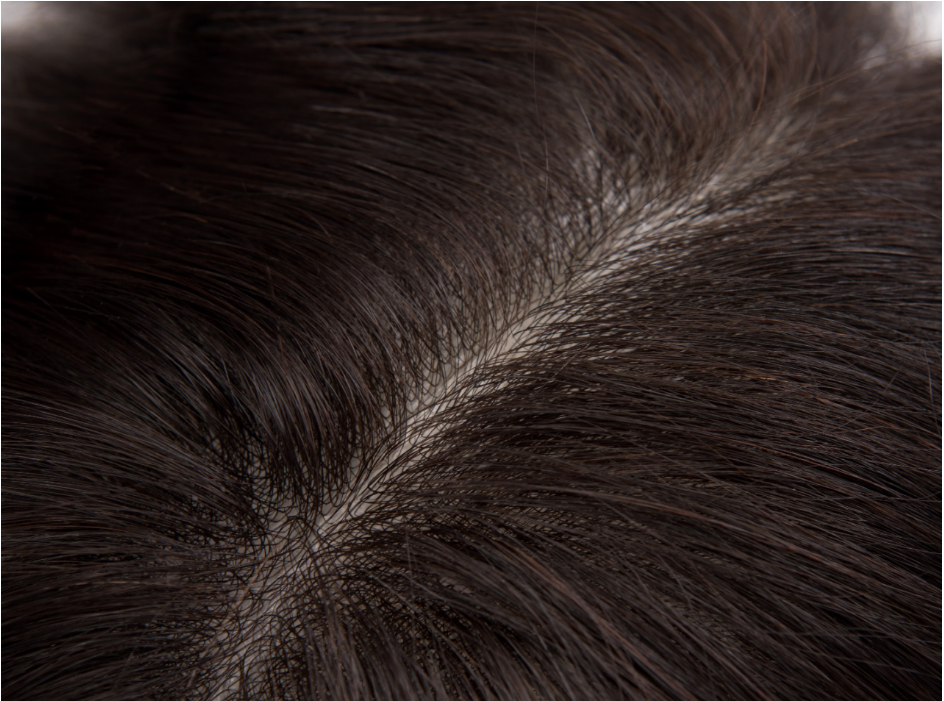
| Knotted ventilation | Hair is tied to a mesh base | Knot size, color contrast, density, and processing can affect how the root area looks; extra processing can also reduce the margin for rough handling. |
| V-loop | Hair is looped into a thin skin/poly layer without a traditional visible knot | It can create a clean root appearance, but the fine film and the hair entry points still need careful removal and brushing. |
| Injection | Hair is inserted into a skin/poly layer, often with a set initial direction | It may help the hair lie in a planned direction, so the ventilation method should be checked against the intended hairstyle rather than ranked by name alone. |
Base material, ventilation method, and thickness are separate specifications. A product can share a base material with another product and still behave differently because the front design, ventilation, density, and attachment zones are not the same.
If you are not sure, start with two practical paths
Intentional scope: this article compares base directions. It does not decide swimming, travel, sensitive-scalp, or high-sweat attachment protocols; check the dedicated guide for the scenario that applies after choosing a base direction.
Path A - airflow and a softer exposed front: Compare lace or a lace-front hybrid. Lace wears compatible tape as the first-wear route, and the mesh still needs patient removal and cleanup.
Path B - a smoother attachment and cleanup surface: Compare skin/poly or a skin-perimeter design. Skin/poly wears compatible liquid glue in thin layers according to the product directions; tape is not the beginner starting method for a thin skin zone.
If neither path feels manageable, use a covered or semi-covered front for the first attempt and choose the routine you can repeat on your own terms. This article will not decide an adhesive brand, exact hold time, or medical suitability.
Which base direction fits your actual routine?
Start with the consequence you would least enjoy living with. Some wearers dislike heat under a base. Some dislike adhesive cleanup. Some want an exposed front. Some would rather use a more structured base than handle a very fine edge. The table separates those decisions instead of treating them as one material score.
| Your priority | Base direction to compare | Reality check before ordering |
|---|---|---|
| A softer, more exposed front hairline | Lace front or a fine front design | The finer the front, the less room there is for placement, bond, and cleanup mistakes. |
| A lighter scalp feel in warm conditions | Lace or a breathable hybrid | It may feel cooler, but heat and sweat can still affect the attachment and can make cleanup more involved. |
| A smoother attachment surface and clearer residue cleanup | Skin/poly or a skin/poly perimeter | Less airflow can feel warmer; a very fine edge still needs careful removal. |
| More structure for a fuller style or repeated handling | Mono or a structural hybrid zone | Decide separately how the front hairline will be handled. Structure does not make an exposed edge invisible. |
| A first system with uncertain maintenance habits | A less extreme design with a covered or semi-covered front | This reduces the number of high-precision variables at once. It is a pilot route, not a universal formula. |
| A mixed need by zone | Hybrid only when each zone has a named job | Ask what happens when the lace front, perimeter, or center is the first area to need service. |
The goal is not to make the purchase feel more complicated. It is to avoid a false promise that one material can solve heat, realism, adhesive, and durability at the same time.
What can lace do, and what can it not solve?
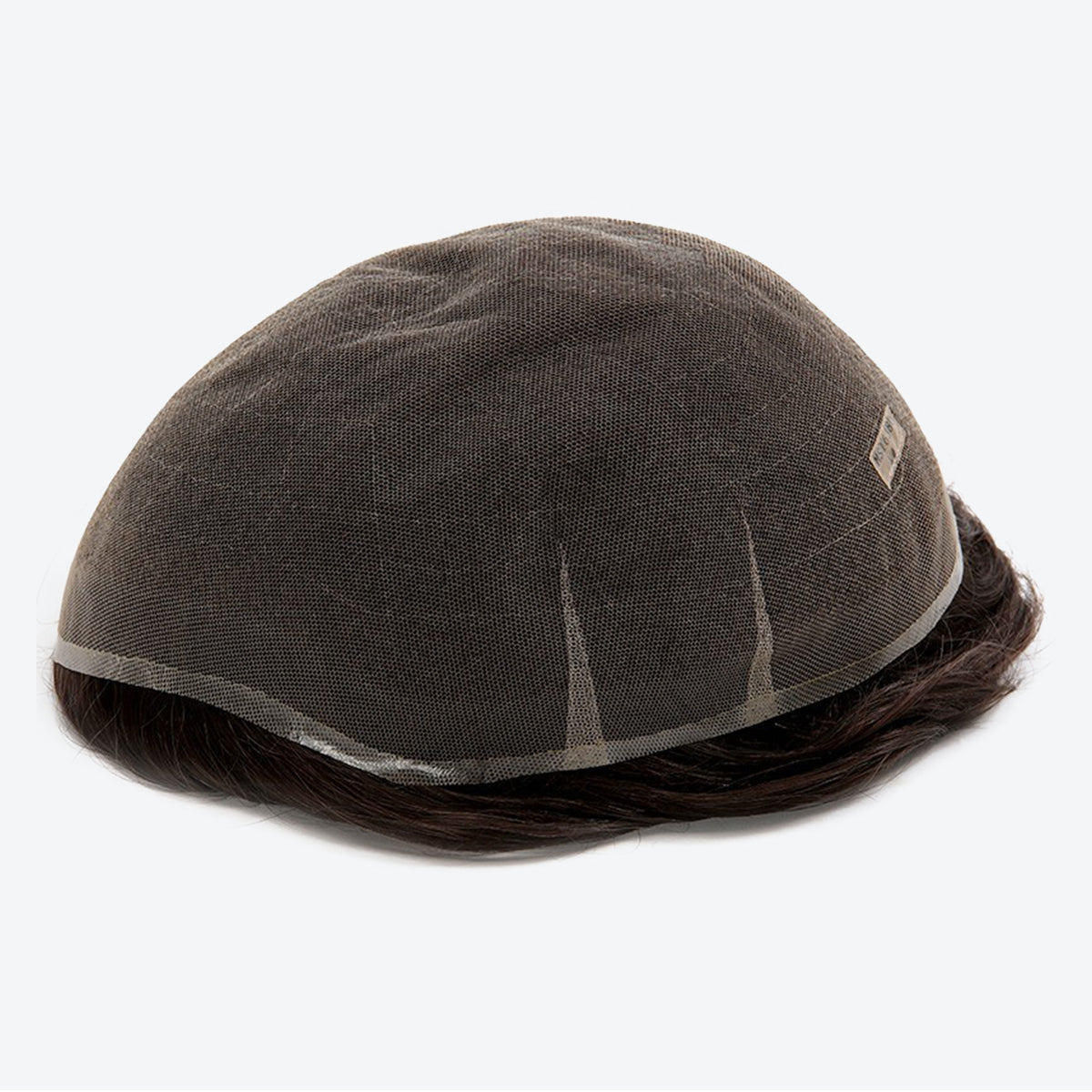
Lace is a fine mesh base. Its open construction can feel lighter and allow more air to reach the scalp than a solid skin/poly base. It can also help create a softer-looking front when the hairline is exposed and the density, cut-in, and attachment are all in balance.
That benefit has a separate maintenance cost. Sweat and humidity can still affect glue or tape. If adhesive migrates into a mesh area, the cleanup can be more involved than on a smooth surface. The open mesh is not a fault, and neither is a wearer failing to care for it; it is a material trade-off that needs a compatible attachment and removal routine.
French lace and Swiss lace are commonly used product labels, but the label alone is not enough to choose between them. Compare the current material specification, front design, density, knot work, attachment plan, and care instructions. A finer lace direction may create a softer-looking front, while also leaving less margin for repeated pulling, scraping, or rushed removal. The useful question is not whether French lace or Swiss lace is universally better; it is whether that specific lace construction fits the way the front will be styled and maintained.
Lace may be workable when:
- You value a lighter feel or a softer visible front.
- You can remove the unit slowly and use the attachment and removal method as directed.
- You understand that a warm or sweat-heavy routine needs a bond and cleanup plan, not just a breathable base.
- You can accept that a delicate edge may need more attention than a covered front.
Pause before choosing lace as a first base when:
- You want the simplest possible residue cleanup.
- You expect to remove and reattach quickly while still learning.
- You want a fully exposed front but have no plan for careful placement, removal, or periodic adjustment.
- You are choosing it only because you sweat, without considering the adhesive method and your willingness to clean the mesh.
If airflow and a soft front are your genuine priorities, compare current lace hair systems with the full attachment and maintenance routine in mind.
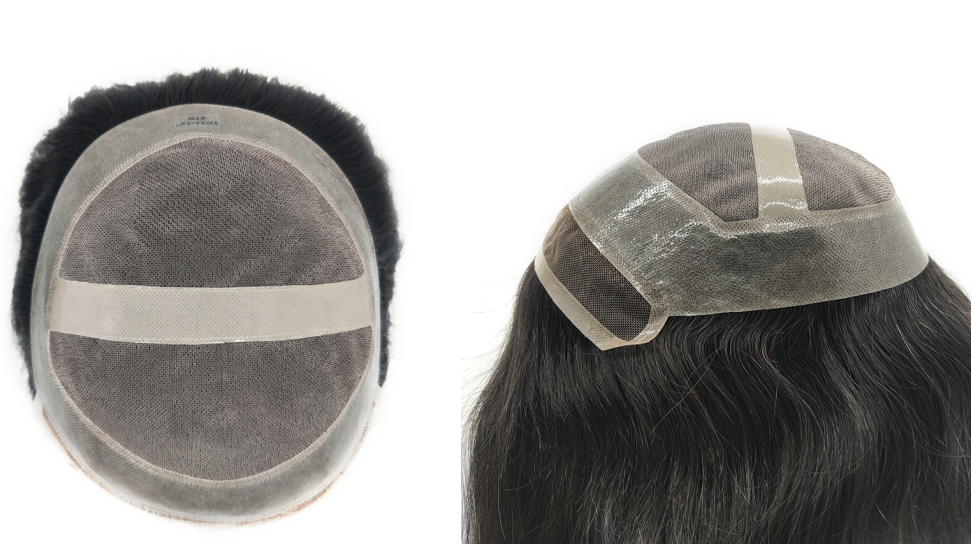
What can a skin or poly base do, and where are its limits?
Skin, also called poly or polyurethane, is a smooth film-like base. Its surface can sit close to the scalp and gives adhesive residue a clearer surface to work from. That can make a home-cleaning routine easier to understand than a mesh cleanup routine.
The trade-off is not merely "less breathable." A solid base can feel warmer for some wearers, especially when the coverage area, activity level, or climate already adds heat. Thickness also changes the compromise: a finer skin edge may look less noticeable but can be less forgiving during removal; a stronger edge may tolerate handling better but may be easier to notice if the front is fully exposed.
Skin/poly may be worth comparing when:
- You want a smoother surface for compatible liquid-glue application and residue cleanup.
- You prefer a covered or semi-covered front style.
- You are learning self-maintenance and want fewer mesh-cleaning variables.
- You are comfortable judging heat and adhesion as separate questions after a real wearing cycle.
Skin/poly may need a different route when:
- Maximum airflow is non-negotiable.
- You regularly run hot and dislike any additional warmth under the base.
- You need a very exposed front with little tolerance for edge visibility.
- You assume a very thin base is automatically easier to remove or more durable.
If a smooth attachment surface and clearer cleanup are the priority, compare skin hair systems by thickness, front design, and attachment method rather than by a single "natural" label.
V-loop and injection are construction methods, not guarantees of a particular result. V-loop avoids a traditional knot and is often used with a fine skin/poly layer. Injection can give the hair a more defined initial direction. In both cases, check the current product specification, intended hairstyle, density, and removal instructions. A clean-looking root does not make a fine base resistant to stretching or rushed handling.
Where does mono genuinely fit?
Mono, short for monofilament, is a more structured mesh-like base. Its useful job is support: it can help carry a fuller style and tolerate repeated daily handling better than a very fine lace area. That is not an outdated or fake benefit. It is simply a different benefit from an invisible exposed front.
Mono is most useful when structure is actually needed, such as a medium-to-fuller density look, a less exposed front, or a wearer who prefers a more substantial base feel. It does not need to be presented as equal to lace at the hairline. In a design with a visible front, a lace front or another fine front treatment may still be doing the visual work.
Consider mono when:
- You need support for the density or style you want.
- You do not depend on a fully exposed front edge.
- You value structure enough to accept that the material is less invisible in a highly visible zone.
Do not choose mono only because it sounds stronger. If your desired style is low density with a fully exposed front, ask whether the structural benefit solves a problem you actually have.
When does a hybrid base help, and what does it not fix?
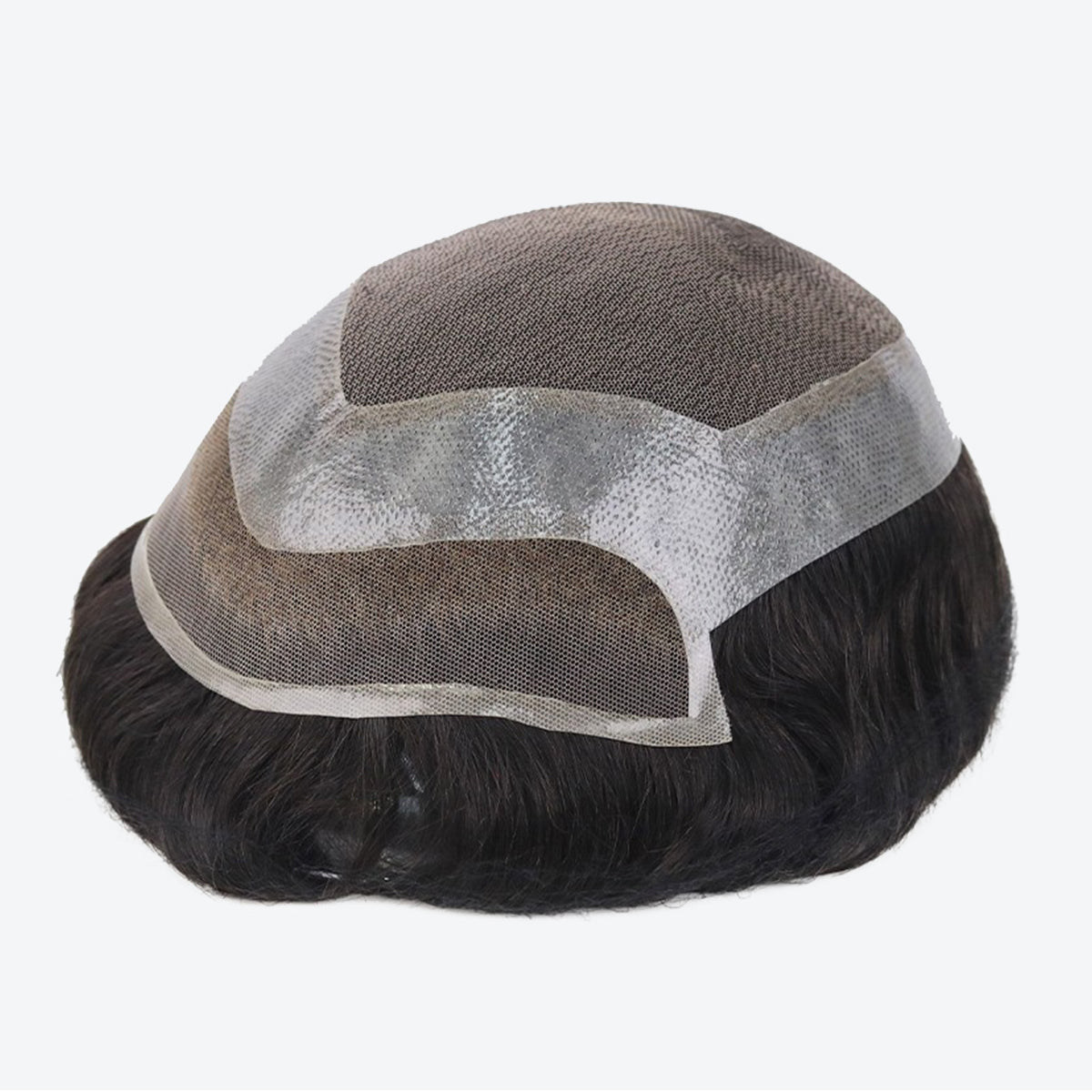
A hybrid uses more than one material because different zones have different jobs. For example, a lace front may be used for a softer transition, while a skin/poly perimeter creates a smoother attachment area. A mono center may provide structure while another material handles the front.
This is useful only when the jobs are explicit. Hybrid does not combine the full durability of every part into one longer-lived unit. The fine front, the most visible edge, hair shedding in a specific zone, or the attachment area that needs the most cleaning can still determine when the system needs attention or replacement. A stronger perimeter does not make a delicate lace front permanent.
| Zone job | A possible material direction | What it improves | What still needs attention |
|---|---|---|---|
| Soften a visible front | Lace front or fine front design | A less abrupt front transition | Placement, adhesive cleanup, and careful removal |
| Make perimeter cleanup clearer | Skin/poly perimeter | A smoother attachment surface | Warmth at the edge and the overall condition of other zones |
| Support density in the center | Mono center | Structure for a fuller look | The front and side visibility still need separate planning |
| Add airflow over a larger area | Lace center or full lace | A lighter, more open feel | Bond behavior, cleaning, and the delicate mesh still matter |
Choose a hybrid only after you can name the exact problem each zone solves. If the answer is only "I want the best of everything," the design has not been chosen yet.
How do attachment and cleanup change the base decision?
Attachment is not an afterthought. The same base can feel manageable or frustrating depending on where the adhesive sits, how often the unit is removed, and whether the wearer has time or professional help for cleanup.
| Routine question | Lace or open mesh | Skin/poly or smooth film |
|---|---|---|
| Where can residue collect? | Adhesive can migrate into the openings, so cleanup may need more time and patience. | Residue remains on a smoother surface where it may be easier to see, but a fine film can still stretch or tear. |
| What does removal demand? | Release the bond according to the product directions and avoid pulling or scraping bonded mesh. | Support the base during removal and do not treat a thinner edge as permission to peel quickly. |
| What if you remove and reattach frequently? | Repeated handling can make a delicate mesh edge a poor match for a rushed routine. | A smooth surface may reduce mesh-cleaning variables, but repeated removal still adds handling stress. |
| What if your scalp becomes oily or sweaty? | Airflow may improve thermal comfort, but oil and sweat can still change bond behavior and cleanup. | A solid surface does not prevent oil, sweat, or heat from affecting comfort and attachment. |
Do not copy a cleaning interval or solvent routine from a different product simply because the base name is similar. Follow the attachment, remover, and care directions for the actual unit and products being used. If irritation or persistent discomfort occurs, remove the system safely and seek appropriate product or professional guidance rather than trying to solve it by changing base labels alone.
How should base, density, hairstyle, and side hair be decided together?
A base is only one part of the finished result. The front can look too sharp because of the base, the density, the attachment, the cut-in, or a combination of them. The top can look separate from the sides because the side hair has grown out, because the density no longer matches, or because the cut-in needs adjustment. None of those outcomes automatically mean that the wearer chose badly.
| Situation | What to assess together | A more balanced decision |
|---|---|---|
| Brushed-back or exposed front | Front material, density, placement, and cut-in | Use a finer front only if you accept a narrower margin for maintenance and adjustment. |
| Covered or semi-covered front | Comfort, cleanup, and structure | A less visible edge gives more room to prioritize a repeatable routine. |
| Light-medium density | Side-hair match, front softness, and material visibility | Avoid treating a lower density as proof that every fine material will suit the routine. |
| Medium or fuller density | Required support and side/back blend | Use structural support where it serves the hairstyle, not automatically at the visible front. |
| Side hair changes quickly between cuts | Density, cut-in, and maintenance interval | Plan a blending check before assuming the base itself is the issue. |
What should a first-time wearer check before choosing a base?
You do not need to solve every future situation before ordering. You do need to be honest about the first wearing cycle. Answer these questions before making a material decision:
- Will the front be exposed, semi-covered, or covered most days?
- In warm or active situations, is the bigger concern heat, the bond, or the cleanup afterward?
- Does your scalp tend to become oily or sweaty during a normal working day, and how will that affect the attachment check?
- Do you have an attachment and removal plan that follows the product guidance, rather than relying on the base alone?
- How often do you expect to remove and reattach the unit, and can the routine be done without rushing?
- Will you maintain the system yourself or have professional help for cut-in and reattachment?
- Will hats, protective equipment, heat, humidity, or repeated friction be part of the work environment?
- What density and side/back hair do you need to blend with today, not in an ideal photo?
- Which trade-off is least acceptable: warmth, mesh cleanup, a visible edge, or delicate handling?
For many beginners, a semi-covered front and a less extreme base choice make the first cycle easier to learn from. That does not make one base universally right. It is a way to discover your actual comfort, attachment, and maintenance needs before committing to the narrowest margin for error.
First-Cycle Routine Choice Card
Your first cycle is a test of the routine, not a final verdict on the material. Choose one clear path, have the matching remover ready before attachment, and keep the patch-test wait day separate from the first full-wear day. The point is to learn which routine you can repeat over time, not to prove that the first attempt must go exactly as planned.
| If your attachment area is... | First-cycle path | What to observe | When to pause or simplify |
|---|---|---|---|
| Lace | Use one lace-compatible tape and a remover matched to that tape. Do not apply liquid glue directly to lace mesh. | Heat comfort, edge placement, residue in the mesh, and the time needed for careful cleanup. | Pause if you cannot remove without pulling or scraping the mesh. A covered or semi-covered front can give the first attempt more margin. |
| Skin/poly | Use compatible liquid glue in thin layers on the scalp, following the current product directions, plus a matching remover. Do not start with tape on a thin skin base. | Warmth, edge visibility, residue on the smooth surface, and how much support the fine base needs during removal. | Pause if the base stretches, the skin is broken, or removal starts to feel rushed. A stronger or less exposed design may be easier to learn with. |
| Mono or a mixed-zone hybrid | Follow the exact construction map for the unit. Do not improvise one adhesive across lace and skin/poly zones. A mixed-zone hybrid is not the default first self-managed attachment. | Which zone needs attention first, how the front behaves, and whether the cleanup plan is clear for every attachment area. | If you cannot name the job and attachment method for each zone, ask for product-specific or professional guidance, or compare a simpler first-cycle path. |
Use three separate checkpoints:
- Wait day: Patch test the chosen adhesive according to its current label and allow the full stated waiting period.
- Wear day: Start the full attachment only after the patch-test period is complete. Work slowly and use the one method selected for the first-cycle path.
- Review day: Note comfort, edge appearance, bond behavior, removal effort, and cleanup time. Persistent redness, broken skin, or a tearing base are stop signals, not problems to push through.
Most first-time wearers learn more from one calm, documented cycle than from changing several variables at once. Your preparation can stay private, and there is no need to rush the next decision.
What can go wrong without it being the wearer's fault?
A visible edge, a warm scalp, or difficult cleanup can come from the configuration, the conditions, the attachment, the cut-in, or the daily routine. The right response is to inspect the combination before blaming either the wearer or the material.
| What you notice | Possible contributors | What to check before changing anything |
|---|---|---|
| Adhesive looks messy at a lace edge | Sweat or humidity, adhesive amount, bond migration, mesh cleanup | Check the attachment method and removal guidance; do not pull or scrub a bonded lace area. |
| The system feels too warm | Solid coverage area, activity, climate, hairstyle, or attachment choices | Separate heat comfort from bond performance before changing base material. |
| The front edge is visible | Front material, density, placement, cut-in, or a change in side hair | Assess the whole front combination, not only the base. |
| The unit feels too delicate | Fine material, removal technique, attachment choice, or the unit's condition | Use a slower removal process and reassess whether the fine edge fits the routine. |
| A hybrid perimeter still looks fine but the front does not | The most visible or delicate zone is setting the service need | Do not assume a strong perimeter extends the useful condition of every zone. |
| The top looks separate from side hair | Density, cut-in, color shift, or side-hair growth | Recheck blend and haircut timing before assuming that a different base fixes it. |
A well-chosen base does not promise a maintenance-free result. It gives you a more intelligible routine: you know what the material is helping with, what it cannot solve, and what needs attention before a small issue becomes frustrating.
FAQ
Is lace automatically better if I sweat a lot?
No. Lace can feel more open and cooler than a solid skin/poly base, but sweat and humidity can still affect the bond. If adhesive moves into mesh, cleanup can take more care. Treat heat comfort, attachment stability, and cleanup as separate checks instead of assuming breathability solves all three.
Does a hybrid base last as long as its strongest material?
Not necessarily. A hybrid is still one unit. Its most delicate, most visible, or most frequently cleaned zone can determine when it needs service or replacement. Hybrid is useful when each zone solves a named problem, not as a way to erase every material trade-off.
Is mono outdated or only a decoy option?
No. Mono has a real structural role for wearers who need density support or prefer a more substantial base. It is simply less suited to a fully exposed, ultra-soft front on its own. Decide whether you need its support before treating it as a default option.
What is the safest first base choice?
There is no universal safest base. A practical first route often reduces variables: choose a hairstyle with a covered or semi-covered front, decide how attachment and removal will be handled, and select a base whose cleanup and comfort trade-off you can repeat. The right route depends on your priorities, not a fixed material ranking.
What should I check before buying a skin base hair system online?
Check that the page clearly states polyurethane or poly as the base material, the base thickness, ventilation method, density, front design, current stock specifications, and who the design may not suit. Also confirm the attachment and removal guidance, support options, and current return terms before ordering.
If a page uses the phrase skin base hair topper, verify the coverage size and product type; for men's partial scalp coverage, skin hair system or poly hair system often leads to clearer specifications. LaVivid groups these options under its skin hair systems collection, while this article remains the comparison guide rather than the commercial owner.
Compare Men's Hair Systems by Base and Routine
Once you know which trade-off and first-cycle routine feel manageable, narrow the options by base, density, front design, and the maintenance plan you can genuinely repeat.


