

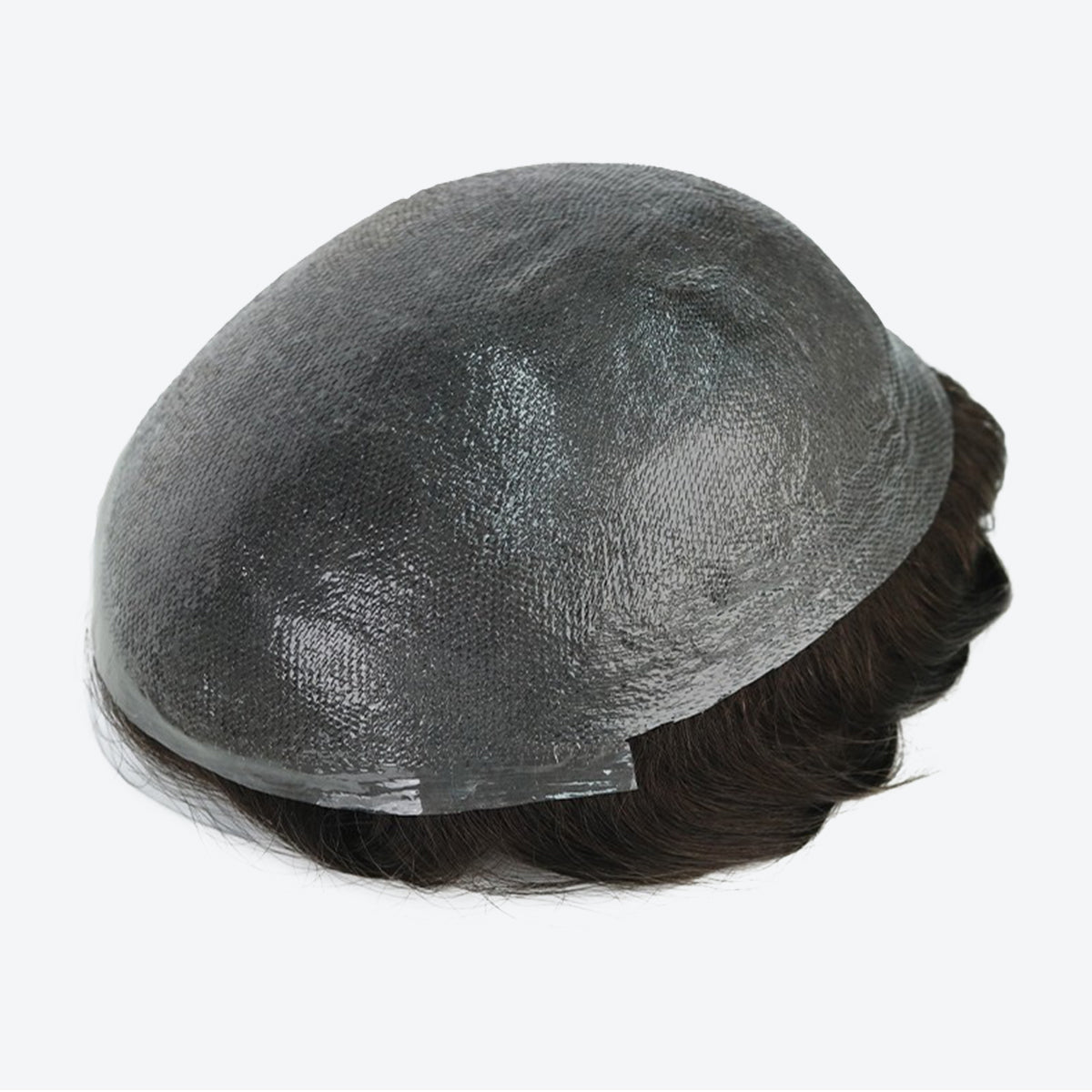
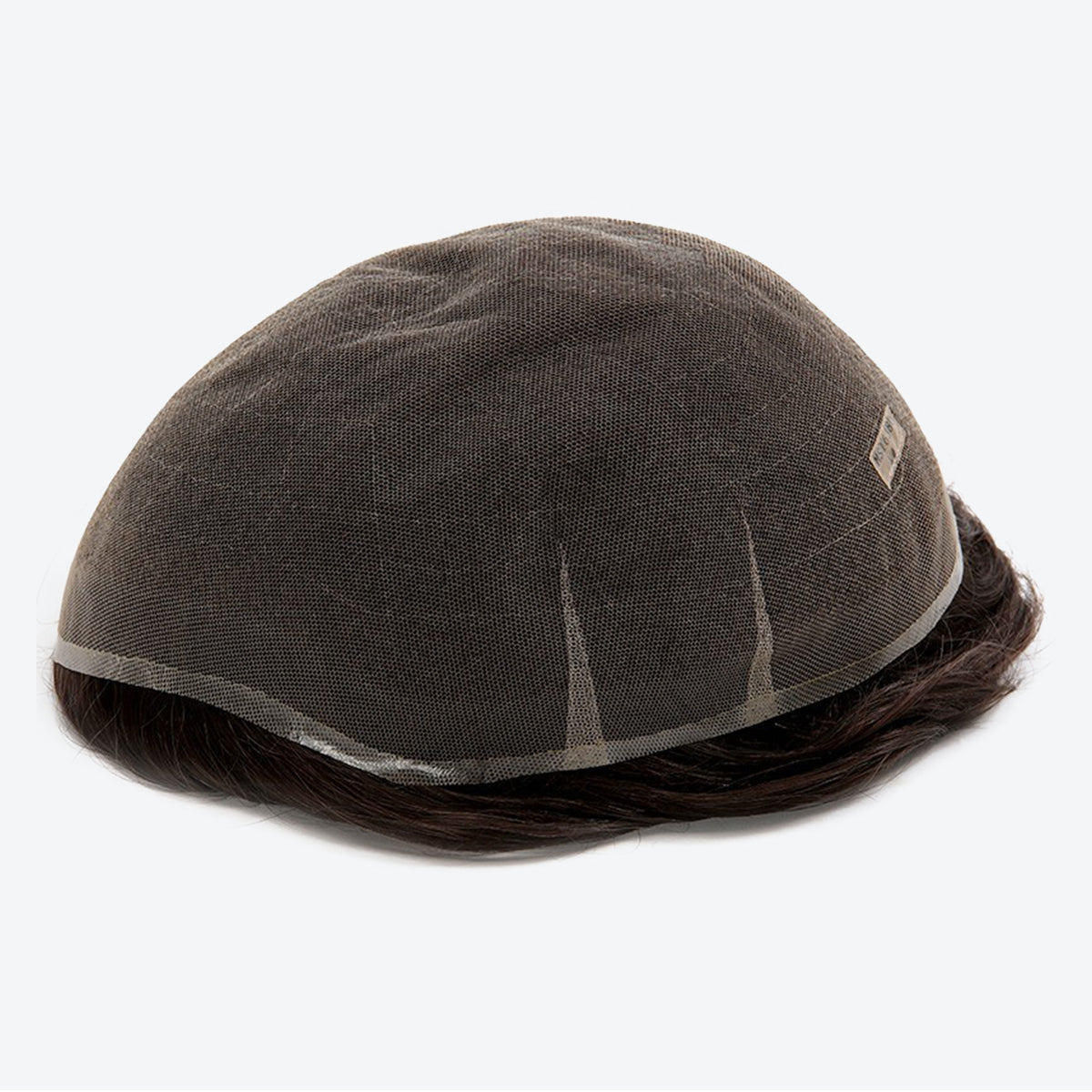
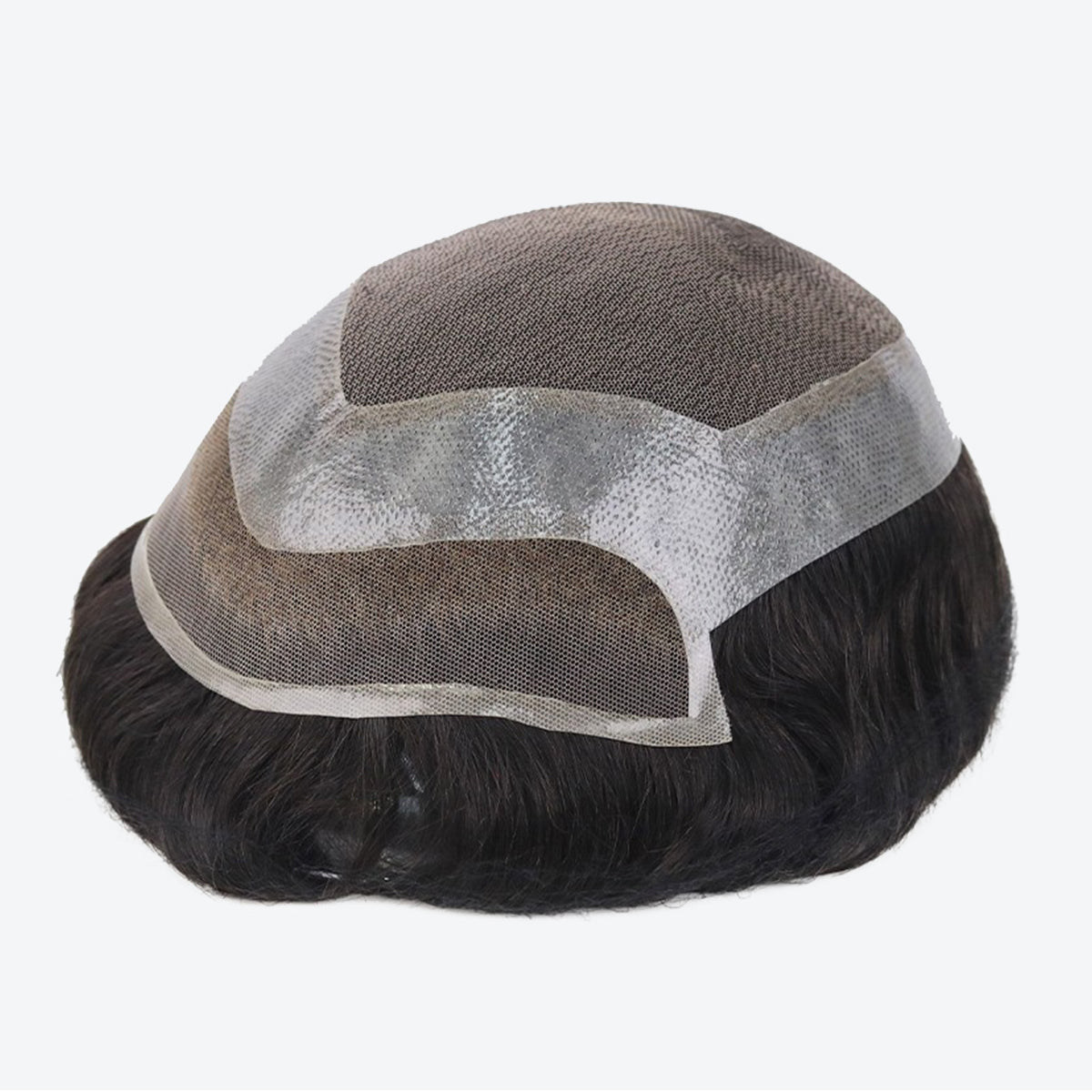

Let your body cool and the lifted area become fully clean and dry before deciding what to do. A small, isolated lift may suit a local touch-up when the rest of the bond is stable; spreading lift, movement, contaminated residue, persistent odor, or skin discomfort points to full removal, cleaning, and reattachment. Many wearers need a few maintenance cycles to recognize these signals, so uncertainty after a workout is normal.
Quick Answer
After sweating, do not press a warm, damp edge back into place. Cool down, blot moisture, and inspect the bond only when the scalp and base are dry. Touch up a lift only when it is small and isolated, the rest of the system remains stable, old residue can be removed locally, and the skin looks calm. Fully remove, clean, and reattach when several edges lift, the system shifts, residue is widespread or gummy, odor remains, or the same repair keeps failing. Use lace-compatible tape on lace zones, compatible liquid adhesive on the scalp for skin or poly zones, and zone-specific methods on hybrid bases.
Quick Takeaways
- Cool down and dry the attachment area before judging the bond.
- Choose a touch-up only for one clean, isolated lift with a stable remaining bond.
- Choose full removal and reattachment when lift, movement, residue, odor, or repeat failure is no longer local.
- Match the repair to the base: tape for lace zones, liquid adhesive on the scalp for skin or poly zones, and separate methods for hybrid zones.
- Stop instead of rebonding over persistent irritation, broken skin, or a damaged base.
What Should You Do First When a Hair System Lifts After Sweating?
Stop checking the edge with your fingers. Repeated lifting, pressing, or rubbing while the area is warm can enlarge a small problem and move sweat, oil, or old residue toward the hair.
Use this order:
- Move to a clean, private place where you do not have to rush.
- Blot surface sweat with a clean towel or tissue; do not scrub the hairline.
- Let your body cool and allow the scalp and base edge to dry completely. Use cool airflow only if needed.
- Inspect the extent of the lift without pulling it farther.
- Check whether the rest of the system remains stable, whether residue can be isolated, and whether the skin feels calm.
This is your routine; no one else needs to see your preparation. Take your time. The bond is easier to judge after heat and moisture are no longer changing what you feel at the edge.
Should You Touch Up or Fully Reattach?
The decision depends on whether the problem is truly local and whether that local area can be restored to a clean, dry, stable surface.
| What you observe | Better next step | Why |
|---|---|---|
| One small edge is loose; the rest of the system stays stable | Consider a local touch-up | A clean local repair may preserve a sound bond elsewhere |
| Several edges are loose, the lift is spreading, or the system shifts | Fully remove, clean, and reattach | A local repair cannot restore overall stability |
| The exposed scalp and base edge can be cleaned completely | A touch-up may be reasonable | New attachment material has a clean, dry surface |
| Residue is gummy, stringy, widespread, or mixed with sweat and oil | Fully remove and clean | Fresh adhesive should not cover a contaminated bond |
| Odor remains after the local area is aired and cleaned | Fully remove, clean, dry, and inspect | Persistent odor is a hygiene-reset signal, not proof of infection |
| Skin looks and feels calm | Continue with the base-compatible path | Intact, comfortable skin is part of a stable attachment |
| Redness, burning, pain, blistering, broken skin, discharge, warmth, or swelling persists | Pause and seek qualified advice when needed | Adhesive should not be applied over compromised skin |
| Lace is torn, thin skin is stretched, or the base edge is damaged | Stop and ask a trained professional for help | More adhesive cannot repair structural base damage |
There is no useful universal measurement for how many inches can be touched up. If you are not sure, start with the conservative path: do not add adhesive until the area is clean, dry, comfortable, and clearly isolated. If those conditions cannot be met, plan a full removal and reattachment.
When Is a Local Hair System Touch-Up Reasonable?
A local touch-up is reasonable only when all of these conditions are true:
- the lift is limited to one small section of the hairline or perimeter;
- the rest of the bond feels stable and the system has not shifted;
- old residue can be removed from the exposed section without enlarging the lift;
- the scalp and matching base edge can dry fully;
- there is no persistent odor, irritation, or base damage; and
- the repair method matches both the base zone and the current product directions.
The trade-off is straightforward. A touch-up avoids disturbing a bond that is still working, but it is less forgiving when moisture or residue remains. A full reattachment takes more time, yet it gives you a clean view of the scalp, base, and entire attachment.
How Do You Touch Up a Lifted Hairline After a Workout?
Keep the repair local and controlled:
- Cool and blot. Wait until your body temperature settles, then blot away surface moisture.
- Confirm the lift is isolated. Check that the system is stable everywhere else.
- Release only what is already loose. Do not pull a sound bond apart to make more working space.
- Clean the exposed scalp and base edge. Use the matching remover or cleaning method allowed by the current attachment-product directions. Remove sweat, oil, and old residue rather than covering them.
- Let both surfaces dry completely. Do not trap moisture under the repaired edge.
- Follow the correct base path. Use the paths below rather than one universal repair method.
- Apply and set according to the live label. Layer, wait, placement, and exposure instructions vary by product.
- Recheck comfort. Stop if the skin begins to burn, hurt, swell, or look damaged.
Most first-time repairs improve after a few practice attempts. A small redo is part of learning your own pattern, not a reason to add a thicker layer. If you are trying a new tape, liquid adhesive, or scalp-prep product, complete any label-required patch test on a separate wait day. For a new remover, confirm base compatibility and follow its skin-contact directions before using it in an urgent repair. A post-workout touch-up should not become the first skin test for a new formula.
How Does the Base Change the Repair Method?
The material under the lifted area determines the starting path. The simple rule is: lace wears compatible tape; skin wears compatible liquid adhesive on the scalp.
| Base or lifted zone | Default repair path | Avoid |
|---|---|---|
| Lace front, lace perimeter, or full lace attachment zone | Use lace-compatible tape; a label-compatible pre-cut contour may help with placement | Do not apply liquid adhesive directly onto lace mesh |
| Skin, poly, thin skin, or full skin attachment zone | Apply compatible liquid adhesive in thin layers on the clean scalp, following the live directions | Do not use tape on a skin base as the starting repair path |
| Hybrid construction | Identify each zone; use tape on lace zones and compatible liquid adhesive on the scalp beneath supported skin or poly zones | Do not bridge different materials with one method |
| Mono or an uncertain construction | Confirm the exact attachment zones before proceeding | Do not assume one method fits every mesh or reinforced area |
If your base is lace, start with lace-compatible tape and its matching remover. If your base is skin or poly, start with compatible liquid adhesive applied to the scalp and the matching remover. A hybrid repair is more involved because each zone must be treated separately. The hair system tapes and adhesives collection can help you review product formats, but the live label and your actual base still control the method.

When Should You Fully Remove, Clean, and Reattach?
Choose full removal and reattachment when the old bond no longer provides a trustworthy local repair surface. Strong signals include:
- more than one edge lifting or a lift that continues to spread;
- movement when you handle the system normally;
- gummy, stringy, widespread, or difficult-to-isolate residue;
- sweat, oil, styling product, or odor extending beyond the exposed edge;
- a touch-up failing repeatedly during the same wear cycle;
- irritation that requires a full scalp inspection; or
- a base edge that needs to be checked for stretching, fraying, or tearing.
A full reattachment means gentle release with a compatible remover, complete cleaning of the scalp and base, full drying, inspection, and reattachment with the correct method for each zone. Do not rush a same-day reattachment if the scalp needs a pause or the base needs professional attention.
Do not turn this decision into a fixed weekly calendar. Sweat level, skin oil, climate, friction, base construction, and product directions all affect maintenance cadence. Track the signals that appear over time and schedule the next full service before residue becomes difficult to remove.
What Do Residue, Odor, and Skin Signals Mean?
These signals answer different questions:
- Residue tells you whether a clean local repair surface still exists. Soft, gummy, stringy, or widespread residue usually points away from another touch-up.
- Odor tells you that moisture or buildup may need a broader cleanup. Odor alone does not diagnose an infection.
- Skin discomfort tells you whether attachment should pause. Persistent redness, itching, burning, pain, blistering, broken skin, discharge, warmth, or swelling is not a cue to add more adhesive.
- Base damage tells you whether the problem is structural. A torn lace edge or stretched thin-skin area needs inspection, not a stronger bond.
Remove the system gently when it can be done without causing more injury. Seek qualified medical advice for significant, worsening, or recurring skin reactions, and ask a trained hair-system professional for help when the base is damaged or difficult to release.
Why Does the Same Edge Keep Lifting After Workouts?
Repeated lifting usually means the overall setup needs review. At the next full service, check:
- whether the scalp and base were fully free of oil and residue;
- whether the attachment method matches the base zone;
- whether each layer, drying step, and setting period followed the current label;
- whether heavy exercise began before that setting period ended;
- whether a helmet, headwear, frequent touching, or the same movement keeps stressing one edge; and
- whether your maintenance cadence still fits how often you sweat.
A stronger bond is not automatically a better long-term answer. More hold can also mean slower cleanup, less forgiving removal, and more stress on skin or delicate base material. The clearer path is the setup you can apply, wear, remove, and repeat comfortably over time.
Once you have corrected preparation and handling, repeated workout-related lifting may indicate that the base, attachment plan, or maintenance rhythm no longer fits your activity pattern. That is where the workout collection becomes the next decision; this article remains focused on what to do after lifting has already happened.
What Is Outside This Article's Scope?
Do not use this article to rank adhesives, choose a system for every sport, plan for swimming, or replace a complete removal-and-installation tutorial. It also does not turn broad summer maintenance into a single touch-up rule. Its job is narrower: help you decide whether a sweat-related lift is clean and local enough to touch up, or broad enough to require removal, cleaning, and reattachment.
When the Repair Points to a Setup Change
One lifted edge is not a reason to replace a system that otherwise works for you. If the same lift keeps returning after clean preparation, a base-compatible attachment, and the product-specific setting period, the overall setup may no longer fit your activity pattern. At that point, compare options built around active routines instead of relying on another emergency repair.
Shop workout-friendly hair systems
FAQ
Can I Touch Up My Hair System While My Scalp Is Still Sweaty?
No. Let your body cool, blot rather than rub, and wait until the scalp and base edge are completely dry. Clean away sweat, oil, and old residue before applying a base-compatible attachment product.
Does One Lifted Corner Mean I Need a Full Reattachment?
Not necessarily. One small, isolated lift may suit a touch-up when the remaining bond is stable, the exposed area can be cleaned and dried fully, and the skin is calm. Choose full removal when the lift spreads, the system shifts, or residue cannot be isolated.
Can I Put New Adhesive Over Old Adhesive After a Workout?
Do not layer fresh adhesive over sweat, oil, or old residue. Clean the exposed scalp and matching base edge with a method allowed by the current product directions, let both surfaces dry, and then follow the correct path for that base zone.
How Long Should I Wait After a Workout Before Inspecting the Lift?
There is no universal number of minutes. Wait until your body has cooled, surface moisture is gone, and the scalp and base edge are dry enough to inspect without rubbing or pulling. The condition of the area matters more than a fixed clock.
What If the Skin Under the Lift Is Red or Itchy?
Pause the repair if redness or itching persists, or if you feel burning, pain, or tenderness. Do not apply adhesive to blistered or broken skin. Seek qualified medical advice for significant, worsening, or recurring symptoms.

