

Hair System Maintenance for Beginners: The Basics You Actually Need to Know

Quick Answer
Quick Takeaways
What should you check before your first care session?
Confirm whether the attachment area is lace, skin or poly, or a mix of materials. The base affects how you release the bond and which attachment product belongs on each zone. A product that holds more firmly can also take longer to remove without stressing a delicate base; that trade-off is worth considering before you buy a stronger adhesive.
| Attachment area | Beginner starting point | Handle with care |
|---|---|---|
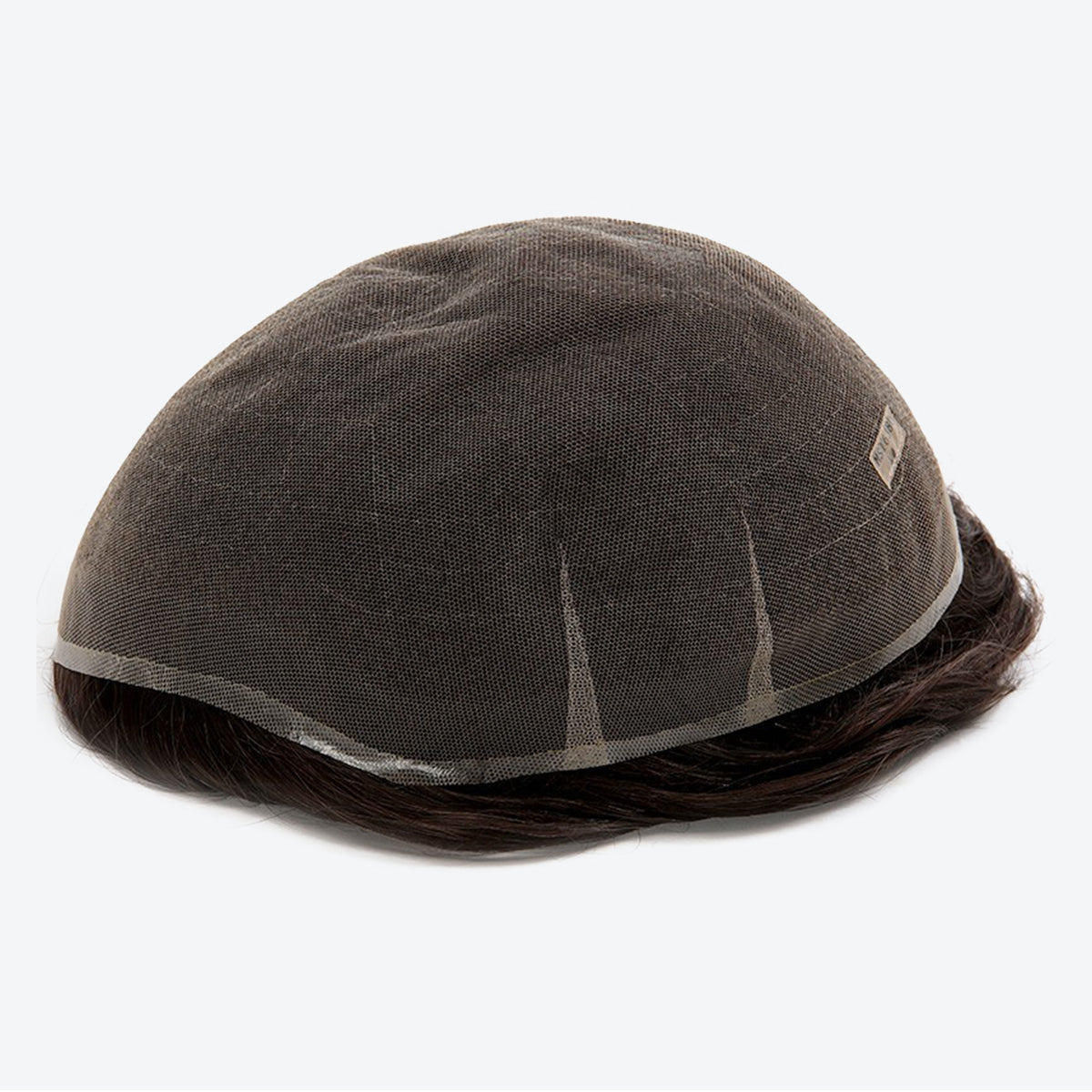
| Lace mesh or lace perimeter | Lace-compatible tape and a matching remover | Support the mesh as the bond releases; never put liquid glue directly on lace. |
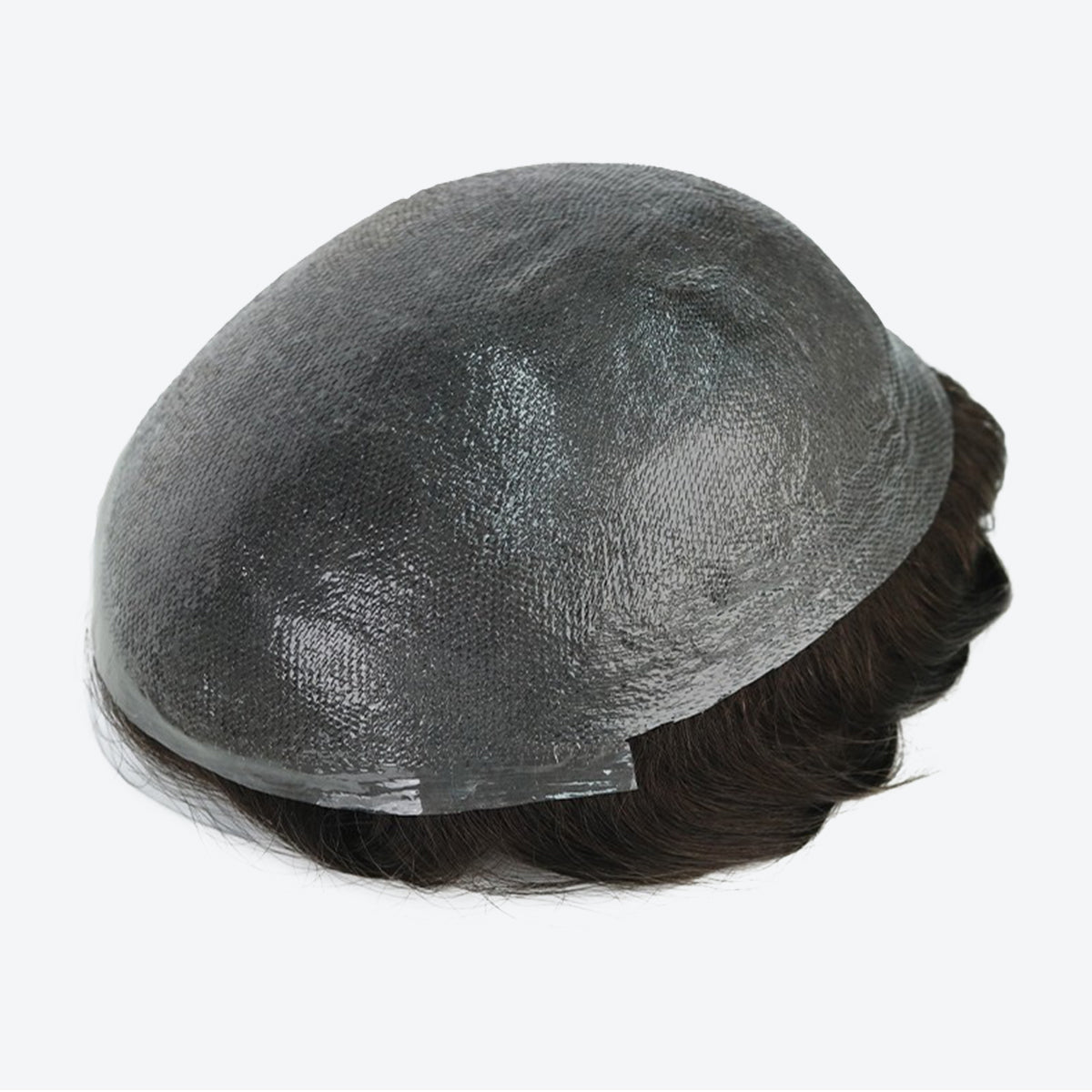
| Skin or poly, including thin skin | Compatible liquid adhesive in thin layers on clean scalp, following the current label, plus its matching remover | Do not start with tape on a skin base; peeling can stretch or tear a fine film. |
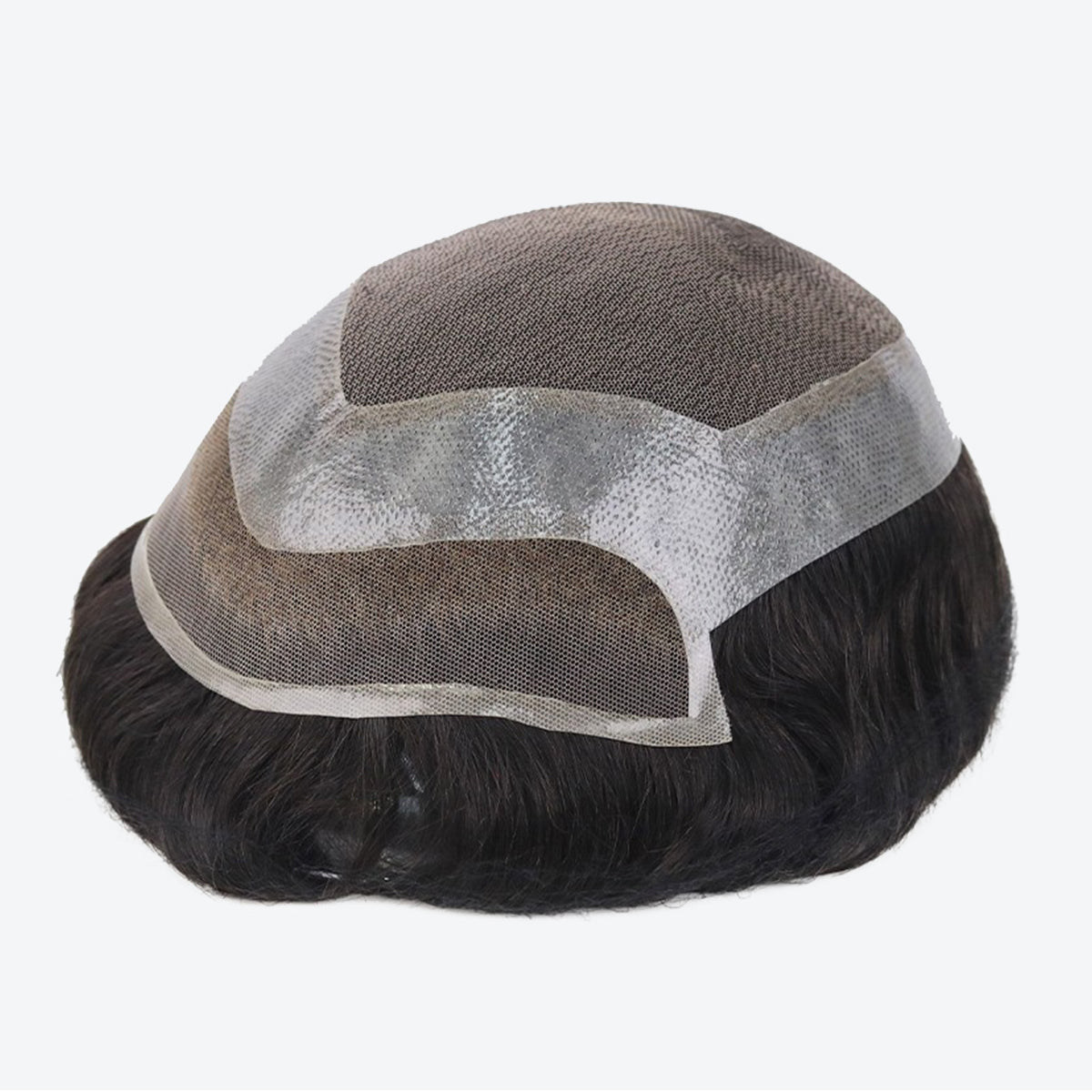
| Hybrid lace and skin/poly zones | Tape on lace zones and compatible liquid adhesive on scalp under supported skin/poly zones | Treat the zones separately; ask a trained professional to map an unfamiliar base. |
| Mono or an uncertain construction | Confirm the manufacturer's attachment zones first | Do not assume every mesh or reinforced edge accepts the same method. |
If your base is lace, start with lace-compatible tape and its matching remover. If your base is skin or poly, start with compatible liquid adhesive applied to the scalp and its matching remover. If you are not sure what base you have, start by checking its product details or asking a hair-system professional before applying a new bond. We would rather see a first-time wearer pause than pull against an attachment they do not yet know how to release.
How much time should you allow for the first full routine?
Keep testing and wearing on different days. On a patch-test wait day, test a new adhesive or scalp-prep product on clean, intact skin and complete the waiting period in its current instructions. Do not treat the first full application as a patch test. If irritation appears, stop using that product.
On a later care and wear day, set aside roughly two unhurried hours for removal, cleaning, drying, alignment, and reattachment; allow extra time for the product's required setting period. Your first attempt may take longer. Choose a private time when you can work slowly and stop if something resists instead of trying to finish on a strict clock.
How do you remove adhesive residue without damaging the base?
Treat residue removal as a release process, not a scraping job. The safest sequence depends on the base and the adhesive you used, so check both before any remover touches the system.
- Match the remover to the adhesive. Use the remover named in the current tape or liquid-adhesive directions. Do not assume that alcohol, a household solvent, or a long solvent soak is safe for every base.
- Release the system in small sections. Apply the compatible remover as directed and give it the label's stated working time. Support lace mesh as the bond releases; support skin or poly film so it does not stretch. If an edge resists, add time or compatible remover instead of pulling harder.
- Clean the base and scalp separately. Once the system is off, gently work softened residue away from the base with the method allowed for that material. Remove residue from the scalp without scraping or reapplying over irritated skin.
- Inspect before washing. Look for remaining tackiness, lifted knots, stretched film, tears, redness, or broken skin. Stop if the base is being damaged or the scalp reaction is significant or persistent.
- Wash away the remaining remover. Follow the remover and hair-care directions, rinse thoroughly, and let the base and scalp dry completely before a fresh attachment.
Avoid turning a product-specific technique into a universal rule. A short soak or alcohol wipe may be allowed for some combinations, but use it only when the current base, adhesive, and remover directions all support it. Never add fresh tape or glue over old residue.
Watch the removal, cleaning, and reinstallation sequence
This official LaVivid video shows the overall order on one hair system. Use it to understand the sequence, then follow the current directions for your own base and adhesive rather than copying every product or timing shown.
How do you wash and dry the hair without stressing the base?
- Detangle first. Hold the hair near the base, start at the ends, and work upward with a suitable wide-tooth comb or soft brush. Do not pull through a knot.
- Wash gently. Use lukewarm water and a hair-system product compatible with the fiber and its current care directions. Work through the hair with light pressure; do not scrub or twist the base. Human hair and synthetic fibers do not necessarily use the same products.
- Condition the lengths if the product calls for it. Keep conditioner away from the attachment area unless the product directions specifically allow it. Rinse until no product remains.
- Dry carefully. Blot with a towel rather than wringing. Let the system dry on a suitable stand when removed, and make sure the base and scalp are fully dry before reattachment. Use heat only within the hair and product directions, and keep high heat away from the base and bond.
There is no prize for washing more often. If the hair still looks clean and feels manageable, keep the routine gentle. If styling product, sweat, or oil is building up, clean it before that buildup makes detangling or reattachment harder. For product formats, see LaVivid's hair care collection, then check the label against your hair fiber and base.
What signs mean the attachment area needs attention?
Do not wait for a calendar date if the attachment is already telling you it needs care. Edge lift, sticky residue, odor, oil or styling buildup, a dull appearance, scalp discomfort, or repeated difficulty getting a clean reattachment are practical reasons to inspect the system and plan the appropriate level of cleaning.
| What you notice | First response |
|---|---|
| A small lifted edge | Check the bond and scalp; follow the base-compatible reattachment directions rather than covering dirt with more adhesive. |
| Sticky residue or odor | Plan a full release and cleanup; do not keep layering product over buildup. |
| Hair that tangles or feels dry | Detangle carefully, check whether the wash or styling routine is too harsh, and follow the fiber's care directions. |
| Redness, burning, broken skin, or a base that starts to tear | Stop the attachment or removal. Seek qualified medical advice for significant or persistent skin symptoms, or a trained hair-system professional for a damaged base. |
If your first placement is uneven, pause and release it with the proper method before trying again. Many wearers need more than one attempt to learn the alignment. More glue or tape is not the recovery step.
What should daily, weekly, and monthly maintenance checks include?
Use these time points as inspection reminders, not automatic wash or removal dates. Your base, attachment product, activity, skin, and the condition of the hair still determine when hands-on maintenance is needed.
Daily check: notice small changes
- Gently detangle from the ends upward while supporting the hair near the base.
- Look for a lifted edge, new tangles, sweat or styling buildup, and changes in scalp comfort.
- Make sure the hair is dry before sleep. If nighttime friction causes tangling, a smooth pillowcase or suitable sleep cap can reduce rubbing without changing the attachment schedule.
Weekly review: decide whether cleaning is needed
- Inspect the hairline and perimeter in good light for lift, sticky residue, odor, oil, or product buildup.
- Check whether the hair looks dull, feels unusually dry, or is becoming harder to detangle.
- Notice whether a previously reliable attachment is becoming difficult to clean or reattach securely.
A weekly review does not mean a weekly full removal. Wash, release, and clean only when these conditions or the current product directions call for it. If the system still looks clean, feels manageable, and remains comfortable, keep the routine gentle.
Monthly review: inspect the whole setup
- Examine the full base for stretched skin or poly, distorted lace, tears, loose knots, or unusual shedding.
- Review whether removal now takes more force, more product, or more time than it did before. Repeated trouble may point to residue, an incompatible routine, or damage that needs professional assessment.
- Check that the attachment product, matching remover, shampoo, and conditioner instructions still fit the base and hair you are wearing.
- Consider seasonal changes. More sweat, swimming, dry air, or sun exposure may change what you need to inspect, but they do not create one universal cleaning schedule.
Swimming, heavy workouts, travel, and advanced hybrid attachment can change the routine, but this article does not decide those situations for you. If heat, sweat, or summer lifting is the main problem, use our summer hold and reattachment guide for that specific situation. Ask a professional about a setup you cannot identify. Over time, if careful cleaning no longer resolves persistent tangling, shedding, base damage, or repeated attachment trouble, review the whole setup before assuming one more wash or a stronger adhesive will fix it.
Your first care routine does not need to be elaborate. Begin with a base-compatible attachment method, its remover, gentle hair care, and enough time to work carefully. When you are ready to consider how base construction affects your next system, compare LaVivid's men's hair systems at your own pace.


