


Summer hair system maintenance does not need a stronger-everything routine. Start with a clean, fully dry scalp, use an attachment method that fits the base, handle sweat gently, and let lift, residue, odor, or discomfort tell you when the routine needs attention. If summer maintenance feels like a lot at first, that is normal. Many wearers need a few reattachments before the routine feels predictable.
Quick Answer
For reliable summer hair system maintenance, prepare a clean, dry scalp and choose attachment by base before comparing hold claims. If your base is lace, start with lace-compatible tape and a matching remover; never apply liquid glue directly to lace mesh. If your base is skin or poly, start with compatible liquid adhesive applied to the scalp in thin layers as directed, not tape as a beginner default. Patch-test on a separate wait day, then allow the product-specific set time after attachment. After sweating, blot rather than rub. Shorten the maintenance cycle only when lift, soft residue, odor, buildup, or discomfort appears earlier than usual.
Quick Takeaways
- Clean away old residue and let the scalp dry fully before reattachment.
- Choose tape or liquid adhesive by base construction, not by a universal strongest-hold claim.
- Keep the patch-test wait day separate from the first full wear or reattachment day.
- After sweating, blot moisture, use cool air if needed, and avoid repeatedly touching the hairline.
- Change the maintenance cycle in response to lift, residue, odor, buildup, or discomfort rather than a fixed summer schedule.

Why Does Summer Change Hair System Maintenance?
Heat does not create one single failure. Higher sweat and oil levels, humidity, more time outdoors, sunscreen transfer, and more frequent washing can affect the scalp, bond, hair, and base in different ways. The first useful step is to identify what changed before adding more adhesive or washing more aggressively.
| What you notice | Possible contributors | Better first response |
|---|---|---|
| One edge begins to lift | Sweat, oil, incomplete prep, repeated touching, or a routine/product mismatch | Stop touching it, let the area dry, then assess whether a clean localized service is possible |
| Adhesive looks white, soft, or gel-like | Moisture, oil, heat, excess product, or residue from an earlier application | Do not cover it with another layer; follow the product's release and cleanup directions |
| Odor or itching appears earlier | Trapped moisture, scalp buildup, or a maintenance cycle that is now too long | Remove and clean sooner; reassess only after the scalp is clean, dry, and comfortable |
| Hair feels rough, dry, or faded | Sun exposure, frequent shampooing, heated styling tools, friction, or heavy styling product | Reduce avoidable exposure and return to gentler hair care |
| Redness or burning persists | Irritated or compromised skin, sensitivity, or an incompatible product | Remove carefully, stop using the product, and seek qualified guidance for a significant or persistent reaction |
Summer is also when beginners are most tempted to change several things at once. Take your time. Change one part of the routine at a time so you can tell whether scalp prep, attachment, maintenance timing, or hair care made the difference.
What Should a Beginner Do Before the First Summer Reattachment?
The first full removal and reattachment has two separate time blocks. Do not combine testing and wearing into one rushed session.
Patch-test wait day
Patch-test the chosen adhesive or scalp-prep product on clean, intact skin and complete the waiting period stated in its current directions. That period is often measured in hours, but the live label is the source of truth. A patch test is not the first full wear day. If redness, burning, swelling, or broken skin appears, stop and do not proceed with that product.
Maintenance and wear day
For a first at-home cycle, reserve roughly two unhurried hours for removal, cleanup, drying, alignment, and application; product-specific set or cure time is additional. First attempts often take longer, and that is part of the learning curve. Give yourself enough private, unhurried time to complete the preparation properly.
- Gather the attachment product, its matching remover, cleaning supplies, towels, and placement tools before starting.
- Release the bond gradually. Support lace or thin skin instead of pulling the base away from a dry bond.
- Clean the scalp and base as separate surfaces. Remove old residue rather than applying fresh product over it.
- Inspect the scalp for irritation and the base for stretching, fraying, or tears.
- Let both surfaces dry completely.
- Reattach with the base-compatible method and follow the current product directions for application and set time.
- Limit heat, water, and heavy sweating during that product-specific setting window.
If you are still planning the rest of your first-wear setup, use the hair systems for beginners guide before choosing supplies. There is no need to rush into a more complicated method because summer has started.
Which Attachment Method Fits Your Base in Summer?
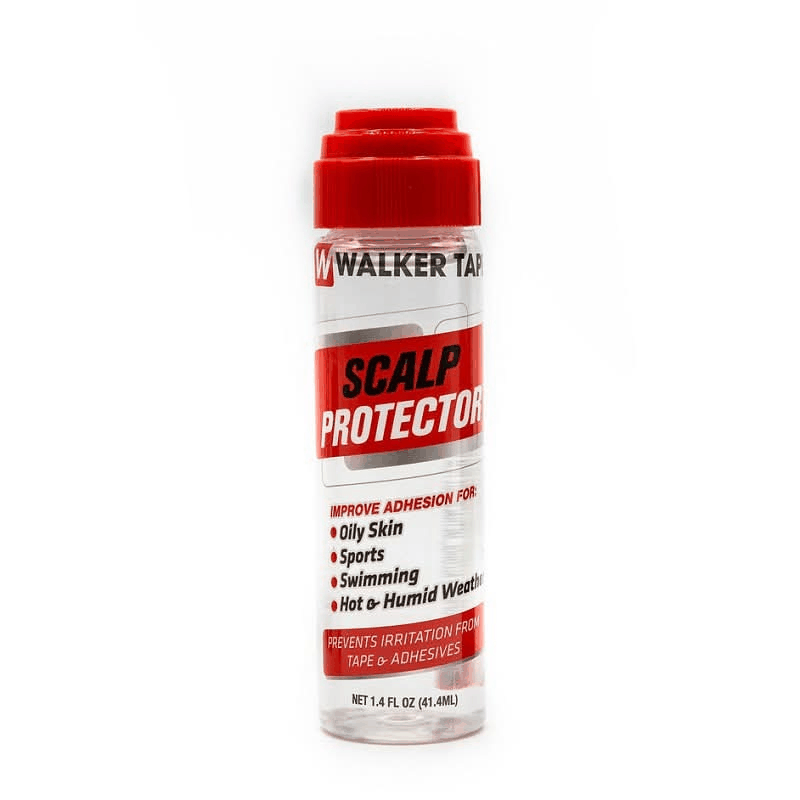
Summer attachment depends first on base compatibility, not a universal glue-versus-tape winner. Review the current hair system tapes and adhesives only after you know which material actually touches the attachment zone.
| Base or attachment zone | Beginner starting path | Summer trade-off | Avoid |
|---|---|---|---|
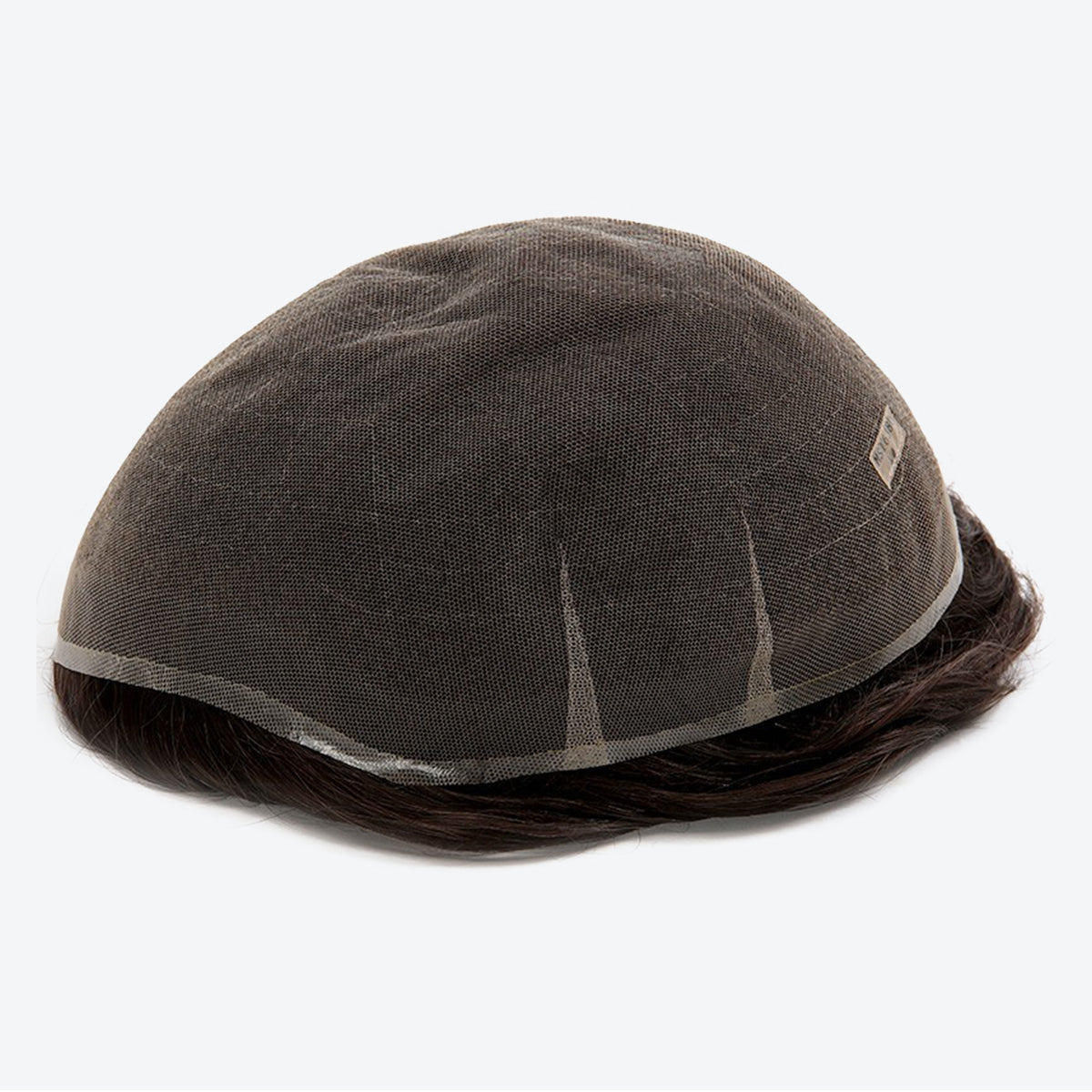
| Full lace, lace front, or lace perimeter | Lace-compatible tape plus its matching remover | Defined pieces can make placement and cleanup easier to map, but delicate mesh still needs patient release | Liquid glue directly on lace mesh; pulling tape from dry lace |
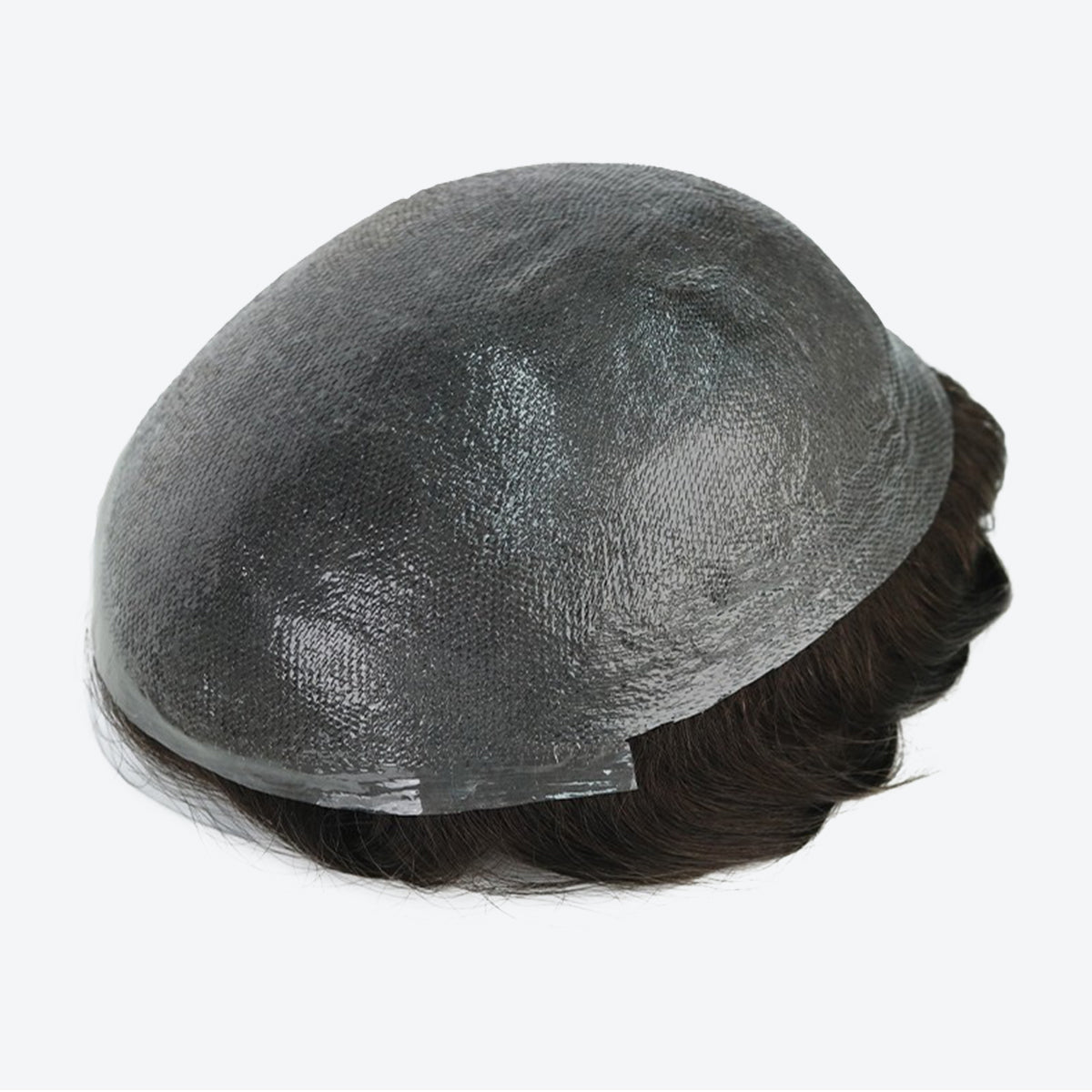
| Skin, poly, thin skin, or full skin | Compatible liquid adhesive applied to clean, intact scalp in thin layers according to current directions | A continuous bond area can suit the material, but cleanup may cover a broader area | Tape as the beginner default; excess adhesive; peeling delicate film from a dry bond |
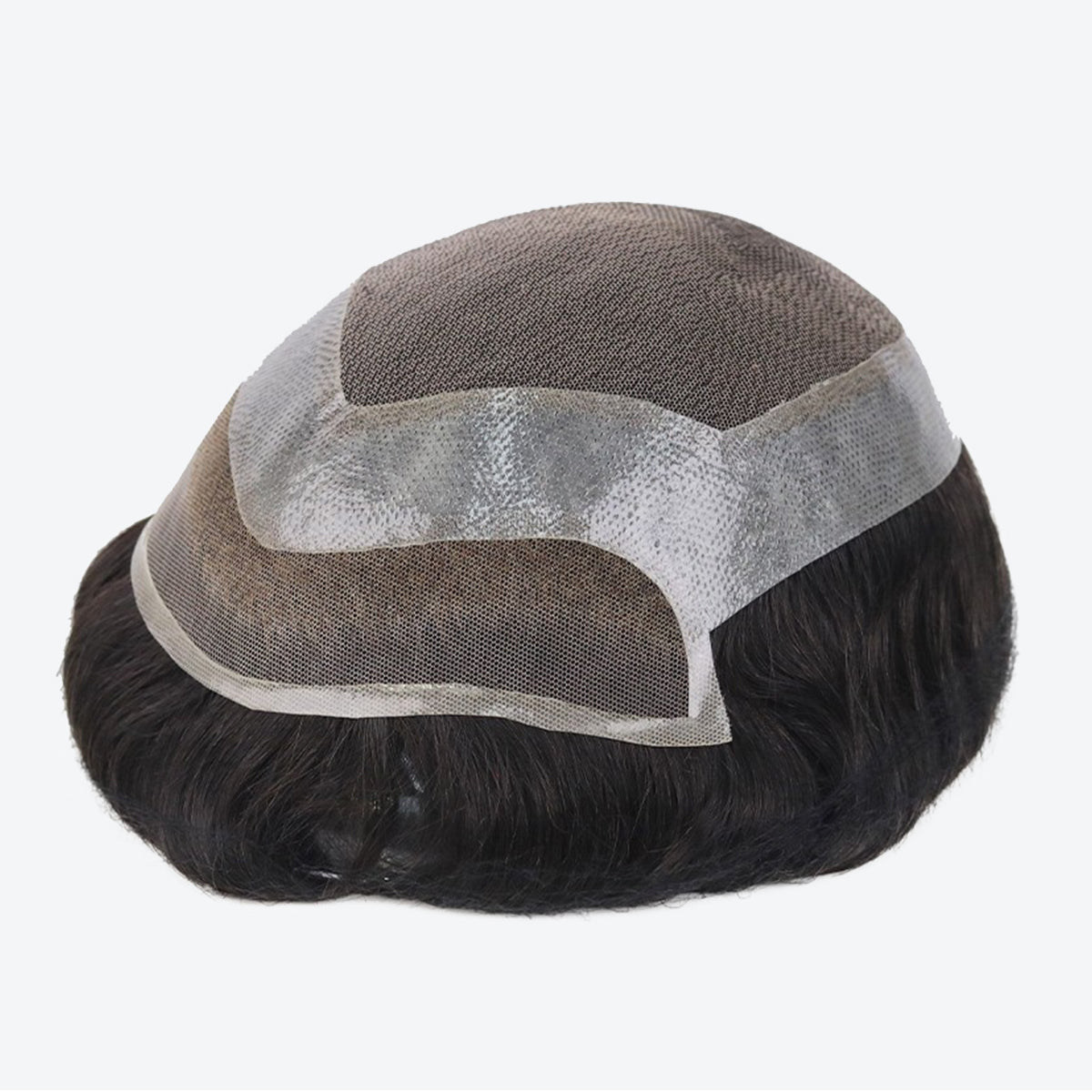
| Hybrid with lace and skin/poly zones | Zone-specific plan: tape on lace and compatible liquid adhesive on the scalp beneath supported skin/poly zones | Can balance airflow and supported attachment areas, but the routine has more steps | One method bridged across every material; tape and glue layered over the same zone |
| Mono or supported mesh | Confirm the exact construction and intended attachment zones before choosing | Construction varies, so the product diagram matters more than the category name | Assuming liquid glue is suitable directly on mesh or improvising one method across all zones |
Path A: If your base is lace
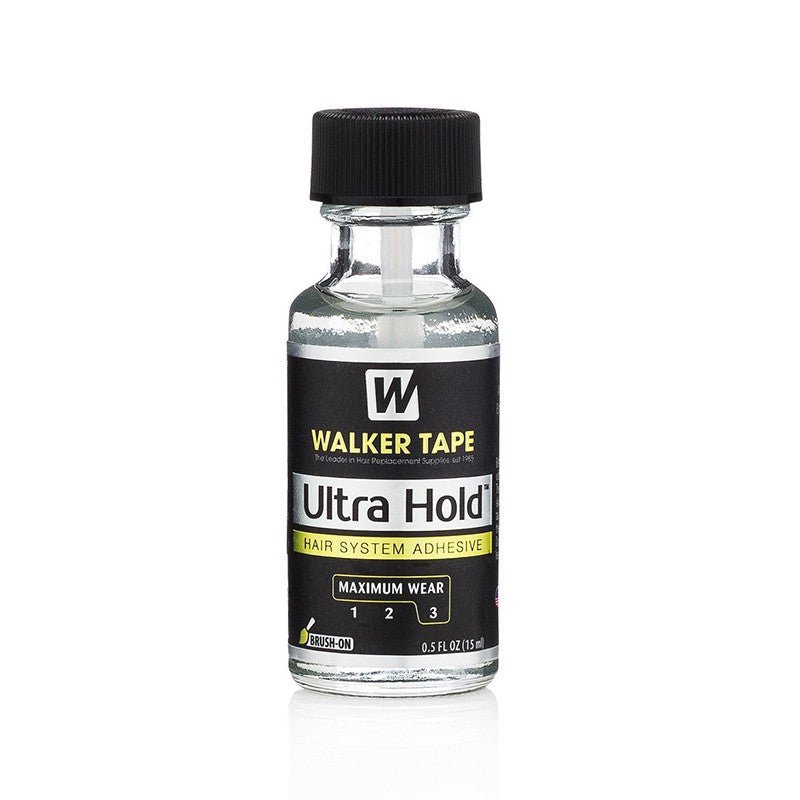
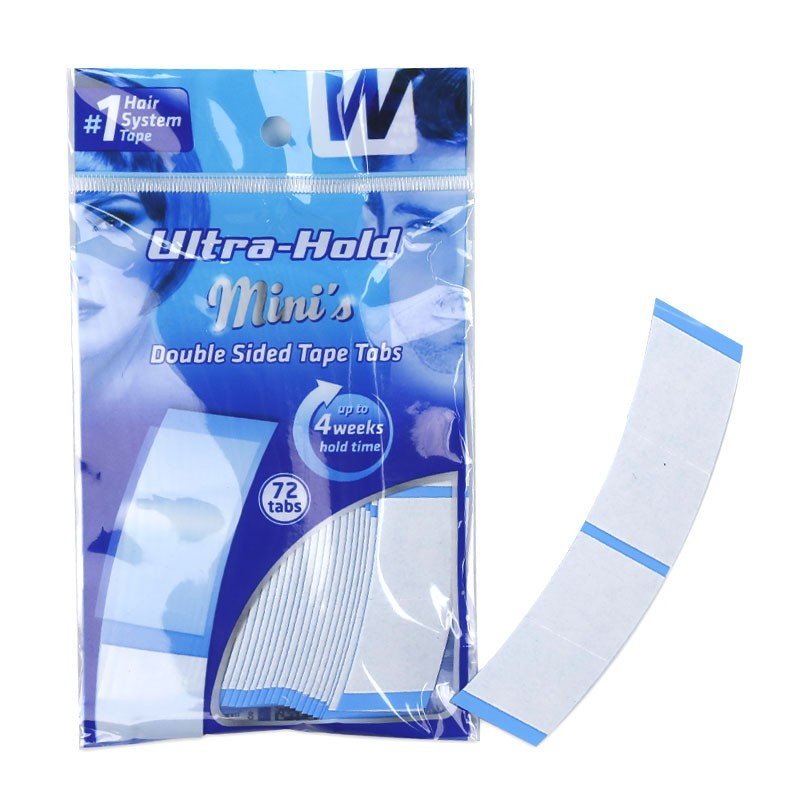
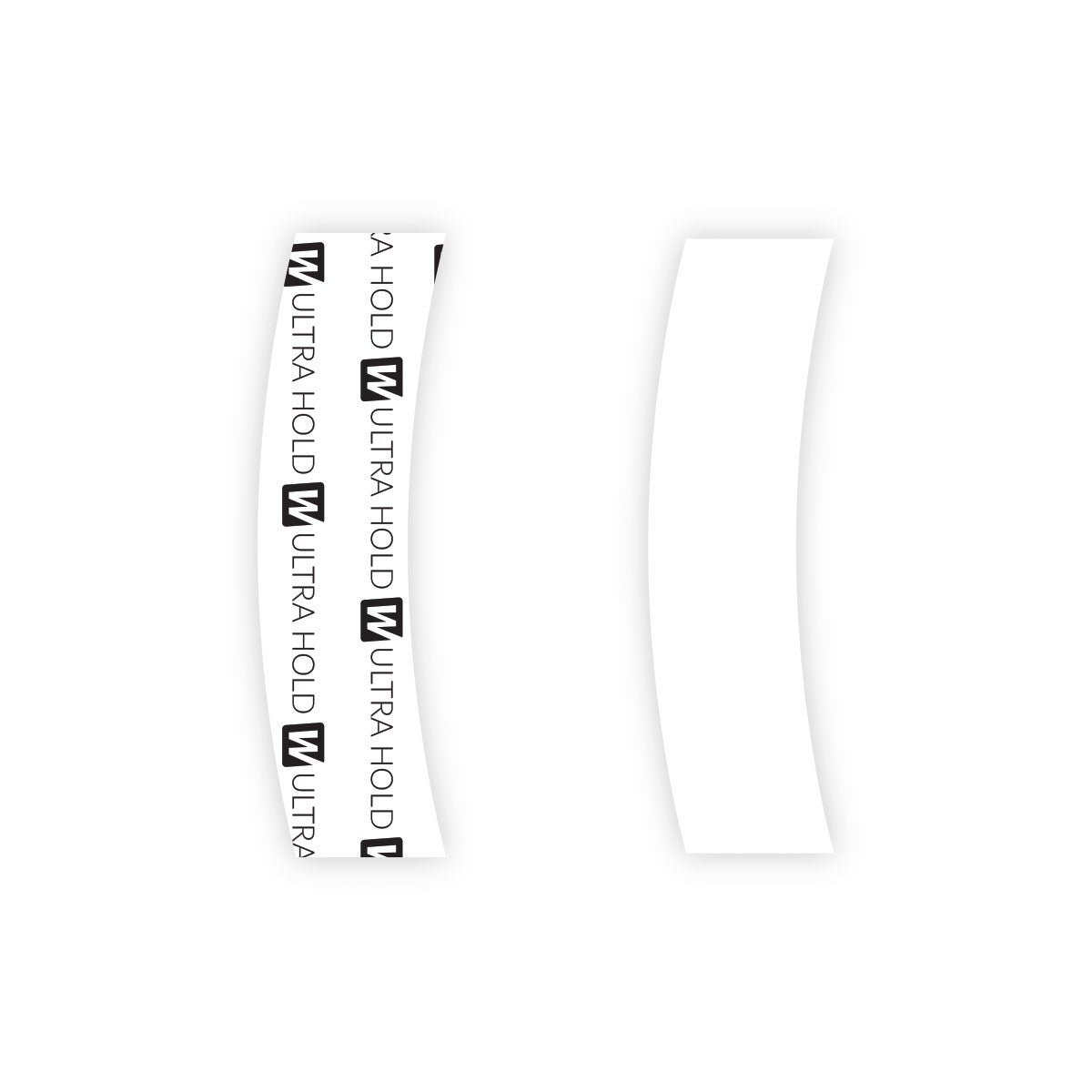
Start with one lace-compatible tape and one matching remover. Pre-cut contours may make curved placement easier to repeat. Never apply liquid adhesive directly to lace mesh. During removal, support the mesh and let the remover release the bond instead of pulling harder.
Path B: If your base is skin or poly
Start with one compatible liquid adhesive and one matching remover. Apply thin, even layers to the scalp only as the live directions specify. Do not make tape the beginner default for thin or ultra-thin skin because removal force can stretch or tear delicate film.
Path C: If your base is hybrid or mono
Treat the base as a zone map. Hybrid attachment may require tape on lace and liquid adhesive on supported skin/poly areas, so it is better handled as an experienced setup. If this is your first attachment, ask LaVivid support or a qualified hair-system professional to confirm the zones instead of learning two methods at once.
For a first kit, one compatible attachment method plus its matching remover is easier to learn and diagnose than an improvised tape-and-glue combination. A stronger bond can also be less forgiving to remove; that trade-off matters more in summer, when you may service the system sooner.
What Should You Do Before and After Sweating?
The goal is not to stop living normally. It is to give a new or recently serviced bond the setting period in its own directions and to avoid turning a sweaty edge into a larger cleanup problem.
Before a workout or long outdoor period
- Confirm that a new attachment has completed its product-specific set time.
- Check the perimeter without pulling at it.
- Keep waxes, oily styling products, skincare, and sunscreen away from the bond line.
- Let sunscreen dry before hair contacts the area, and shield the hairline during reapplication when practical.
- Make the first test an ordinary activity, not an important event or a long day away from your supplies.
After sweating
- Blot moisture with a clean towel or tissue instead of rubbing the hairline.
- Let the area dry naturally or use cool airflow; avoid high heat.
- Do not repeatedly press, lift, or pull an edge to check it.
- Inspect again when the scalp is dry enough to judge the bond.
- If sunscreen or styling product transfers to the hair, follow the hair-care directions rather than scrubbing the area.
This article does not replace a swimming-specific plan. Water exposure, chlorine, salt, and repeated immersion add different care decisions beyond normal summer perspiration.
Should You Touch Up or Remove and Reinstall?
A touch-up is not the right answer for every lift. Adding adhesive over sweat, oil, or old residue can make the next cleanup harder and move contamination toward the hair.
| Condition | Better response | Why |
|---|---|---|
| A small, localized edge is lifted; the area can be safely released, cleaned, and dried; the base and product directions allow local service | Service only that clean section and follow the current product directions | A controlled local response may avoid disturbing a sound bond elsewhere |
| Lift is spreading, several edges are moving, or adhesive has become white, soft, stringy, or gel-like | Remove and clean the affected bond area; consider a full reinstallation when contamination is widespread | Fresh adhesive will not correct residue, oil, or moisture underneath |
| Odor, itching, or buildup appears earlier than usual | Shorten this cycle, clean the scalp and base fully, and reassess the routine | The old schedule may no longer fit the climate or activity level |
| The base stretches, wrinkles, tears, or resists removal | Stop pulling, add the compatible remover as directed, and support the material | More force can turn a release problem into base damage |
| Persistent redness, burning, swelling, or broken skin develops | Remove carefully, stop using the product, and seek qualified medical guidance for a significant or persistent reaction | Discomfort is a pause signal, not a normal step to push through |
If you cannot release and clean a lifted area without pulling the base or working over irritated skin, pause. A qualified professional can help you protect both the scalp and the system.
What Common Summer Maintenance Mistakes Should Beginners Avoid?
- Adding more adhesive over sweat, oil, or old residue. A new layer can cover contamination without restoring a clean contact surface.
- Choosing the method described as strongest before checking the base. Lace, skin/poly, and hybrid zones do not share one beginner default.
- Applying liquid glue directly to lace or starting thin skin with tape. Both shortcuts can damage the material they are meant to secure.
- Learning tape and glue at the same time. One method is easier to place, remove, and troubleshoot during a first cycle.
- Rushing removal or buying adhesive without its remover. The release plan belongs in the first kit, not the next order.
- Washing aggressively after every sweat. Frequent scrubbing, high-temperature water, wringing, and rough towel drying can add friction, dryness, tangling, and shedding.
- Stretching wear time to meet a fixed number. Summer cadence should respond to actual lift, residue, odor, buildup, and comfort.
- Using heavy styling products, high heat, or DIY color as a quick correction. Each can add buildup or stress when the hair is already dry from summer exposure.
Most first-time wearers improve placement and cleanup over several attempts. A redo is not failure. Slower handling now usually supports a more stable long-term routine and fewer avoidable replacements later.
How Can You Protect the Hair and Base From Summer Damage?
Attachment care protects the bond; hair and base care protect the rest of the system. Keep the routine light, consistent, and specific to the care instructions for your unit.
- Use cool or lukewarm water unless the current care directions say otherwise.
- Guide shampoo and rinse water in the hair direction; avoid scrubbing knots, lace, or the base.
- Pat with a towel instead of rubbing or wringing.
- Detangle gently with the recommended tool, starting at the ends and working upward while supporting the base.
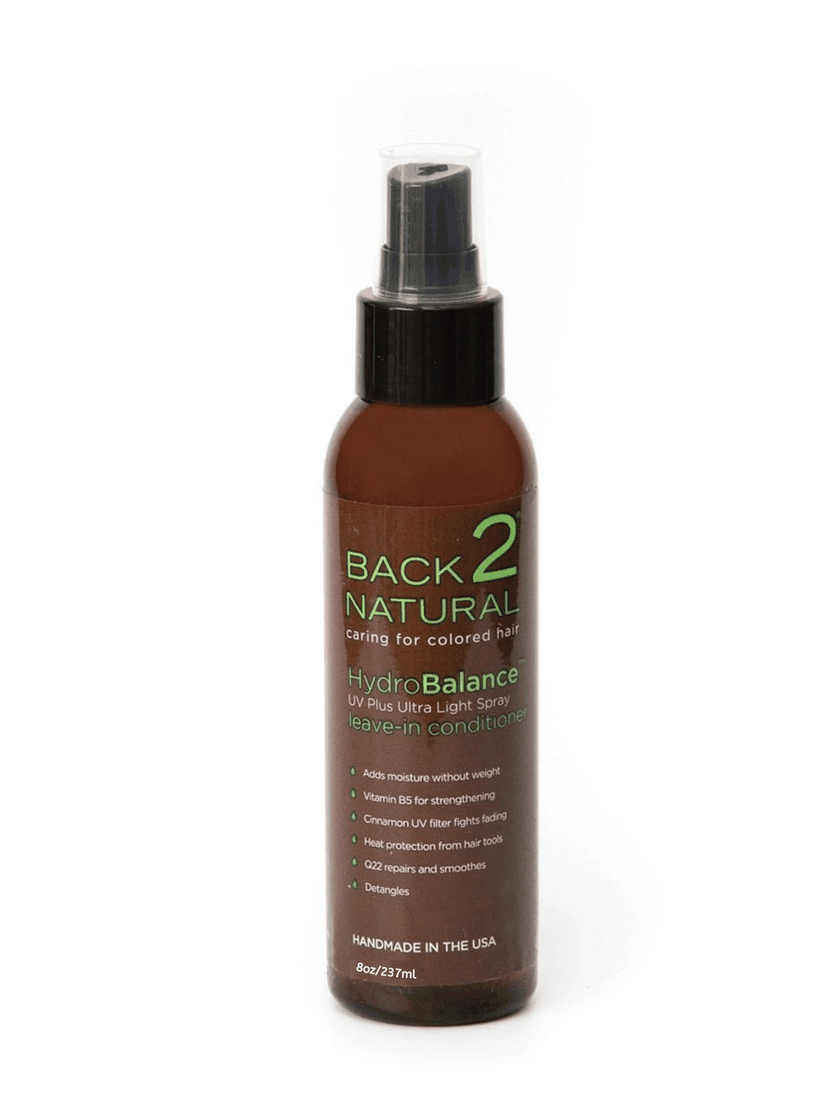
- Use lightweight, compatible conditioning or styling products rather than layering waxes and oils.
- Limit prolonged direct sun where practical. A clean, loose-fitting hat can reduce exposure without replacing normal care.
- Keep sunscreen, face products, and oily sprays away from the hairline and hair as much as practical.
- Use heated tools sparingly and at the lowest suitable setting with a compatible heat-protection routine.
- If the system is removed for storage, clean and dry it fully, support its shape, and keep it away from direct heat and sunlight.
- Leave major recoloring or chemical correction to a professional who understands processed hair systems and base construction.
Would a Different Base Fit Your Summer Routine Better?
A base change is worth considering only when the same comfort, cleanup, or attachment problem repeats after the routine is corrected. Breathability is one factor, not a promise that sweat or maintenance will disappear.
| Example | Construction and possible fit | Honest trade-off | Attachment note |
|---|---|---|---|
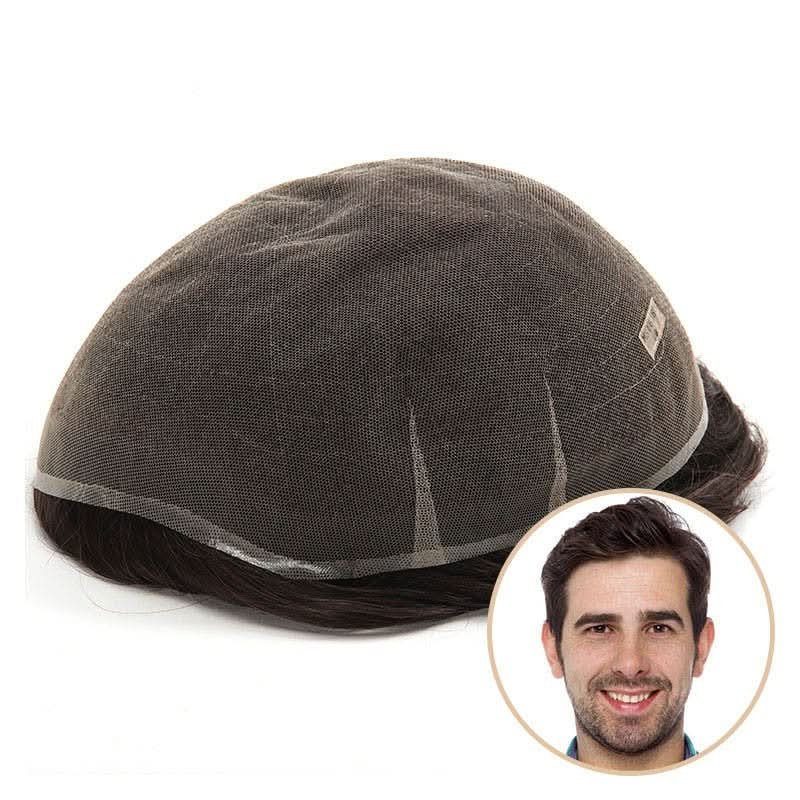
| Helios | Full Swiss lace; may suit wearers who prioritize a light feel and airflow in warm or humid conditions | Fine lace needs gentle handling and may not be the right priority when maximum stability or lower-maintenance durability matters more | Use lace-compatible tape; do not apply liquid glue directly to the lace mesh |
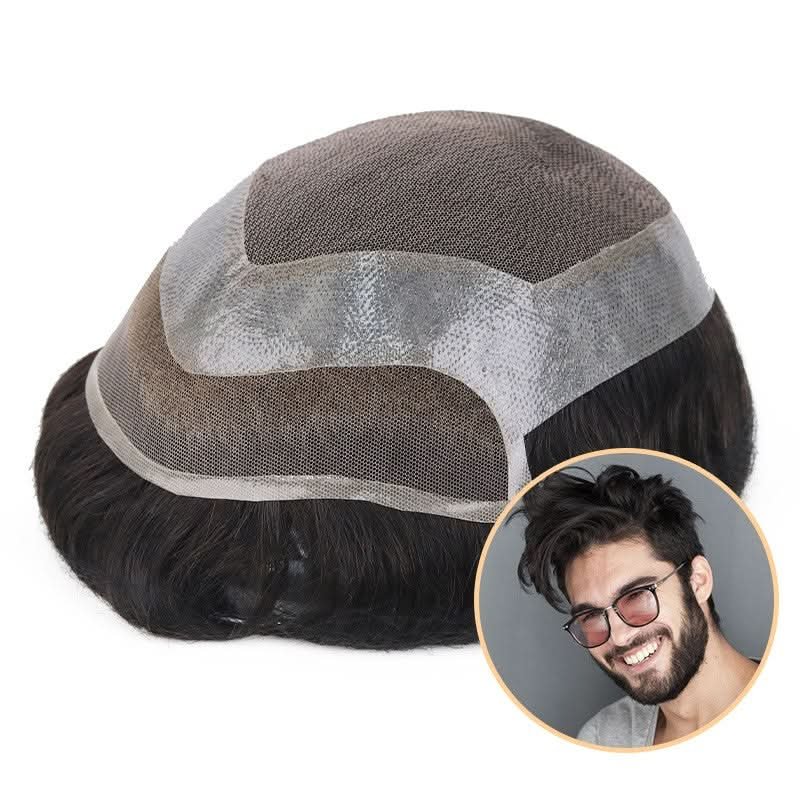
| Simois | Lace center and front with a PU perimeter; may suit someone seeking airflow plus supported perimeter zones | The mixed construction adds zone-specific attachment and cleanup steps | Tape on lace zones; compatible liquid adhesive only on the scalp beneath supported PU zones as current directions allow |
If you are not sure whether the issue is the base or the routine, begin by correcting preparation and maintenance first. Change the system only when the same signal repeats and the trade-off of a different construction fits your priorities.
When Should You Change Your Summer Routine?
There is no universal weekly, biweekly, or maximum-hold schedule. Keep your normal cycle while the scalp is comfortable, the bond remains clean and predictable, and removal stays manageable. Shorten it when lift, soft residue, odor, buildup, or itching begins earlier in repeated cycles.
Change one variable at a time:
- Confirm that prep and drying are complete.
- Confirm that the attachment method matches the base.
- Follow the current set-time and exposure directions.
- Adjust the maintenance cycle when the same signal appears earlier.
- Reassess the base only if comfort or upkeep still does not fit your summer routine.
Persistent irritation, broken skin, difficult release, or a tearing base is the point to stop experimenting and ask for qualified help. The long-term goal is not the longest possible interval. It is a repeatable cycle you can remove and clean without rushing or damaging the scalp, hair, or base.
FAQ
Does sweat ruin a hair system?
Sweat does not automatically ruin a hair system, but repeated moisture, oil, and buildup can affect the bond and increase cleanup. Blot rather than rub, let the area dry, and service the bond when lift, residue, odor, or discomfort appears.
How often should I reinstall my hair system in summer?
There is no universal summer schedule. Keep the current cycle while the scalp is comfortable and the bond remains clean and manageable. Shorten it when lift, soft residue, odor, buildup, or itching appears earlier than usual.
Is glue or tape better for summer?
Neither is better for every base. Start with lace-compatible tape for lace zones and compatible liquid adhesive on the scalp for skin/poly zones. Hybrid systems require a zone-specific plan, not one method across the whole base.
What should I do if the hairline lifts after a workout?
Stop touching the edge, blot moisture, and let the area dry before judging it. A small clean section may be serviced if the base and product directions allow. Spreading lift or contaminated residue calls for proper removal and cleanup.
Why does adhesive turn white, soft, or gel-like?
Moisture, oil, heat, excess product, or old residue may change the appearance and texture of a bond. Do not add fresh adhesive over it. Follow the current release and cleanup directions, then restart only on clean, dry, comfortable skin.
Compare the Options That Fit Your Routine
Summer is easier to manage when the base, attachment method, and maintenance cycle make sense together. Compare the construction and care trade-offs at your own pace, then choose the setup you can repeat without forcing a maximum-hold routine.

