Choosing a men's hair system is easier when you start with your real routine, not only with a product name. A system that works well for gym days may not be the same setup a first-time office wearer wants. Warm weather, sweat, exposed hairline styles, maintenance time, and how often you can clean and rebond all affect the right starting point.
For beginners, the goal is not to find one universal system for every situation. The goal is to choose a stable first path, understand the trade-offs, and avoid a setup that looks good on paper but does not fit your week.
Quick Answer
The right hair system depends on the lifestyle condition you need to solve first. If you work out often, focus on airflow, attachment stability, and post-workout care. If your priority is office or social confidence, look at natural density, hairline design, and a routine you can maintain discreetly. If you live in a warm or humid climate, breathability matters, but it does not replace a realistic attachment and cleaning plan. Product examples such as Simois, Upgrade Ares, Helios, and a skin/poly starter route can help you compare different starting paths, but the final choice should match your base, density, styling, attachment method, and maintenance comfort.
Quick Takeaways
- Choose by lifestyle first: activity level, heat, styling needs, and maintenance time.
- Breathability can improve comfort, but it does not make a system maintenance-free.
- A natural hairline is only useful if you can maintain the front edge confidently.
- Beginners often do better with a balanced setup than the most delicate or extreme option.
- One good next step is to compare your routine against the beginner guide before choosing a product.
Which lifestyle factor should you decide first?
Start with the condition that will test your system most often. A person who trains five days a week has a different first problem from someone who spends long days in meetings. A person in a humid climate may care more about airflow and heat than someone in a cool office environment.
| Lifestyle priority |
What matters most |
What to avoid assuming |
Better starting logic |
| Active or sports routine |
Airflow, attachment plan, sweat cleanup, edge checks |
A breathable base alone solves sweat |
Choose a system and attachment routine together |
| Office or social routine |
Natural density, controlled hairline, close-up blending |
The most exposed hairline is always better |
Choose a look you can maintain calmly in daily settings |
| Warm or humid climate |
Lightweight feel, ventilation, manageable care |
Lace means no sweat problems |
Balance airflow with adhesive and cleaning needs |
| First hair system |
Simplicity, maintenance comfort, support path |
The most technical option is best |
Start with a stable, beginner-friendly decision path |
If this is your first system, use the beginner hair system guide as the parent decision path before narrowing into a specific product.
Which LaVivid product examples fit these lifestyle paths?
Use the products below as starting examples, not a fixed ranking. The better choice still depends on your coverage area, hairline plan, density match, attachment method, and how much maintenance you are comfortable doing.

Simois: balanced active and daily wear
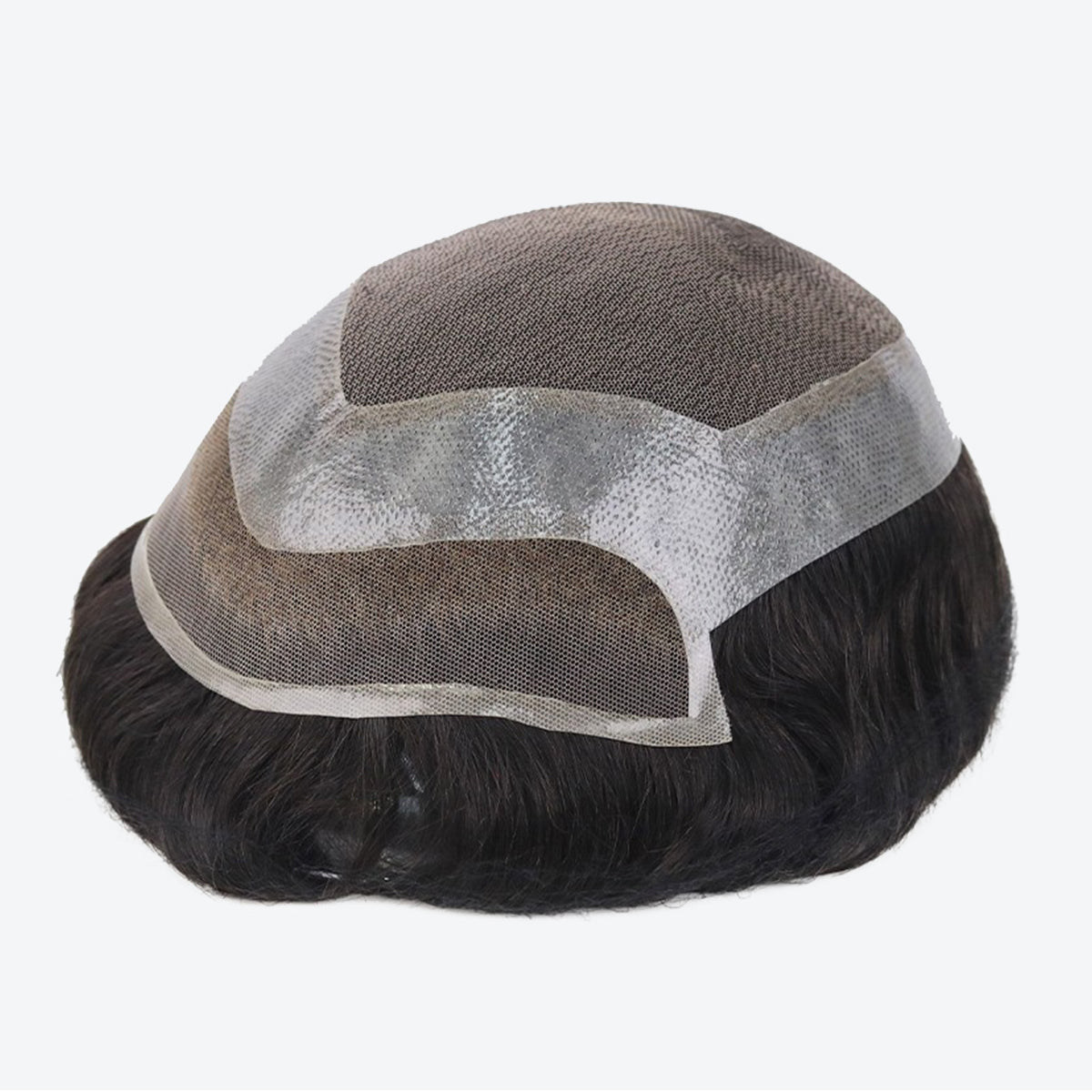
Simois may fit men who want a lace center for airflow, a PU perimeter for practical bonding, and a lace front for exposed or semi-exposed styling.
- Physical path: lace center + 1-inch PU around + 1/2-inch lace front.
- Best-fit path: gym-to-office routines, daily comfort, balanced attachment.
- Trade-off: lace still needs careful residue cleanup after sweat.
View Simois details 
Upgrade Ares: exposed-front office and social styling
Upgrade Ares may fit men who specifically want an exposed front, a breathable French lace center, and a skin perimeter for a clearer bonding surface.
- Physical path: French lace center + skin perimeter + 0.04mm PU front.
- Best-fit path: meetings, close-up social settings, slick-back or side-part styles.
- Trade-off: not the lowest-risk first choice if you do not want to maintain an exposed front.
View Upgrade Ares details 
Helios: breathability-first comfort
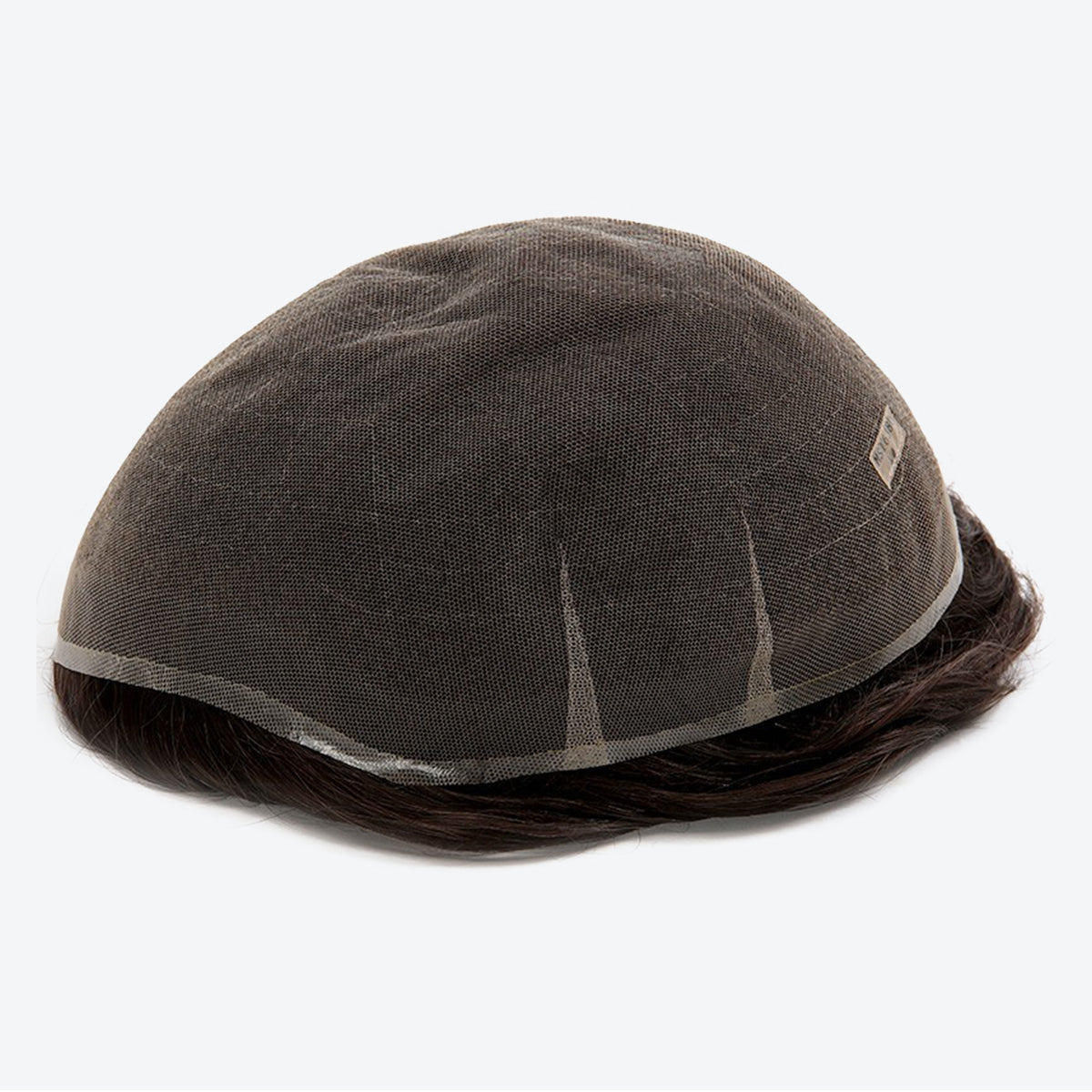
Helios may fit men whose first priority is an all-lace, lightweight feel for airflow and daily comfort in warmer or more humid conditions.
- Physical path: full Swiss lace base.
- Best-fit path: breathable daily wear, lighter activity, warm-climate comfort.
- Trade-off: full lace can be harder to clean if adhesive moves through the mesh.
View Helios details 
Skin/poly route: simpler cleanup for cautious beginners
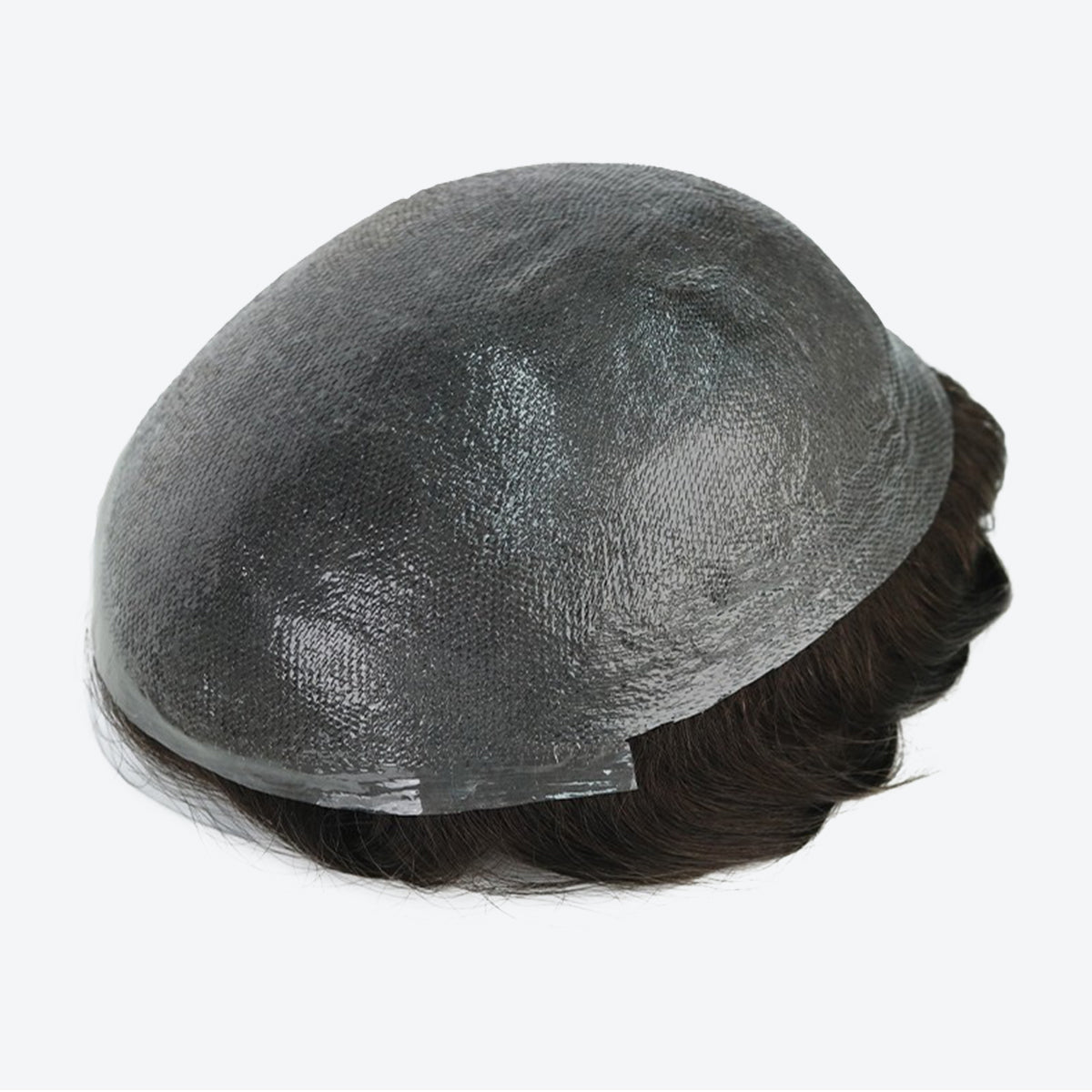
A skin or poly base may fit beginners who care more about easier residue cleanup and a smoother bonding surface than maximum airflow.
- Physical path: transparent PU base with no lace mesh.
- Best-fit path: lower-maintenance learning, indoor routines, cleaner adhesive removal.
- Trade-off: less airflow; ultra-thin skin still needs gentle handling.
Compare skin/poly systems
What physically separates these options?
The products above are not different only because of lifestyle labels. They create different handling conditions because the front material, center material, and perimeter material are different.
| Path |
Physical structure |
What it may help with |
Main beginner caution |
| Simois |
Lace center, PU around, lace front |
Balanced airflow, practical perimeter bonding, exposed or semi-exposed styling |
Sweat and adhesive residue can still require careful lace cleanup |
| Upgrade Ares |
French lace center, skin perimeter, 0.04mm PU front |
Exposed-front office or social styling with a clearer bonding surface |
Better for users willing to maintain a visible front edge |
| Helios |
Full Swiss lace base |
Maximum airflow and lightweight comfort |
Heavy sweat plus adhesive can create difficult mesh cleanup for new users |
| Skin/poly route |
Full PU or thin skin base |
Smoother adhesive cleanup and a simpler first learning path |
Less breathable; ultra-thin versions can be delicate |
What should active or sports wearers look for?
For active routines, the question is not simply "Which system is strongest?" It is whether the base, attachment method, hairstyle, and cleaning routine can handle regular movement and sweat.
A hybrid option such as Simois can be a useful example of a balanced active-daily setup. Its lace center supports airflow, while the PU perimeter gives a clearer surface for tape or glue attachment. The lace front also allows a more natural-looking transition when the front is styled carefully.
Simois may fit men who want:
- A breathable center for daily comfort
- A PU perimeter for more practical bonding and cleanup
- A lace front for exposed or semi-exposed styles
- A balanced system for gym-to-office routines
This does not mean Simois is automatically the best answer for every athlete or every heavy-sweat situation. If training is your main concern, compare the full active-use path in the workout hair systems collection, then check the product page and attachment guidance before choosing.
What should office and social wearers prioritize?
For office and social settings, the main pressure is close-up confidence. The system should look natural in everyday light, blend with your existing hair, and fit a grooming routine you can maintain without constant checking.
Upgrade Ares is useful only if the office or social goal includes an exposed front. It uses a French lace center, a skin perimeter, and a 0.04mm PU front, so the office benefit is not simply "hybrid equals office." The benefit is a cleaner exposed-front route when the wearer can maintain placement, cut-in, and edge checks.
Upgrade Ares may fit men who want:
- An exposed-front look for meetings or social settings
- A French lace center with a skin perimeter for a more practical bonding surface
- Medium density that feels appropriate for daily wear
- A system they are willing to maintain with careful front-edge placement
The key is restraint. For many first-time office wearers, a slightly covered or softly side-parted style may be calmer than a fully exposed slick-back. The most convincing result often comes from the right density, color match, cut-in, and maintenance timing, not from pushing the most dramatic hairstyle.
What if breathability is your first concern?
If you live in a warm climate or dislike heat buildup, breathability deserves attention. A full lace option such as Helios can be a good reference point because a full Swiss lace base is designed for lightweight airflow and daily comfort.
Helios may fit men who want:
- Maximum airflow from an all-lace base
- A lighter feel during daily wear
- A natural-looking front when the lace is cut and attached carefully
- A breathable option for light activity or warm weather routines
The trade-off is handling and attachment discipline. Lace is breathable, but adhesive residue and cleanup can require more care. If heavy perspiration is your normal routine, do not pair a full lace system with a generic strong-hold promise and assume the cleanup will be simple. Sweat can soften adhesive, and mesh bases can make residue harder to remove if the adhesive moves into the lace. The better decision is to compare breathability against attachment security, cleaning comfort, and how much maintenance you are willing to do.
How often should you clean or rebond a hair system?
There is no universal bonding cycle that fits every wearer. Many users plan removal, scalp cleaning, and reattachment around a one-to-two-week rhythm, but climate, sweat level, skin chemistry, adhesive type, and base material can change that window.
Some mild routines may allow longer wear, while heavy sweat, humidity, oily skin, or frequent workouts may require shorter inspection and maintenance intervals. A longer bond is not automatically better if it makes cleanup harder or leaves your scalp uncomfortable.
Use this as a practical starting point:
| Situation |
Maintenance implication |
| Regular workouts or heavy sweat |
Inspect edges more often and avoid delaying cleanup when comfort changes |
| Office or lower-sweat routine |
A steadier rebond schedule may be easier to maintain |
| Warm or humid climate |
Watch for sweat buildup, residue, itching, or early edge lift |
| First-time wearer |
Start conservatively; learn your skin and routine before trying to extend wear time |
How do you choose without overcomplicating it?
Use a simple three-question filter:
- What will test the system most: sweat, close-up appearance, heat, or maintenance time?
- Do you want more airflow, easier bonding, or a more exposed hairline?
- Can you realistically clean, remove, and reattach the system on the schedule the setup requires?
If you are unsure, start with a balanced option and a conservative hairstyle rather than the most delicate base or most exposed front. A stable first system gives you better information for your second order.
FAQ
What is the best men's hair system for beginners?
The best beginner system is usually the one that fits your routine with the least guesswork. Many first-time wearers should compare comfort, base type, density, attachment method, and maintenance time before choosing. A balanced hybrid can work for some beginners, while a skin/poly route may be calmer for users who want simpler adhesive cleanup. The most delicate or most specialized option is not always the best first lesson.
Is lace always better for an active lifestyle?
No. Lace can improve airflow, which may help with comfort in heat or light activity. But sweat also affects attachment and cleanup. Active wearers should compare base material, adhesive method, edge maintenance, and after-workout care together.
Is a skin or PU perimeter useful for beginners?
It can be. A PU perimeter can make tape or glue placement and cleanup more straightforward for many users. The trade-off is that less-open materials may feel warmer than lace, so the right choice depends on your comfort and maintenance priorities.
How long can I wear a hair system before cleaning it?
Many wearers use a one-to-two-week cleaning and rebond rhythm, but there is no single rule for everyone. Sweat, climate, oily skin, adhesive type, and activity level can shorten or lengthen the practical window.
Should I choose by product name or by lifestyle?
Choose by lifestyle first, then use product names as examples. Your activity level, work environment, heat exposure, hairstyle, and maintenance comfort should guide whether you start with a balanced hybrid, an exposed-front option, a breathable lace system, or a simpler skin/poly route.
Start with the path that matches your routine
If you are choosing your first system, use this article as a filter rather than a product shortcut. If you want a broader first-step checklist, compare your lifestyle, base preference, density, attachment comfort, and maintenance routine in the beginner hair system guide. If you already know your main priority, use the product examples above to choose the closest starting path, then confirm the current product details before ordering.