

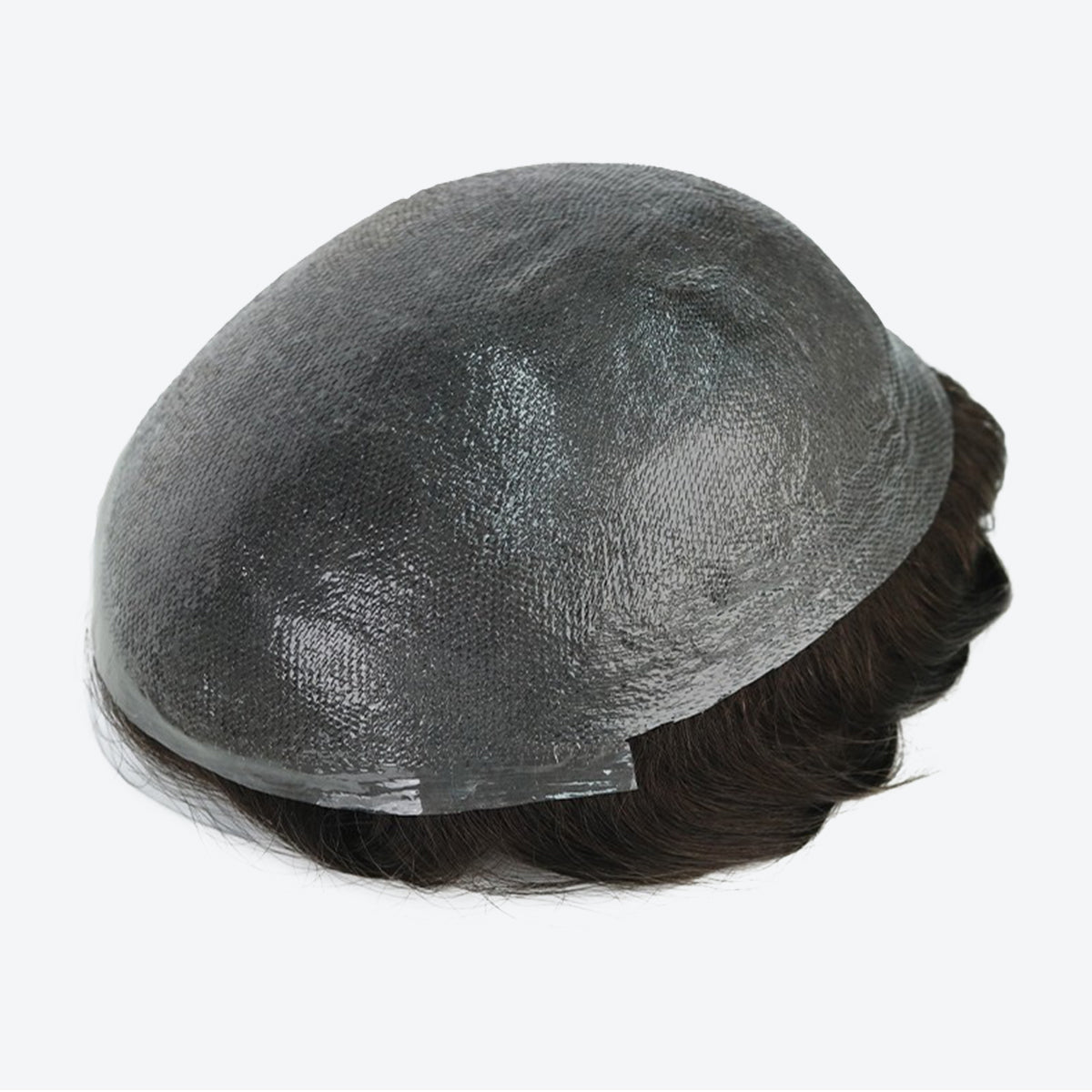
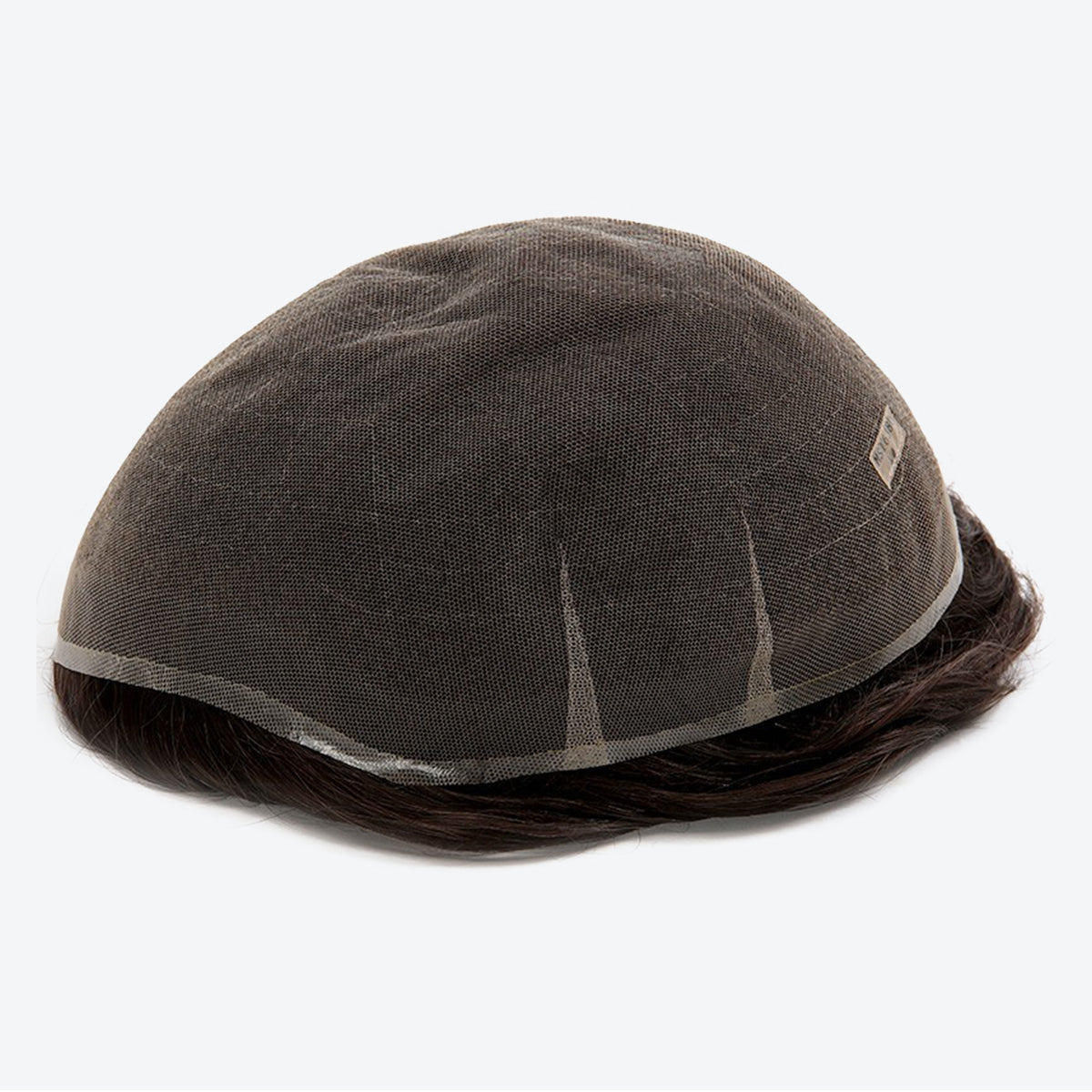
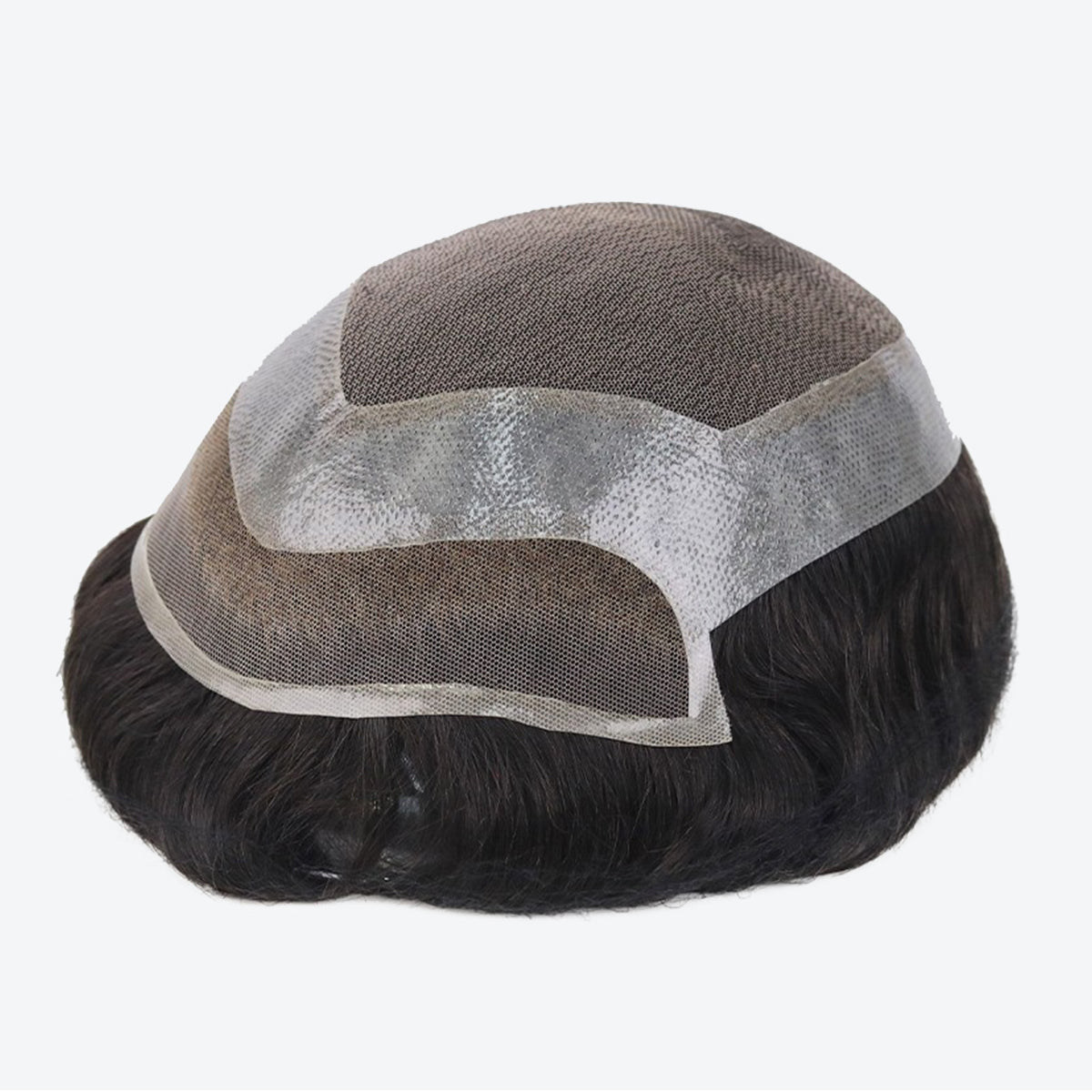

European Hair and Remy Hair are not opposite categories. European Hair is a stated source or material label, while Remy describes how strands are kept in a consistent root-to-tip direction according to the product specification. If the two terms have seemed interchangeable while you shop, that is normal. Many wearers encounter product titles that combine origin, processing, and quality language without explaining which claim each word makes.

Quick Answer
European Hair and Remy Hair answer different questions, so one is not automatically better than the other. European Hair is intended to describe a source or hair-material category. Remy is intended to describe root-to-tip alignment and cuticle handling, not geographic origin. A hair system can be European and Remy at the same time, but either label still needs verification. Compare processing history, color, wave, density, base, and the actual current hair. If you are not sure, start with the specification that solves your real mismatch rather than choosing the more premium-sounding term.
Quick Takeaways
- European Hair is a source or material-category label; Remy is an alignment and handling label.
- A product may be both European Hair and Remy hair.
- Neither label proves virgin status, no processing, one texture, or a fixed service life.
- The complete system still includes color, wave, density, base, ventilation, cut-in, styling, and care.
- Ask for current specifications and normal-light evidence before comparing value.
What Does European Hair Describe?
European Hair is used to identify a stated source or material category. In practice, sellers may also use it to communicate an expected texture range. Because terminology and verification can differ, the label should lead to a question: what does European Hair mean for this exact product and batch?
It does not automatically establish that the hair is Remy, virgin, unprocessed, lighter in color, finer in strand profile, or suitable for every wearer. Those details need their own specification or direct comparison.
For a fuller vocabulary guide, start with what European Hair means in a hair system.
What Does Remy Hair Describe?
Remy is used to describe human hair kept in a consistent root-to-tip direction, with cuticle alignment represented as part of the specification. It does not name a country or region. Indian, European, and other human hair may all be described as Remy when the seller can support that handling claim.
Remy also does not mean unprocessed. Hair can retain aligned direction and still be colored, toned, lightened, waved, or otherwise treated. That processing history can influence feel and styling response, so ask about it separately.
Can European Hair Also Be Remy Hair?
Yes. Think of the terms as two fields on the same specification rather than two boxes that compete:
| Product question | European Hair label answers | Remy label answers | Still needs verification |
|---|---|---|---|
| What source or material category is stated? | Yes | No | Seller definition and current batch |
| Were strands kept in one root-to-tip direction? | Not necessarily | Intended to answer this | How the specification was verified |
| Was the hair chemically processed? | No | No | Color, toning, lightening, wave, or texture work |
| How will it feel and move? | Not by itself | Not by itself | Actual hair, length, wave, density, products, and care |
| How will the full system perform? | Not by itself | Not by itself | Base, ventilation, fit, hairline, cut-in, routine, and handling |
This distinction removes a false choice. The useful question is not simply European or Remy? It is which complete, verified combination fits your hair and routine.
Which Criteria Should You Compare First?
Use this order so that a broad label does not distract from a larger mismatch:
- Fit and base: confirm the coverage area, contour, construction, and handling needs.
- Density and color: check how the system agrees with visible hair at the sides and back.
- Texture and wave: compare strand feel, separation, and movement under ordinary conditions.
- Processing history: ask what color or texture work occurred before sale.
- Remy specification: verify alignment as a separate field rather than treating it as a source.
- Care and repeatability: consider whether you can reproduce the result after normal washing and styling.
The trade-off is that a more specific hair specification can narrow available colors, products, or replacement choices. That may be worthwhile when it corrects a repeated texture or processing concern. It adds little when the real problem is fit, density, or cut-in.
Who May Prioritize Each Label?
You may want to investigate a European Hair specification when:
- the stated source or expected material category matters to your comparison;
- you are trying to match a particular texture or movement pattern;
- you can review the current processing information and actual hair;
- you are comparing it with a familiar option under the same conditions.
You may want to prioritize a Remy specification when:
- root-to-tip alignment is one of the handling details you want documented;
- you are comparing human hair from more than one source category;
- you want the seller to separate alignment from origin and processing;
- a wider product or color range matters, provided the complete unit still fits.
These paths can overlap. Choosing a European Hair system does not require ignoring Remy handling, and choosing Remy hair does not require a particular origin.
What Is the Safest Fallback if the Product Page Is Vague?
If you are not sure, compare the exact current unit rather than filling gaps with assumptions. Ask for:
- the stated hair source or material category;
- whether the hair is specified as Remy;
- the known processing and finished color;
- current wave, density, length, and base details;
- normal-light photos or a relevant sample from the current option;
- current care limits for heat or chemical services.
If those details remain unclear, keep your familiar option in the comparison. Take your time. There is no need to decide today because one label sounds more advanced. Your routine is your own, and a repeatable long-term match is more useful than a category name you cannot verify.
For a separate origin-category decision, read European Hair vs Indian Hair. That article does not replace this Remy terminology comparison.
FAQ
Is all European Hair Remy hair?
Do not assume so. European Hair and Remy describe different fields. Look for both specifications and ask how they apply to the current product.
Is Remy hair always unprocessed?
No. Remy describes root-to-tip direction according to the product specification. Hair can still be colored, toned, lightened, permed, or otherwise treated.
Is European Hair always softer than Remy hair?
That comparison is not reliable because European Hair can itself be Remy, and texture varies by individual hair, batch, processing, wave, color, and care. Compare the actual options.
Which label matters more for a natural-looking result?
Neither label works alone. Fit, hairline, density, color, texture match, wave, cut-in, styling, and care all contribute to the finished result.
What should I ask before ordering?
Ask for the source or material label, Remy status, processing history, current color and wave, density, length, base, care limits, and a normal-light reference from the current option.
Compare European Hair Options
Read the full current specifications rather than choosing from one label. Compare European Hair options at your own pace.


Comments
I just was asking the description the difference between Indian and European whether it’s feel how it lays how it moves this article completely confuse me to explain the differences between the two types