

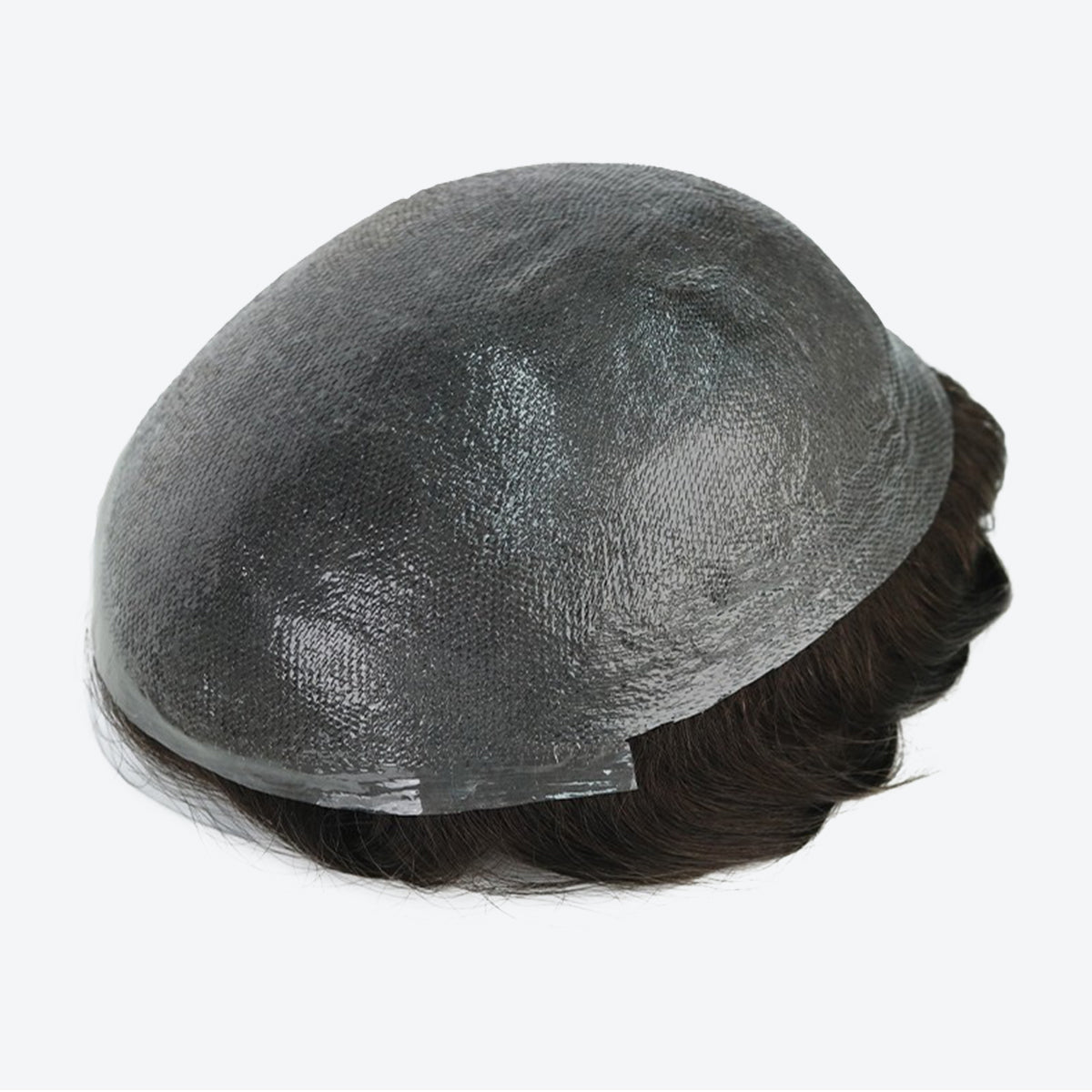
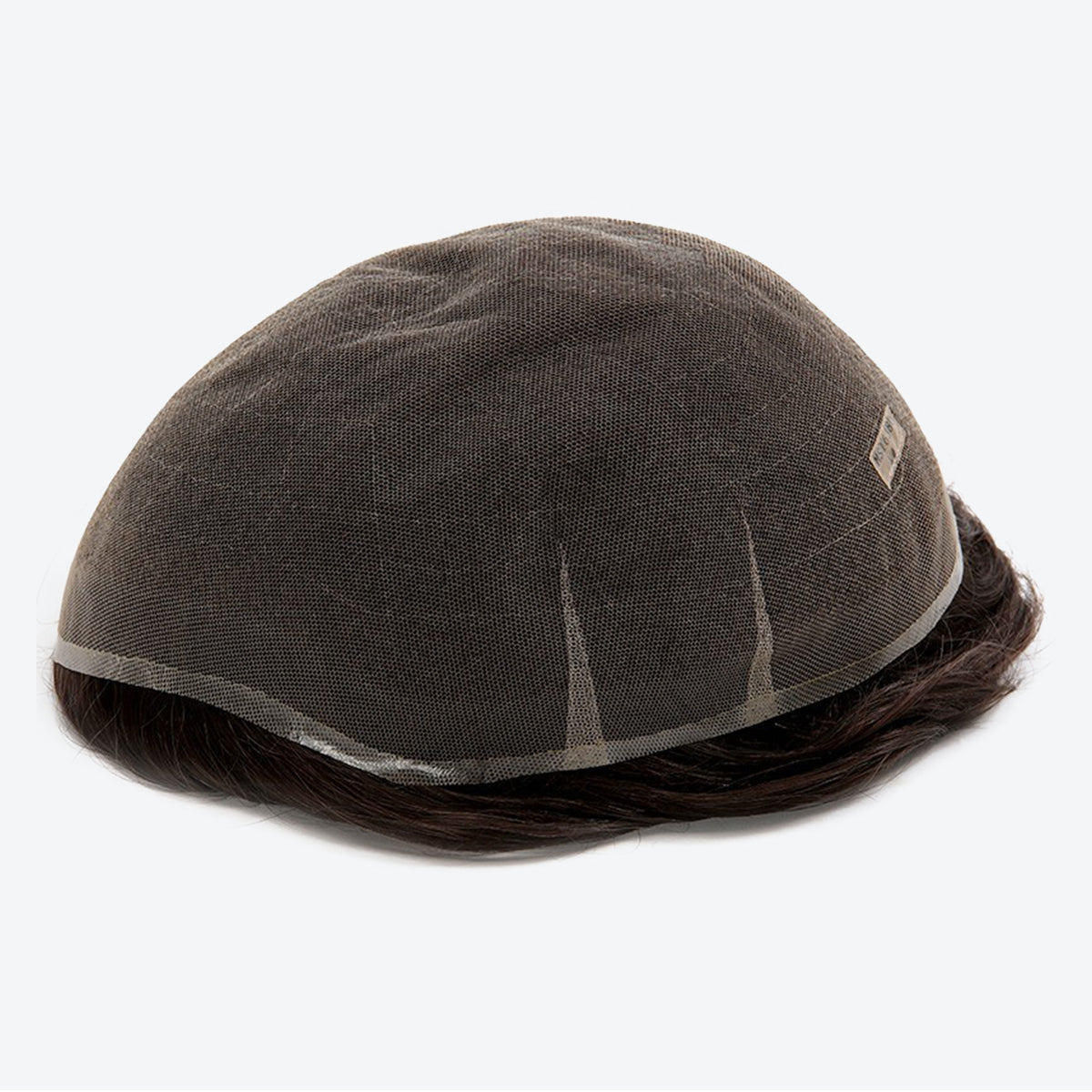
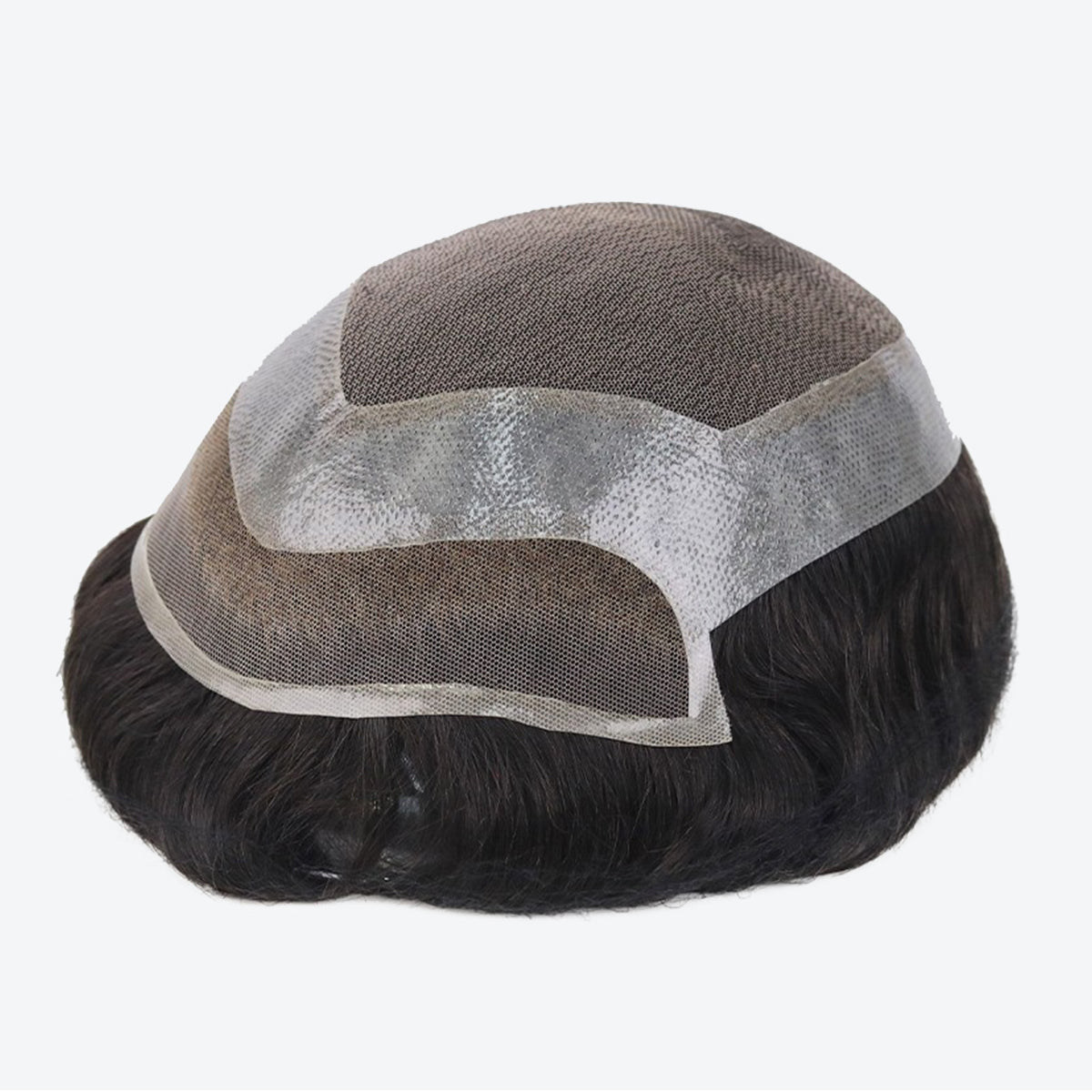

European Hair is a human-hair category used in some hair system specifications. It can help describe sourcing or a target texture, but the label alone does not tell you how the hair was collected, processed, colored, ventilated, or matched to a base. If the terminology feels inconsistent from one product page to another, that is normal. Many wearers find that the clearest comparison begins with the actual specification and sample, not with a quality ranking.

Quick Answer
In a hair system, European Hair is a material label that should be read together with processing history, color, wave, density, length, base construction, and care guidance. It is not automatically the same as Remy, virgin, or unprocessed hair, and it does not guarantee one universal texture or result. Some wearers explore it because they want a particular feel, movement, or match with their remaining hair. If you are not sure, start by comparing one current option with your own hair in neutral light and ask what processing the hair received before choosing.
Quick Takeaways
- European Hair describes one part of a hair system, not the complete construction.
- Origin, Remy alignment, and processing history answer different questions.
- Texture, movement, and color should be checked on the actual current option.
- Base fit, density, hairline placement, and cut-in still shape the finished look.
- A useful choice matches your hair and routine; it does not need to win a universal ranking.
What Does the European Hair Label Actually Mean?
At its most useful, the label tells you which hair-material category a seller has assigned to the product. That is a starting point, not a complete specification. Definitions and verification practices can vary across suppliers, so ask what the label means for the exact unit you are considering.
Four terms are often mixed together even though they describe different things:
| Label | What it is meant to describe | What it does not prove by itself |
|---|---|---|
| European Hair | A stated source or hair-material category | Remy alignment, no processing, one strand profile, or a fixed result |
| Remy hair | Hair kept in a consistent root-to-tip direction, according to the seller's specification | Geographic source, virgin status, color history, or overall construction quality |
| Virgin or unprocessed hair | A claim about whether chemical color or texture processing occurred before sale | European origin, Remy handling, or how the finished system will fit |
| Human hair | The fiber material rather than synthetic fiber | Source, cuticle condition, processing, texture, or expected service life |
This vocabulary is worth separating before you compare products. European Hair can also be described as Remy when both specifications are verified. Likewise, hair labeled European may have been toned or colored, while a different human-hair option may have aligned cuticles and careful processing.
Why Does Processing Matter as Much as the Label?
Processing can change color, surface feel, wave, and styling response. The effect depends on what was done, how it was done, and the starting hair. A simple processed or unprocessed badge rarely gives enough detail for a buying decision.
Ask practical questions instead:
- Has the hair been lightened, colored, toned, permed, or texture-treated?
- Is the displayed color the hair's current finished color or its original color?
- Does the seller describe cuticle alignment and how it was verified?
- Is the sample or product photo from the same current batch and color?
- Are there special care limits for heat, color work, or chemical services?
The trade-off is straightforward: processing can make a particular color or wave available, but it can also change how the hair feels and responds to later services. That is why the actual processing record matters more than a broad promise that one category is always softer or stronger.
What Differences Might a Wearer Actually Notice?
Wearers usually notice the finished combination rather than the origin label in isolation. The most useful observations are specific and repeatable:
- Texture: Does the strand feel in agreement with the hair at the sides and back?
- Movement: Does the hair separate, bend, and settle naturally during an ordinary head turn?
- Light reflection: Does the color and surface finish blend indoors and in daylight?
- Styling response: How much product, heat, or repeated handling does the usual style require?
- Touch: Does the hair feel comfortable and familiar after normal washing and styling?
Compare under the same conditions when possible. Different lighting, product load, wave, density, or cut-in can make two units look unlike each other even when the hair label is the same.
What Does Hair Type Not Decide?
Hair material cannot correct a base that does not fit, a hairline placed in the wrong position, density that conflicts with visible side hair, an inaccurate color match, or an uneven cut-in. It also does not decide comfort or service life on its own.
This is an important scope boundary. Do not use this page to choose a complete hair system by material alone. The base, ventilation method, density, wave, length, color, attachment routine, care, and styling all work together.
In our experience, the expensive mistake is often changing the hair category before identifying the real mismatch. A more specific material choice can narrow colors or increase care expectations. That trade-off may be worthwhile when it solves a repeated texture or movement issue, but not when fit or density is the actual problem.
Who May Want to Explore European Hair?
European Hair may be worth comparing when:
- texture or movement is a repeated mismatch with your current system;
- matching fine or differently behaving side and back hair is a high priority;
- you can inspect a current sample, verified product, or normal-light reference;
- you are willing to compare processing, color, wave, density, and base together.
A familiar human-hair option may make more sense when:
- it already blends, styles, and feels the way you want;
- broad color availability or repeatable replacement matters more than a different hair feel;
- the largest mismatch is fit, density, hairline, or cut-in;
- the seller cannot explain what the European Hair label means for the current unit.
Your choice is private and personal. You do not need to justify whether touch, movement, budget, or a familiar routine matters most. Take your time. There is no need to decide from a category name alone.
What Should You Verify Before Buying?
Use this short checklist:
- Confirm the exact hair label and what the seller means by it.
- Ask about Remy alignment and processing separately.
- Compare the current color, wave, density, length, and base.
- Look at the hair in neutral indoor light and daylight.
- Compare movement, not only a still product image.
- Check current care guidance before planning heat or chemical services.
- Keep a familiar option in the comparison so you can judge the real trade-off.
First-time comparisons improve when you change one factor at a time. Over the long term, a clear specification record also makes reordering and troubleshooting easier.
For a focused source-category comparison, read European Hair vs Indian Hair. To separate origin from handling terminology, see European Hair vs Remy Hair.
FAQ
Is European Hair always unprocessed?
No. European Hair and unprocessed describe different parts of a specification. Ask whether the current hair was colored, toned, lightened, permed, or otherwise treated.
Is European Hair the same as Remy hair?
No. European Hair is a source or material-category label, while Remy describes root-to-tip alignment according to the seller's specification. A product may be both, one, or neither.
Does European Hair automatically look more natural?
No. Texture can matter, but a natural-looking result also depends on base fit, hairline, density, color, wave, cut-in, styling, and care.
Is European Hair a type of hair system base?
No. It describes the hair material. Lace, skin, mono, silk-style, and hybrid constructions describe the base. The two decisions should be compared separately and then checked together.
What is the safest starting point if I cannot inspect a sample?
Ask for the complete current specification and normal-light photos from the same product and color. If key processing or product details remain unclear, keep your familiar option in the comparison and wait before changing.
Explore European Hair Systems
Compare the current hair specification, color, wave, density, and base at your own pace. Explore European Hair Systems.


