

What Is a Toupee? A Clear Guide to Coverage, Fit, and Natural Results
Learn what a toupee is, what it covers, how it differs from a wig or hair system, and when a stock or custom fit may make more sense.

Quick Answer
Quick Takeaways
What does the word "toupee" mean today?
Traditionally, a toupee means a small or partial hairpiece worn to cover an area of hair loss. Today, many people use the term for a modern men's hair system that covers part of the top of the scalp and blends with hair at the sides and back.
The word can carry an old-fashioned image, but the product category has changed. Modern units use a range of fine, lightweight, and reinforced base constructions. The useful question is not whether one label sounds newer. It is whether the coverage, base, hair, density, color, and fit work together for the person wearing it.
What areas can a toupee cover?
A toupee most often covers a defined area while leaving some existing hair available for blending. The right scope depends on where coverage is needed.
| Coverage need | Typical category | Important boundary |
|---|---|---|
| Front hairline or temples | Frontal or small partial hairpiece | Covers a focused area rather than the whole top |
| Crown | Crown piece or partial hairpiece | Needs enough surrounding hair for a balanced blend |
| Top of the scalp | Full-size partial toupee or hair system | Usually blends into hair at the sides and back |
| Several connected areas across the top | Larger partial system | Accurate measurements and cut-in become more important |
| Whole scalp | Full-cap wig or full-coverage system | Usually outside the main use of a partial toupee |

A partial unit may not be the right category when full-scalp coverage is needed or when there is not enough surrounding hair for the intended blend. That is a scope decision, not a judgment about appearance.
Is a toupee the same as a hair system, wig, or hairpiece?
The terms overlap, but coverage and context make them easier to separate.
| Term | What it usually means | What to check |
|---|---|---|
| Toupee | A partial hairpiece, commonly for the top, crown, or front | Coverage size and how it blends with existing hair |
| Hair system | A broader modern term for an engineered hair replacement unit | Base, hair, density, fit, attachment, and routine |
| Hairpiece | An umbrella term that can include patches, toppers, toupees, and other partial units | The exact area and purpose |
| Wig or full-cap system | A unit that usually covers most or all of the scalp | Full coverage, cap fit, and overall style |
These words are sometimes used differently by stores, salons, and wearers. Before comparing products, check the actual base dimensions and coverage description. The label alone cannot tell you whether a unit fits your needs.
What does a modern toupee look like?
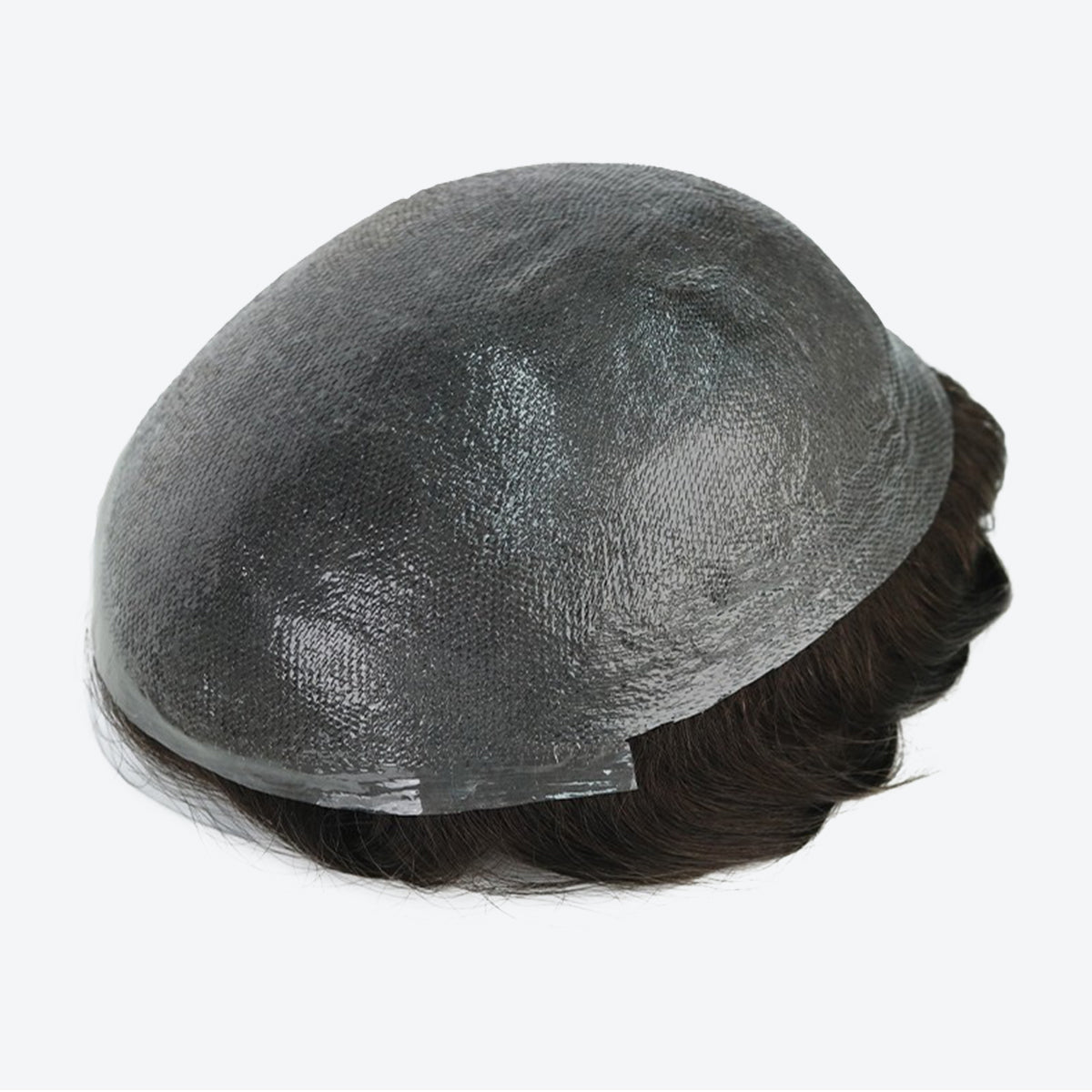
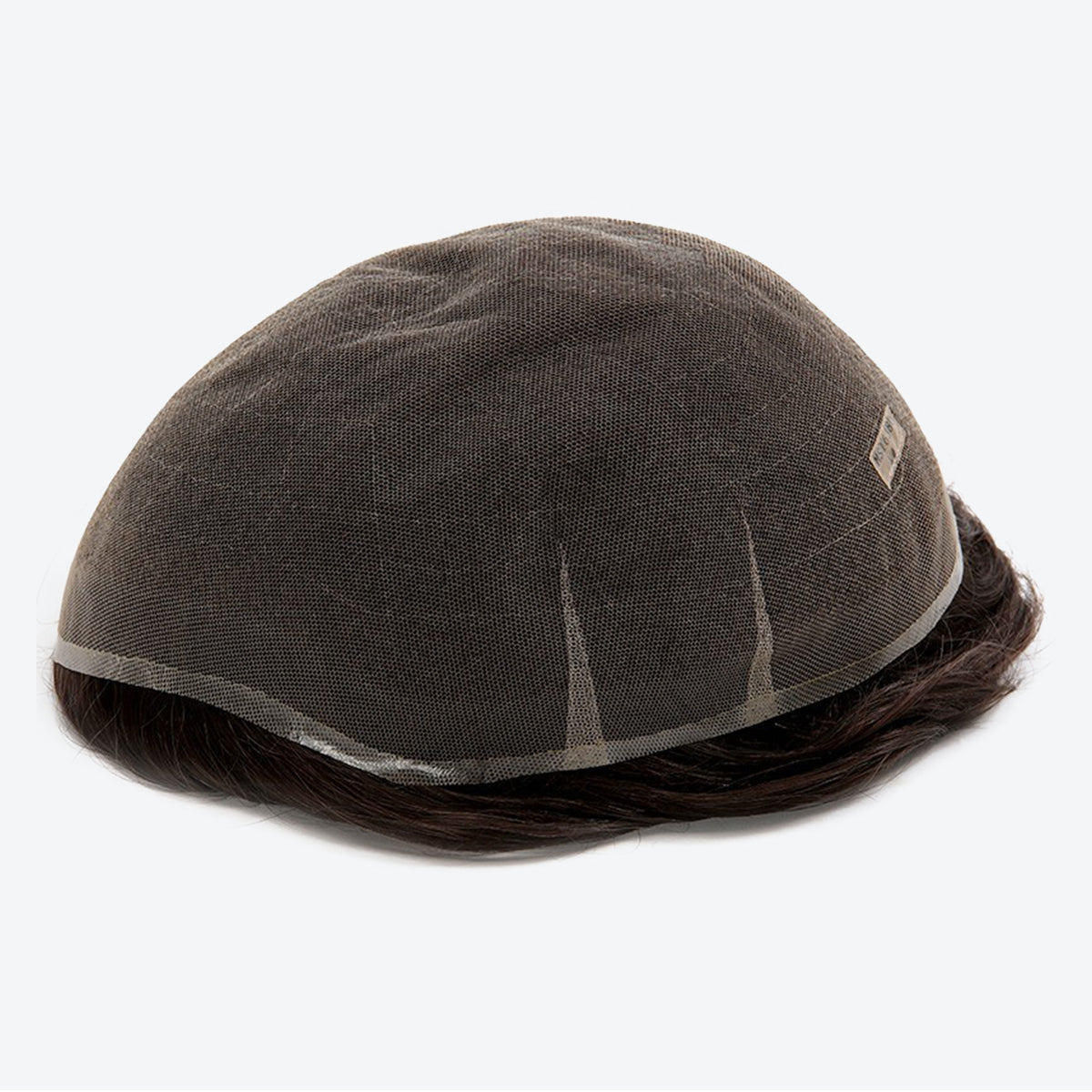
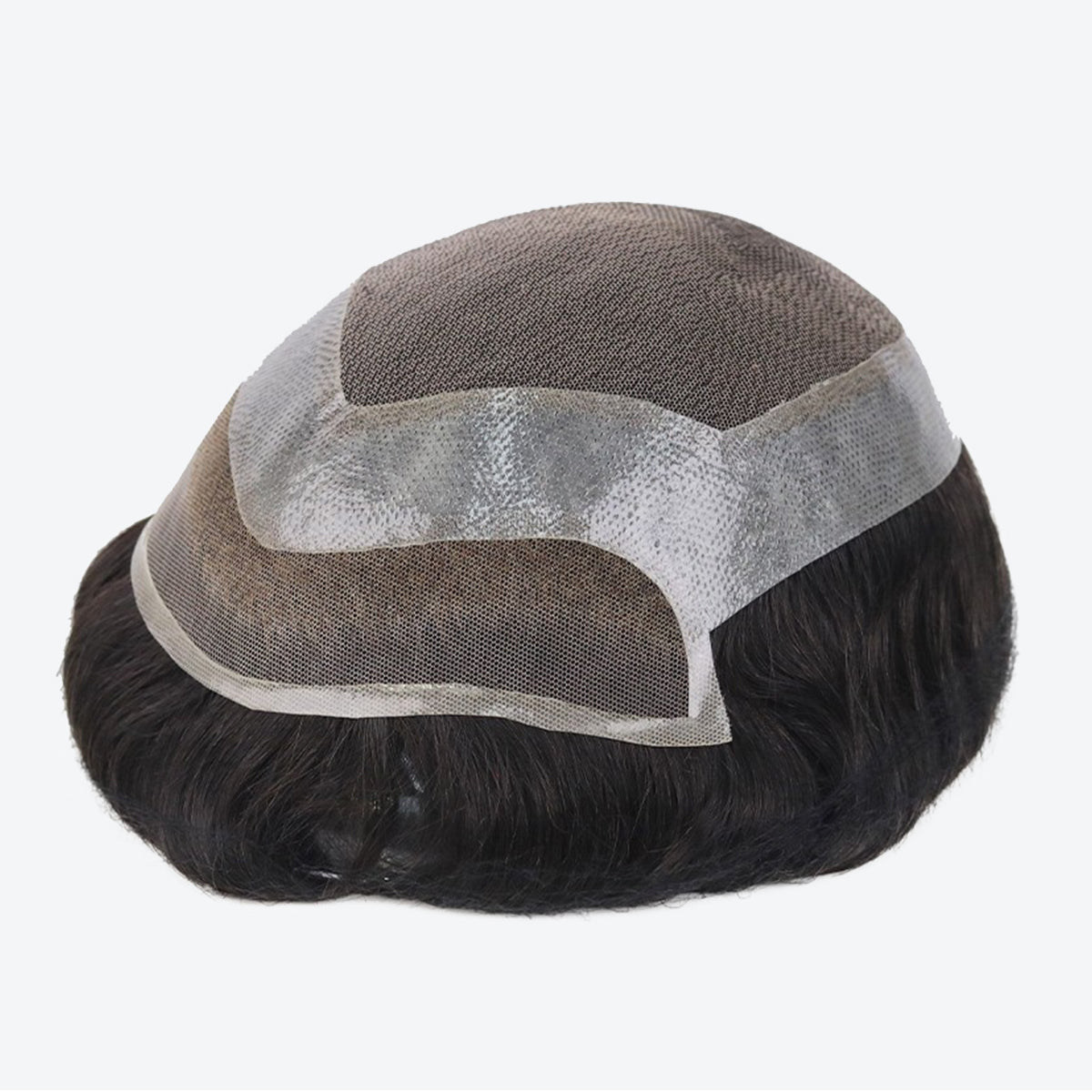
A modern toupee looks like a section of hair attached to a flexible base. Before it is fitted, the base shape and hair density are visible. After a proper cut-in and blend, the goal is for the hairline, color, density, texture, and side hair to read as one coherent style.

The honest standard is a natural-looking result, not a promise that every unit will be invisible in every setting. Bright light, a poor color match, too much density, an unsuitable hairline, or an uneven cut-in can make any system more noticeable.
What makes a toupee look natural?
Six factors work together:
- Coverage and base size. The base should cover the intended area without extending farther than needed.
- Hair density. The unit should make sense beside the wearer's existing side and back hair.
- Color and texture. A close match reduces the visual break between the unit and growing hair.
- Hairline design. The front shape, placement, and density should suit the face and hairstyle.
- Cut-in and blending. The system hair needs to be cut into the surrounding hair, not treated as a separate haircut.
- A manageable routine. A setup that can be cleaned, repositioned, and maintained consistently is more dependable over time.
Every factor involves a trade-off. A very fine base may prioritize a lighter visual result but require more careful handling. A sturdier construction may feel easier to handle but look or feel different at the edge. A higher density adds coverage, but it may be harder to blend with finer existing hair.
When you are ready to see how these choices appear in current products, compare men's toupee options. Use the collection to inspect real base types and specifications; use this article to keep the terminology clear.
How does a toupee stay in place?
A toupee is secured using a method compatible with the exact unit and the wearer's routine. Follow the instructions supplied for that product rather than assuming that one method works with every construction.
This definition article does not choose a securement method for you. Scalp sensitivity, activity, climate, removal comfort, and maintenance frequency can change that decision. If you are new to hair systems and want help understanding your options, book a 15-minute one-on-one video consultation with a LaVivid hair system expert. For irritation, broken skin, or other health concerns, consult a qualified healthcare professional before extended wear.
Who may find a toupee useful?
A partial system may fit when:
- coverage is needed mainly at the front, crown, or top;
- there is surrounding hair that can be blended into the unit;
- a non-surgical, removable option is preferred;
- control over style, density, color, or hairline matters;
- the wearer is comfortable with an ongoing care and replacement routine.
A different route may be clearer when:
- full-scalp coverage is needed;
- the intended coverage cannot blend with the existing hair pattern;
- the maintenance routine does not fit the wearer's time or comfort level;
- scalp health or skin reactions need professional assessment first.
There is no need to make the category fit when the coverage does not. Choosing the correct scope at the beginning usually prevents more adjustment and replacement later.
Should a first-time wearer choose stock or custom?
Stock and custom systems solve different problems.
| Route | Main advantage | Trade-off | May fit when |
|---|---|---|---|
| Stock | Clearer specifications and a simpler comparison path | Fewer choices outside standard sizes, colors, and designs | Common measurements and available specifications are a close match |
| Custom | More control over size, shape, color, density, hair direction, and construction | More decisions, production time, and specification work | Standard options do not solve a real fit or matching requirement |
If you are not sure, start with coverage measurements and the closest suitable stock specifications. Move to custom only when you can name the mismatch you need custom work to solve, such as a size, shape, color, density, or hair-direction requirement that falls outside standard options.
Can wearing a toupee change how you feel?
It can, but no hairpiece can guarantee happiness or confidence. Some wearers value the control of choosing their hairstyle again. Others need time to become comfortable with the look, the feel, or the care routine. Both reactions are normal.
This is a personal decision, and no one else needs to approve how privately you compare or prepare your options. A useful first goal is not to become a different person. It is to find out whether the coverage, appearance, and routine make daily life feel more manageable on your terms.
What should a first-time wearer do next?
Use a short sequence:
- Identify whether you need front, crown, top, or full-scalp coverage.
- Measure the coverage area before comparing base sizes.
- Note your existing hair color, density, texture, and preferred style.
- Decide which trade-off matters most: realism, breathability, handling, or durability.
- Compare stock specifications first, then use custom only for a specific mismatch.
- Plan who will cut in and blend the first unit before it arrives.
Take your time. Your first comparison only needs to identify a sensible starting path; it does not need to settle every future choice.
FAQ
What does toupee mean?
A toupee is a partial hairpiece designed to cover a defined area of hair loss, commonly the front, crown, or top of the scalp. It usually blends with existing hair at the sides and back.
Is a toupee the same as a wig?
Not usually. A toupee generally provides partial coverage, while a wig commonly covers most or all of the scalp. Product names vary, so check the actual coverage dimensions rather than relying on the label alone.
Can a toupee look natural?
It can look natural when the coverage, base, density, color, texture, hairline, placement, and cut-in work together. No single feature can correct a poor overall match.
How does a toupee stay on?
A toupee should use a securement method compatible with the exact unit. Follow its product directions, and seek qualified guidance if you have scalp concerns or are unsure which instructions apply.
Is stock or custom better for a beginner?
Stock is often a clearer first comparison when standard measurements and available specifications are a close match. Custom may make more sense when a specific size, shape, color, density, hair direction, or construction cannot be matched by stock options.
Compare toupee options when you are ready
You now know what a toupee is, what it covers, and which fit questions matter. There is no pressure to choose today.

