


Finding the right toupee can feel overwhelming, especially when your goal is a seamless, natural look. A realistic toupee should not look like a separate hairpiece. It should blend with your scalp, match your natural hair, follow your original hairline, and move like real hair.
In this guide, we’ll walk you through how to choose a natural-looking toupee for men, including base materials, hair density, color matching, attachment methods, measurements, styling, and daily care tips.
Key Takeaways
- Natural-looking toupees avoid straight hairlines, thick bases, and mismatched colors.
- Choose the right base material, hair density, and color to match your scalp and natural hair.
- Select an attachment method that balances hold, comfort, and skin sensitivity.
- Accurate head measurements and trial fittings are essential for a seamless fit.
- Professional styling and hairline customization enhance realism and natural flow.
- Decide between synthetic or human hair based on budget, appearance, and maintenance.
- Rotate toupees, carry backup adhesives, and maintain scalp health to prolong wear and preserve a natural look.
Why Some Toupees Look Unnatural
Many commercial hairpieces miss the mark: hairlines look too straight, bases appear thick or opaque, and the overall effect reads “wig.” These telltale signs can undermine your confidence rather than restore it. By knowing the common pitfalls, uniform hair density, bulky base materials, and generic color blends, you’ll be better equipped to spot a truly realistic system.
Factors To Consider When Choosing A Toupee
Base Material And Construction
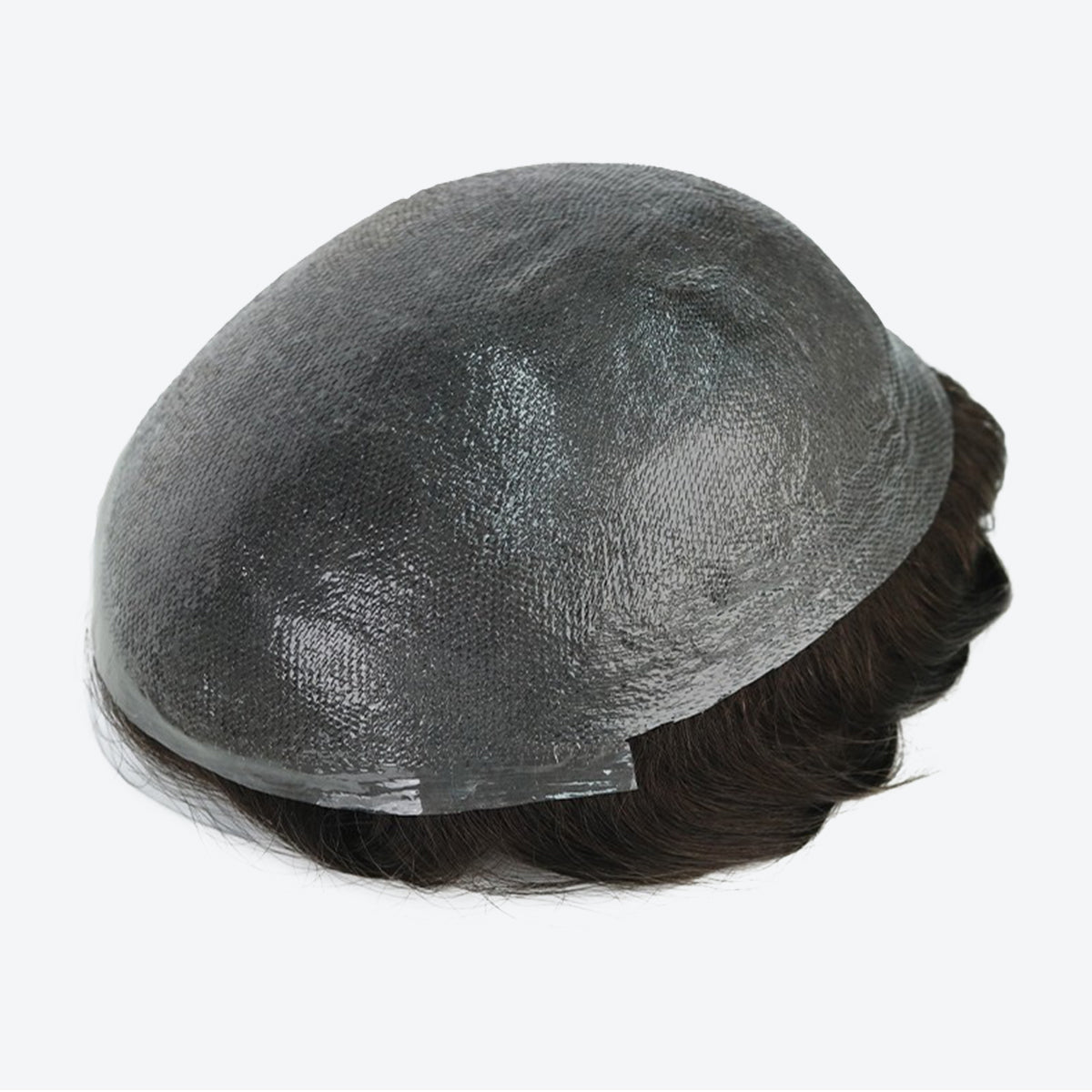
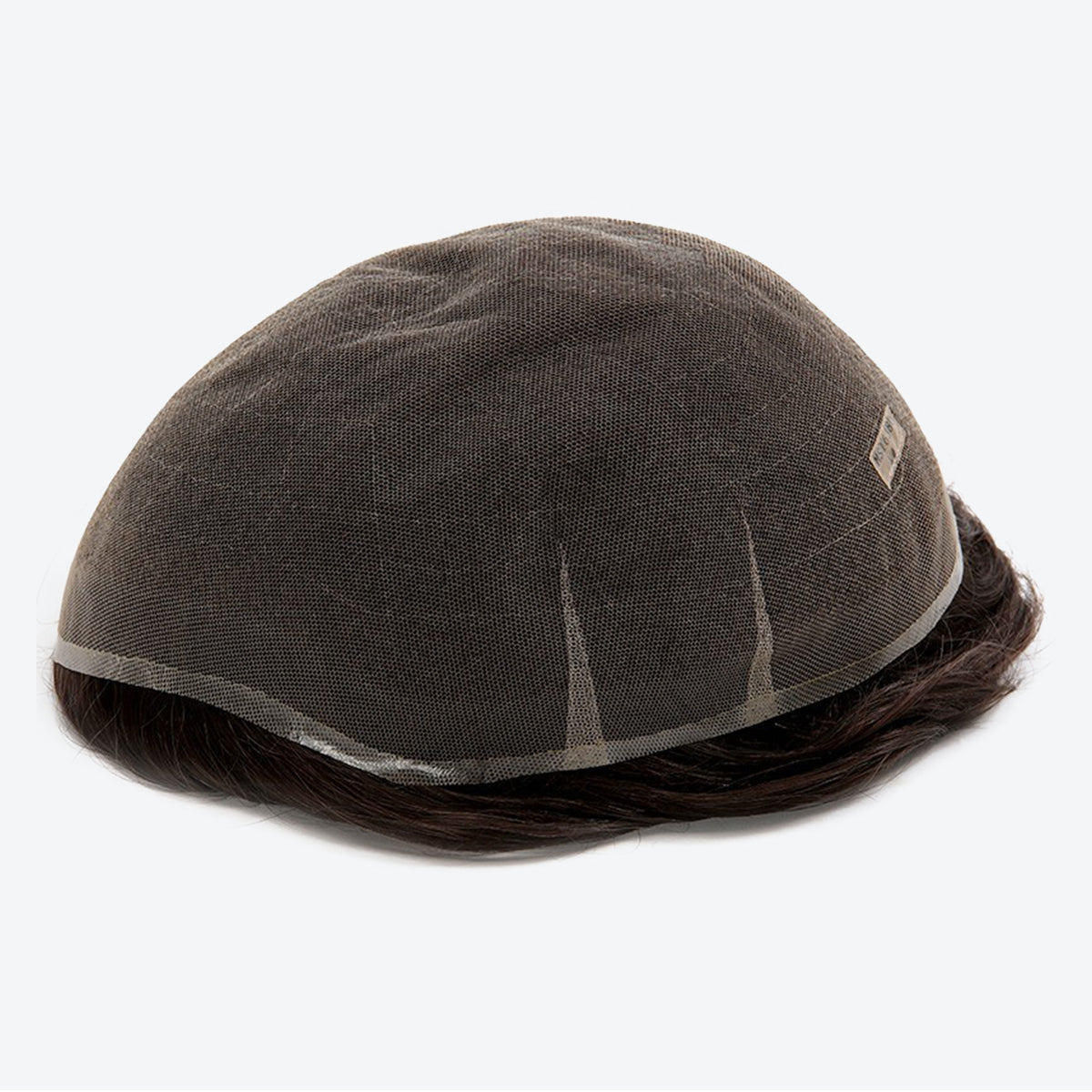
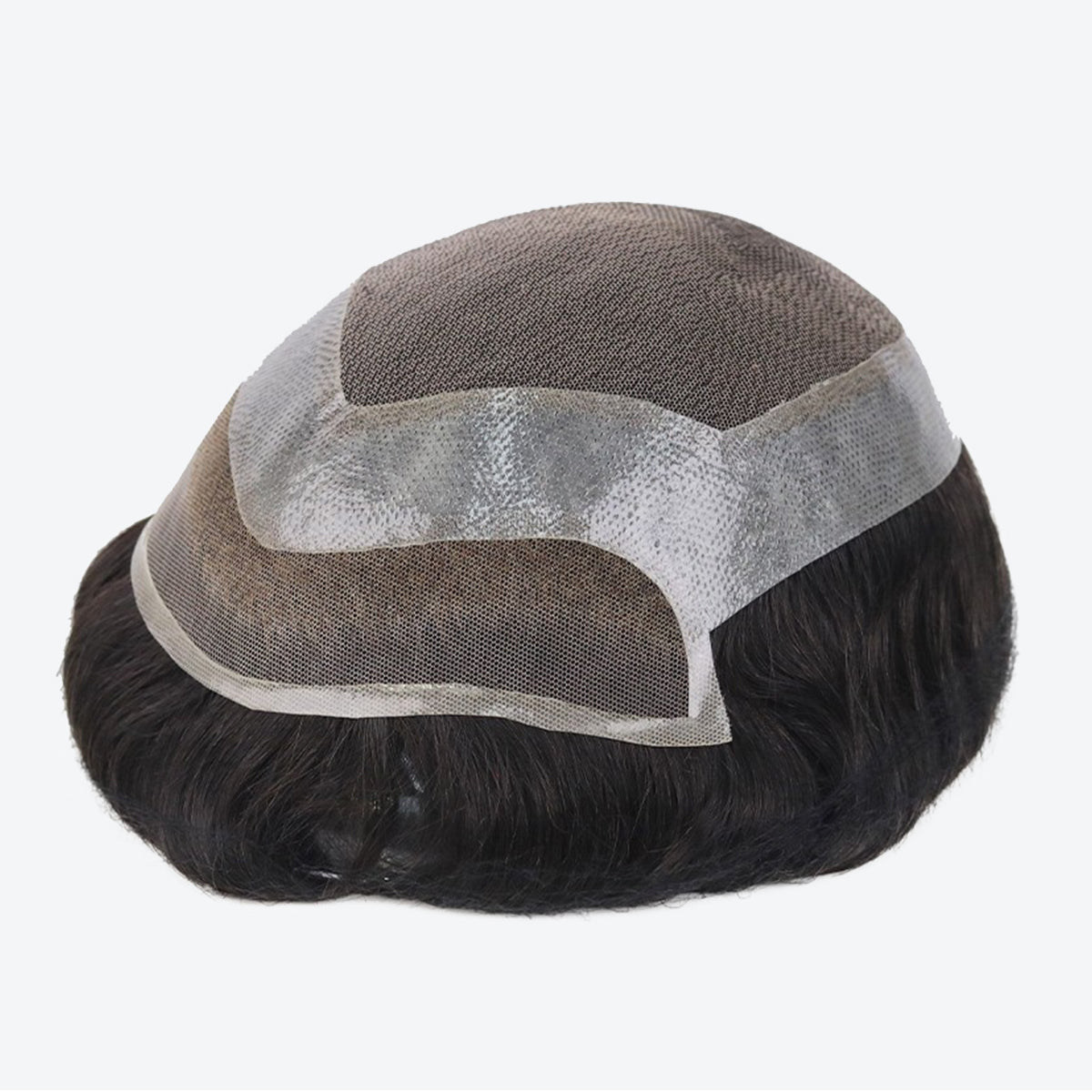
The base is your foundation. Swiss-lace and monofilament bases offer a delicate, translucent look, while ultra-thin polyurethane (“thin-skin”) provides a smooth, scalp-like finish. Hand-tied constructions allow each hair to move naturally, avoiding the stiffness of machine wefts.
Color Matching And Hair Density
A perfect match means blending, not contrasting. Select a shade that mirrors your scalp tone and natural hair, and test swatches under daylight. Choose a strand density that matches your age, existing hair volume, and styling preferences. Lighter density often looks more natural for men with thinner side hair or a mature hairline, while medium density may suit users with naturally fuller hair.
Attachment Methods And Security
Your choice here impacts both hold and skin comfort. Medical-grade tapes come off cleanly but may need regular replacement, while liquid adhesives offer extra water resistance. If you have sensitive skin, try micro-clip integrations or silicone-based glues designed to minimize irritation.
Comfort And Breathability
All-day wear demands a lightweight, well-ventilated base. Lace systems excel at airflow, reducing heat buildup and sweat. Thin-skin bases sit snugly against the scalp without bulk; just be sure to measure your head precisely for an itch-free fit.
Maintenance Requirements
Even the best toupee needs care. Lace bases often require gentle hand-washing with sulfate-free cleansers, while thin-skin systems can be wiped down. Plan for a professional deep-clean every 4–6 weeks to remove residue and keep fibers looking fresh.
For a deeper look at cleaning routines and long-term care, read our How to Wear a Hair System: A Complete Guide to Non-Surgical Hair Replacement for Men.
If you are completely new to hair systems, check out our Beginner’s Guide to Hair Systems: Everything You Need to Know to learn the basics before choosing your first toupee.
Step-By-Step Guide To Selecting Your Toupee
Measure Your Head Precisely
- Gather tools: You’ll need a flexible measuring tape (like the kind used in sewing) and a small mirror.
- Key dimensions: Measure front-to-back (from your hairline at the center of your forehead to the natural crown point) and ear-to-ear (from one temple, over the top of your head, to the opposite temple). Note both measurements in inches or centimeters.
- Additional checks: If you want coverage on the sides, measure from the temple down behind your ear to the base of your skull. Record each measurement twice to avoid errors.
- Why it matters: Even a half-inch discrepancy can cause lifting at the hairline or puckering at the crown, so accuracy here is key to a snug, undetectable fit.
Request Base Swatches and Hair-Color Chips
- Choose a vendor with clear swatch-request policies: Many suppliers offer small lace or thin-skin samples and color rings free or for a nominal fee.
- Test under natural light: Hold base swatches against your scalp in daylight to confirm translucency matches your skin tone. Use the color chip ring to compare hair shade with your remaining natural hair or eyebrows.
- Consider undertones: Scalp tones vary, cool (pinkish), neutral, or warm (yellowish). Swatches help you avoid an “off” hue that reads too ashy or too golden.
- Sample a range: If you fall between shades, request two adjacent chips and compare them side by side; the subtleties make a huge difference once the toupee is installed.
Arrange a Trial Fitting
- At home or with a stylist: You can pin a sample piece onto a wig stand first, but nothing beats a live trial on your head. If possible, visit a stylist experienced in hair systems.
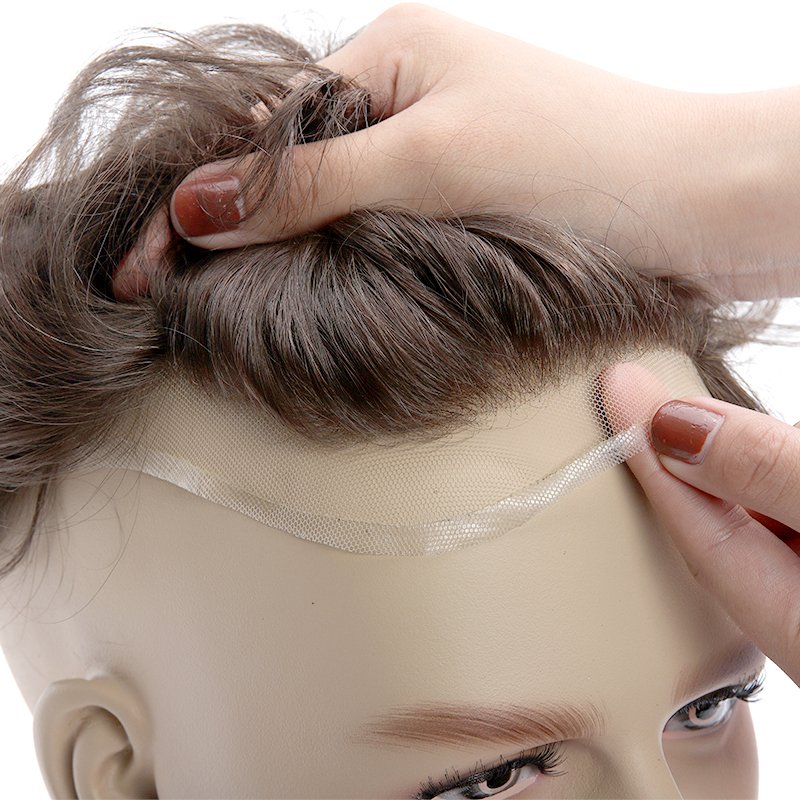
- Check hairline shape: Look straight on in the mirror and from various angles, your hairline should mimic natural irregularity (tiny peaks and valleys) rather than a perfect straight edge.
- Assess comfort: Wear the sample for at least 30 minutes. Walk around, nod, and even lightly perspire to test breathability and hold. Note any itching or pressure spots.
- Adjust placement: A good stylist can shift the piece slightly forward or back to align the part and crown exactly where your own hair grows, ensuring the most seamless flow.
Finalize Your Order With Clear Instructions
- Provide exact head measurements: Include all dimensions you recorded, plus any notes on ear-to-crown length if you need side coverage.
- Detail your desired specifications: Specify base type (Swiss-lace, monofilament, thin-skin), hair density preference (light, medium, heavy), and any special requests for hair direction (e.g., side-swept, straight back).
- Attach style references: If you have photos of your previous hairstyle or inspiration looks, send them along. Visuals help your maker replicate your natural growth patterns.
- Confirm delivery timeline and fitting policy: Ask about lead times, return or tweak options, and any post-delivery fitting services. A responsible vendor will offer minor adjustments free or at low cost to ensure your complete satisfaction.
By investing the time in these steps, precise measuring, careful shade testing, realistic trial fitting, and crystal-clear order instructions, you’ll dramatically increase the odds that your toupee looks, feels, and behaves just like hair growing from your own scalp.
Styling, Customization And Budget Considerations
Professional Styling And Hairline Customization
- Thin out bulk, refine texture
- Create an irregular perimeter
- Blend sideburns, temples, and crown
- Use lightweight styling products
Choosing Between Synthetic And Human Hair
| Feature | Synthetic Fibers | Human Hair |
|---|---|---|
| Cost | Cost-effective | Higher investment |
| Appearance | Slightly less realistic movement and may shine | Ultra-natural look and feel |
| Styling | Ready-to-wear and pre-styled | Offers heat-styling versatility |
| Maintenance | Lower daily maintenance | Requires regular care |
| Longevity | Varies by product quality and care | Varies by base type, hair quality, care routine, and wearing frequency |
| Best For | Beginners or budget-conscious users | Users who want the most natural appearance and styling flexibility |
Smart Budgeting Tips
Match Your Budget To Your Goal: If your main goal is affordability and easy maintenance, a high-grade synthetic toupee can be a practical starting point.
Prioritize Human Hair For Maximum Realism: If you want the most natural movement, texture, and styling flexibility, a human hair toupee with a lace or thin-skin base is usually the better choice.
Plan For Maintenance Costs: Budget not only for the toupee itself, but also for tapes, adhesives, cleaning products, scalp care, and professional cut-in services.
Consider Financing or Payment Plans: Many vendors offer staggered payments on custom human-hair units.
Rotate Between Systems: Owning two toupees can extend each unit’s lifespan and help you maintain a consistent, natural look.
By balancing realism, comfort, maintenance, and budget, you can choose a toupee that fits both your lifestyle and your expectations.
LaVividHair For Your Custom Hair System
Once you know your ideal base, density, color, and attachment method, the next step is choosing a supplier that can customize these details for your needs.
If you’re ready to find a hair system that truly fits you, LaVividHair offers custom solutions for full toupees,hair patches, targeted accessories. Our one-on-one customer service helps you customize every detail, from scalp tone and hair density to base type and daily lifestyle needs.
- Wide Range of Bases: Skin, Swiss lace, silk, monofilament, and hybrid options for every budget and comfort need.
- Real Human Hair & High-Grade Synthetics: From ultra-thin skin bases to breathable lace constructions, all designed for authenticity and durability.
- Global Delivery & Pro Services: Fast worldwide shipping, plus optional pre-styling, template pick-up, and professional cut-in services to ensure a flawless fit.
Whether you’re an active athlete, a busy professional, or simply seeking a confidence boost, our hair systems are tailored to men of all ages and lifestyles. Feel free to reach out for a free consultation; our team is here to craft “just-for-you” hairpieces that look and feel like they’re growing straight from your scalp.
Conclusion
Choosing a toupee is really about feeling like yourself again. When the base, color, density, and fit are right, your hairpiece should simply look and feel like your own hair.
Take good care of it, keep your scalp healthy, and carry extra tape or adhesive when you travel. With the right system and a little regular maintenance, your toupee can stay natural-looking, comfortable, and confidence-boosting every day.
FAQ
How do I choose a toupee for men that looks natural?
Choose a lightweight base, realistic hair density, close color match, and an irregular hairline that blends smoothly with your natural hair.
What is the best toupee base for daily wear?
Lace bases are breathable and lightweight for daily wear, while thin-skin bases offer a closer scalp-like appearance and easier cleaning.
How can I make my toupee hairline look real?
Avoid a perfectly straight hairline, choose a natural-looking front edge, and have a stylist customize small irregularities for a more realistic appearance.
Do I need a professional stylist for my toupee?
Yes, a professional cut-in can make a major difference by blending the hairline, temples, sideburns, and crown with your natural hair.
How long does a toupee last?
It depends on the base, hair quality, and how well you maintain it. With proper care, a hair replacement toupee can stay natural-looking and last much longer.
Should I choose synthetic or human hair for a natural-looking hair replacement?
Human hair usually looks and feels the most natural. Synthetic hair is easier to maintain and more budget-friendly, making it a good option for beginners.
How much does a natural-looking hair replacement for men cost?
The cost depends on the base, hair type, customization, and styling services. Human hair and custom systems usually cost more, while synthetic options are more budget-friendly.
Can I wear a toupee while exercising or sweating?
Yes, you can. Choose a secure attachment method, such as strong tape or liquid adhesive, and keep your scalp clean to help the toupee stay comfortable and natural-looking.


