


When men begin their image restoration journey, the instinct is often to overcompensate. The assumption is that purchasing a hair system with maximum density will provide the most youthful appearance. In reality, choosing a density that is too high is the most common pitfall in the industry, leading to an artificial, unnatural silhouette.
Finding the right density is not about vanity; it is an exercise in optical physics and structural engineering. To achieve a seamless, undetectable image, the system must mimic the natural behavior of biological hair. This means allowing light to penetrate the hair and interact with the scalp.
The Physics of Natural Density
A natural head of hair acts as a filter, not a solid wall. Under direct lighting, a biological scalp is subtly visible through the hair strands. If a hair unit is too dense, it blocks this light refraction entirely, creating a matte, helmet-like appearance.
For the pragmatic professional seeking absolute invisibility, managing this light transmission is critical.
Light vs. Medium vs. Heavy: A Technical Breakdown
Understanding industry density metrics is essential for setting correct expectations and managing your image effectively.
-
Light to Medium-Light (80% - 90%): The LaVivid Low-Density Series
-
The Engineering: This is our flagship specification for absolute realism. The knotting is distributed evenly, exposing the scalp naturally under any lighting condition. It places minimal mechanical stress on ultra-thin base materials.
-
The Lifestyle Fit: Engineered specifically for men aged 35 and older. It perfectly matches the natural biological progression of a mature male, making it the most undetectable option for professional environments.
-
The Reality Check: Because there is less hair, exposing a graduated hairline is mandatory to maintain the illusion of natural growth.
-
-
Medium (100%): The Industry Standard
-
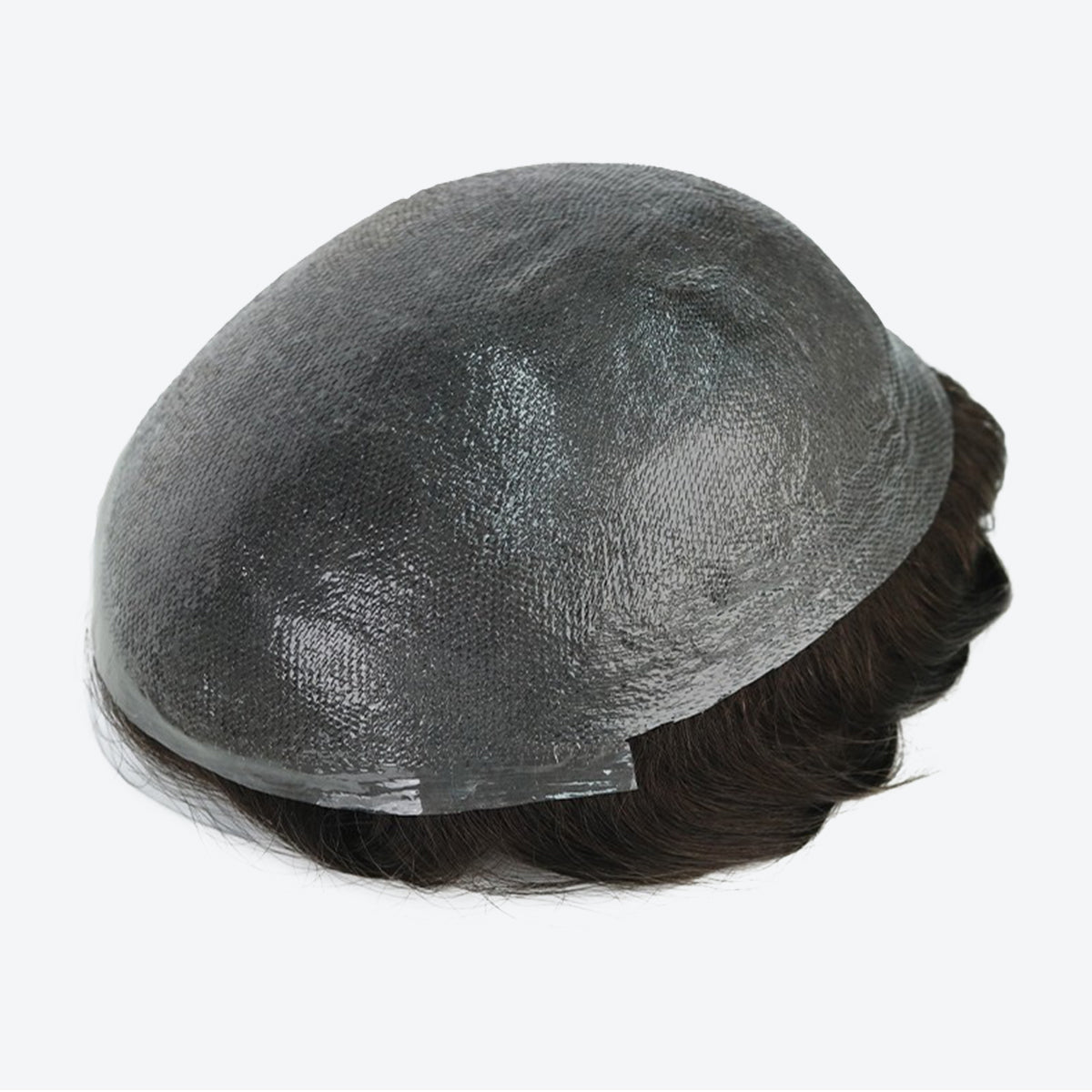
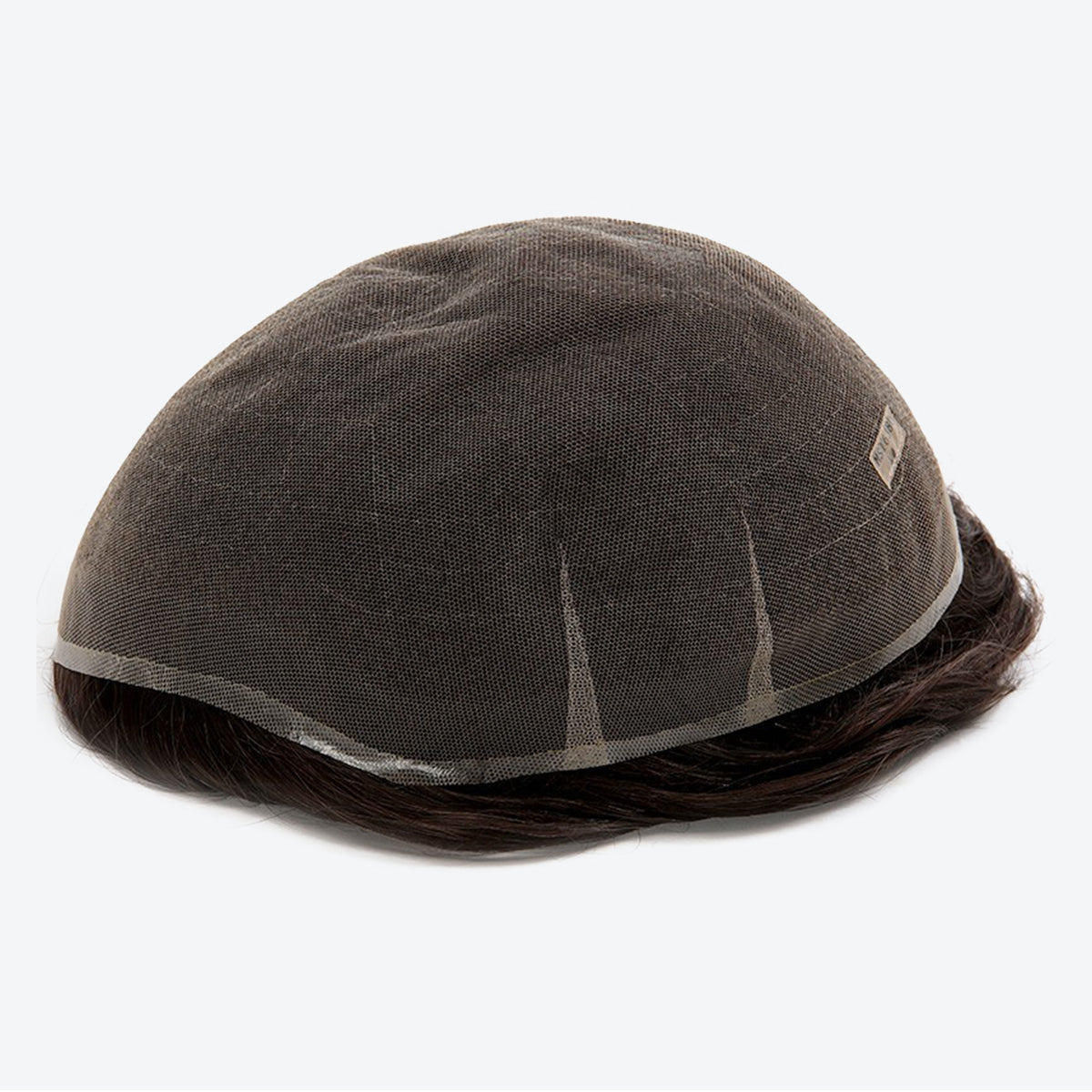
The Engineering: Provides a full, robust look without completely sacrificing scalp visibility. It pairs securely with durable materials like French Lace or a 0.08mm poly coating.
-
The Lifestyle Fit: Ideal for men in their late 20s to early 30s who require a dense foundation for structured styles, such as pompadours or modern comb-overs.
-
-
Medium-Heavy to Heavy (110% - 130%+): The Specialized Application
-
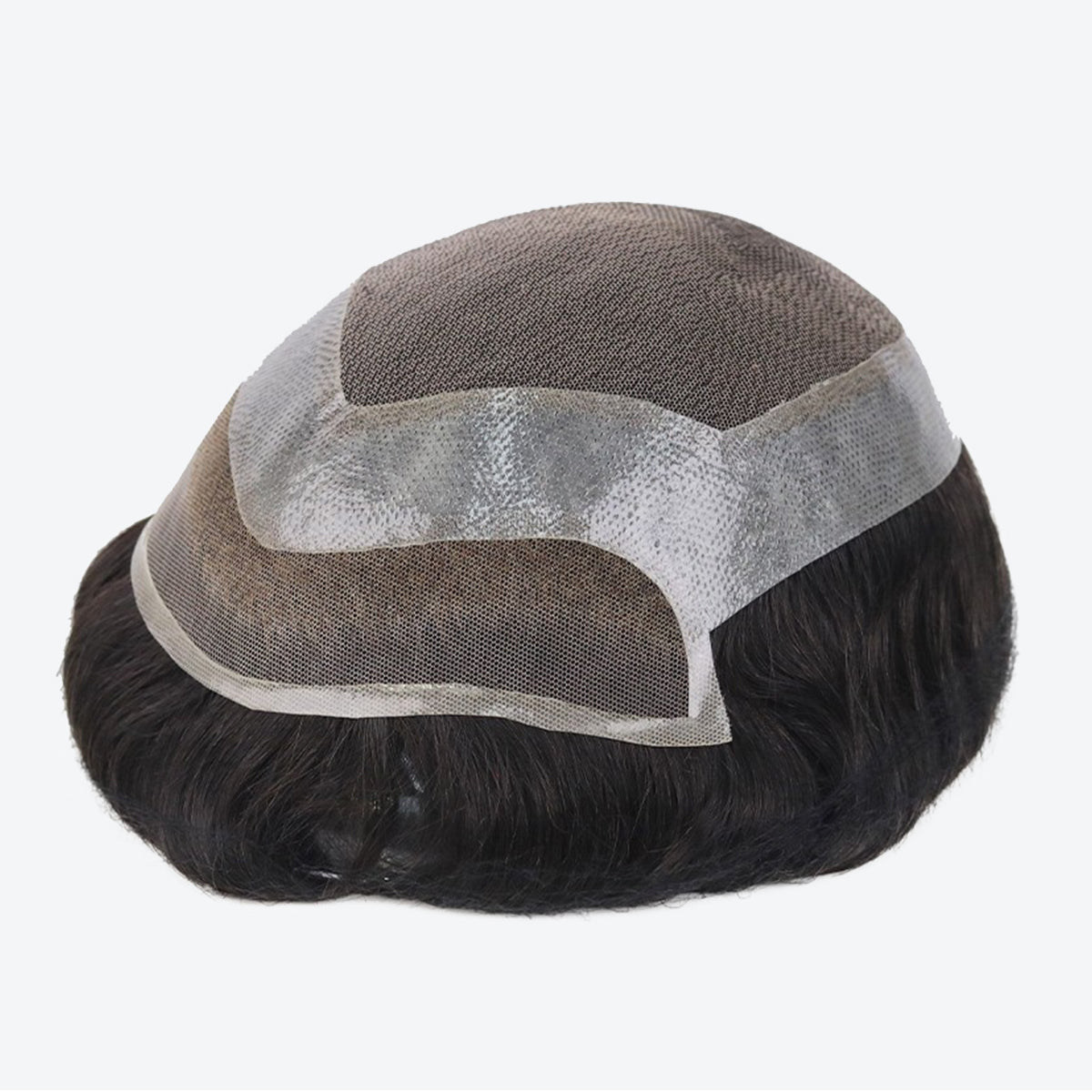
The Engineering: Extremely dense knotting that requires a reinforced, thicker base (like monofilament) to prevent the base from tearing under the weight of the hair. Zero light penetrates to the scalp.
-
The Lifestyle Fit: We rarely recommend this density for Caucasian men over 30. It is engineered primarily for younger wearers with exceptionally thick biological hair, or specific hair textures that naturally carry high volume.
-
Why "More Hair" Doesn't Always Mean "Better"
Selecting a density beyond your age-appropriate baseline introduces several severe structural and aesthetic trade-offs.
-
The Optical Disconnect: A 45-year-old face paired with the 130% hairline density of a teenager creates immediate cognitive dissonance. The human eye detects this inconsistency instantly, destroying the illusion of a natural hairline.
-
The Density-Durability Paradox: Every hair strand must be anchored to the base. Higher density requires more knots. A high volume of knots packed tightly together will stretch and eventually tear ultra-thin materials. If you demand a 0.03mm bio-skin base for an invisible hairline, you must accept a lighter density to maintain the system's structural integrity.
-
Restricted Airflow: A dense "wall of hair" traps heat against the scalp. For active lifestyles or warmer climates, lower density ensures the system remains breathable and stable.
Industry Trick: Perceived Density vs. Actual Density
When reviewing specifications, it is crucial to understand that the base technology alters how thick the hair appears.
A system engineered with a V-loop ventilation method (where the hair is injected into a thin poly base without knots) allows the hair to stand straight up. Because there is no knot tying the hair down, a V-loop system at 80% density will look significantly fuller and more voluminous than a system using flat, single knots at that exact same 80% density. You can utilize this principle to achieve a fuller look while still maintaining the breathability and light weight of a low-density unit.
Securing Your Image Stability
An undetectable restoration relies on respecting the technical limits of the materials and your biological baseline. The LaVivid 80%-90% low-density series is engineered specifically to eliminate the guesswork. It provides a pre-calibrated balance of structural durability, age-appropriate volume, and the complete rejection of the artificial 'helmet' silhouette.
Review Detailed Specifications in our Low-Density Series to find the precise structural solution for your unique environmental and style demands.


