

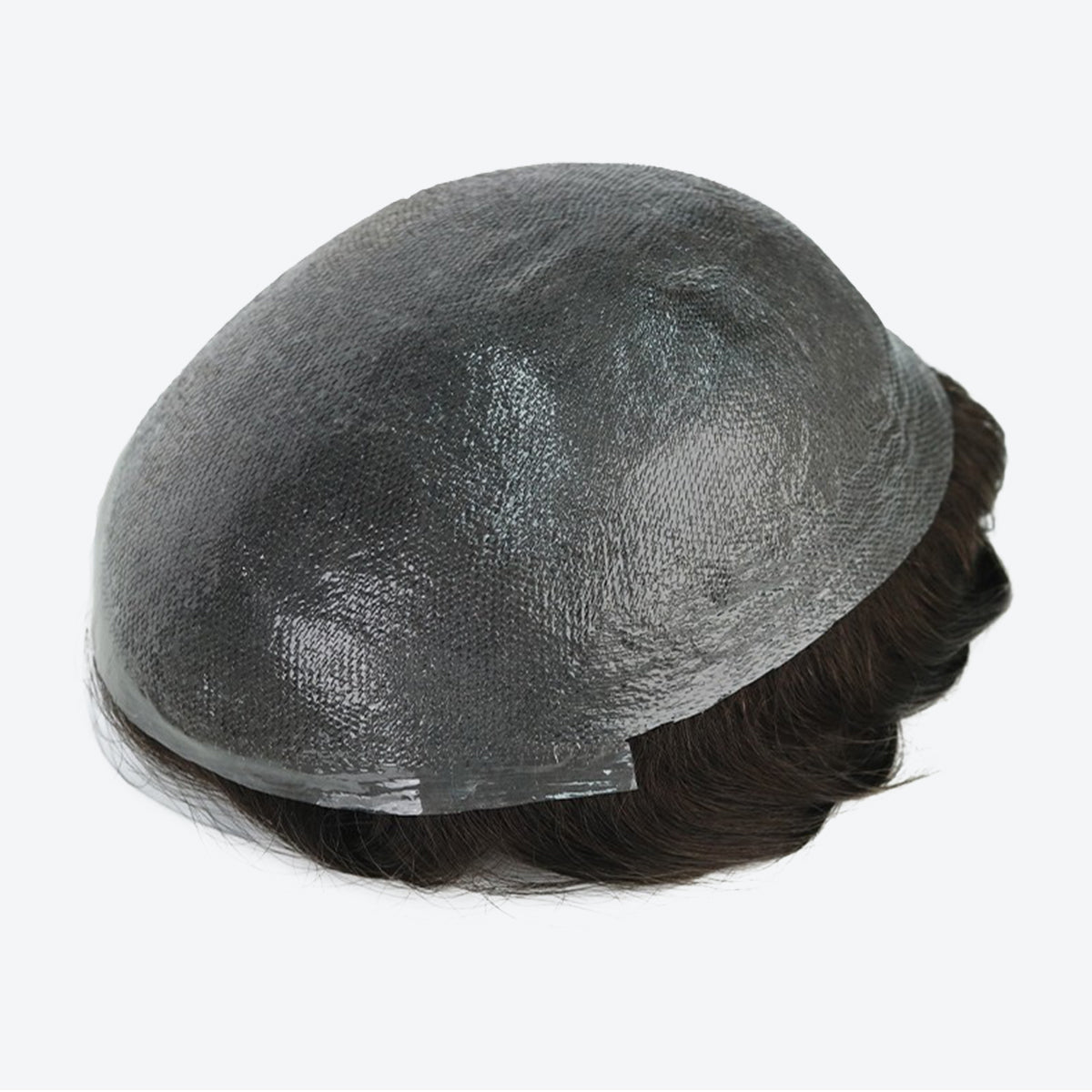
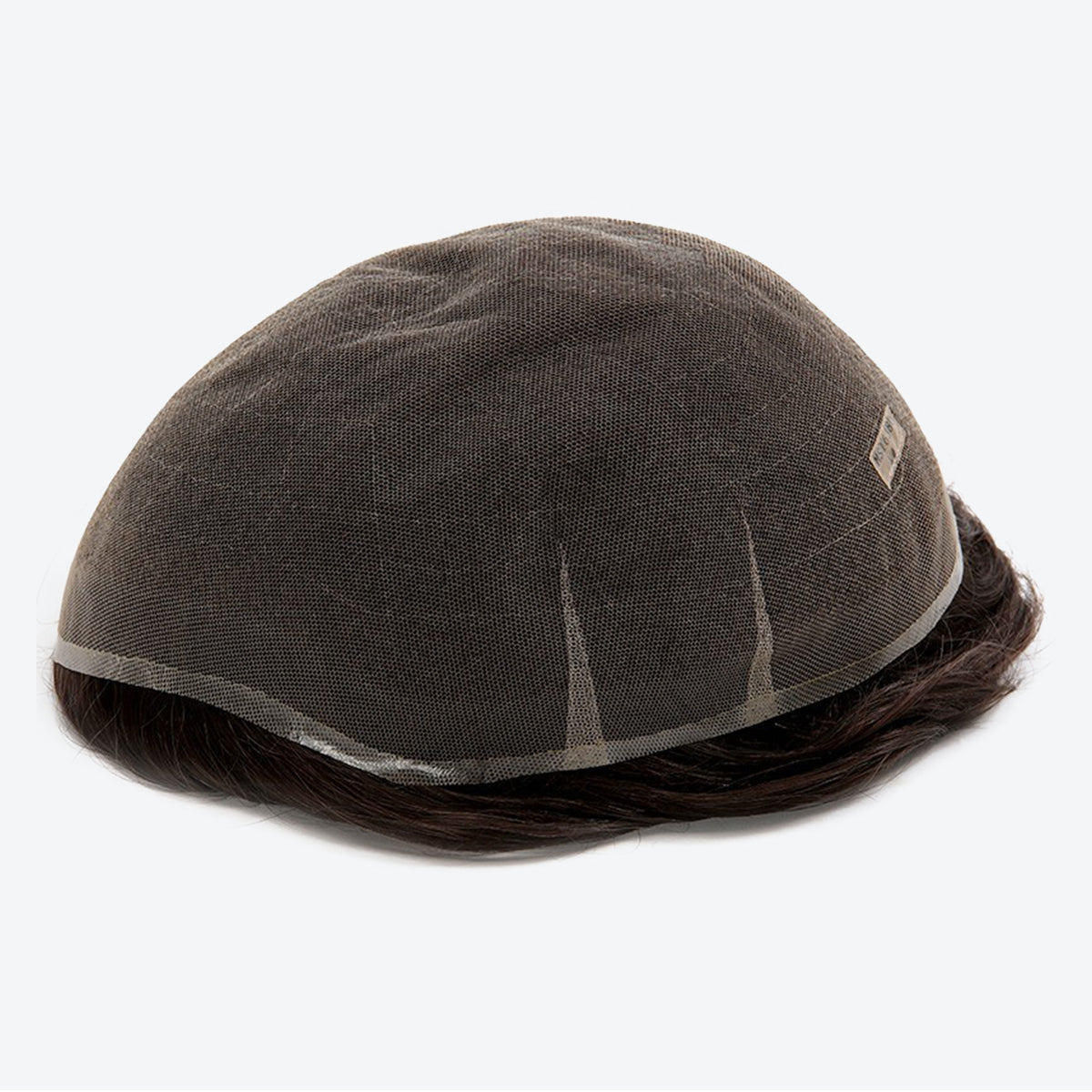
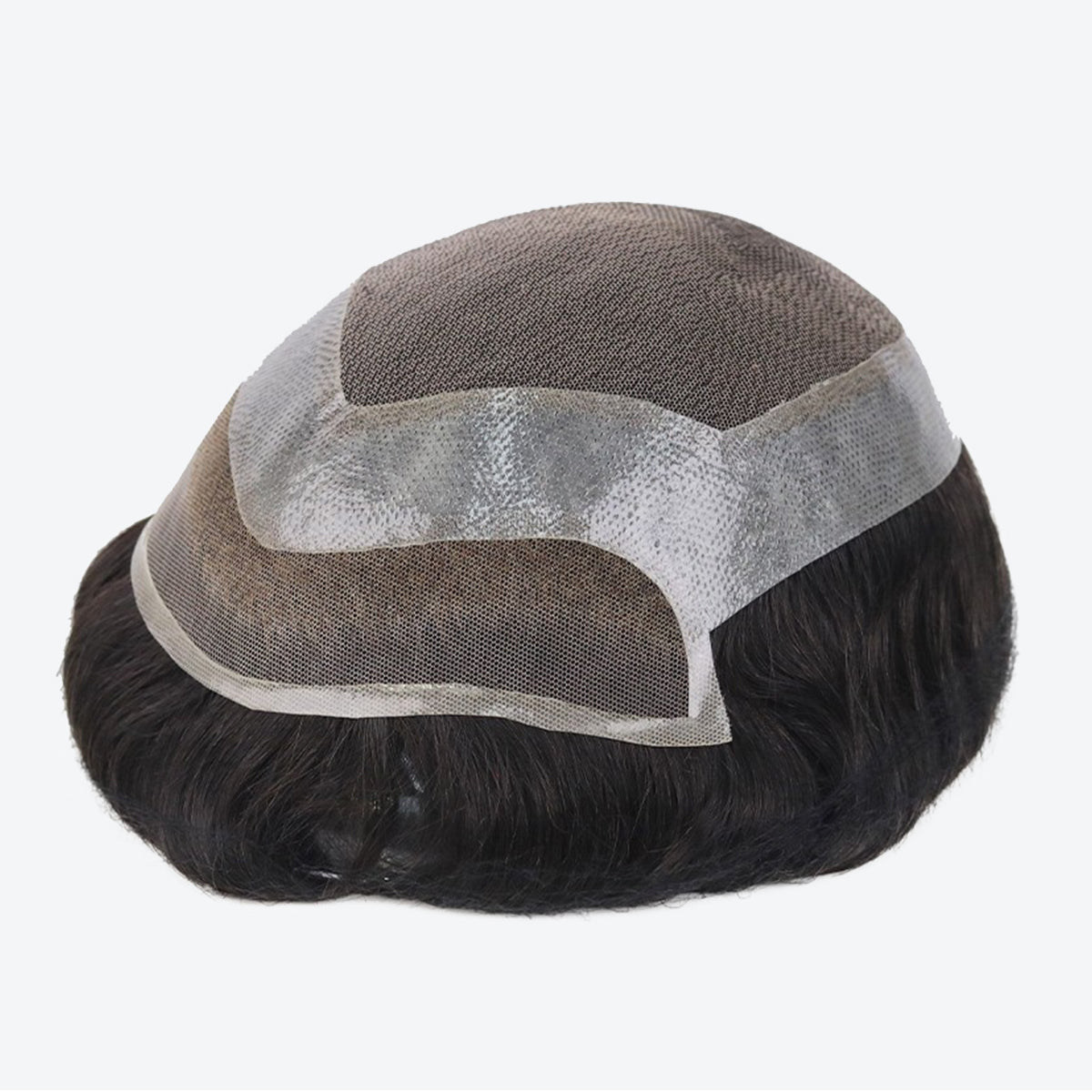

If you’ve been researching non-surgical hair replacement, you’ve probably seen hair patches and toupees used almost side by side. A lot of people treat them as the same thing. They’re not, at least not in the way they’re usually used.
The difference is pretty simple: coverage.
A hair patch is usually for a smaller area, like thinning at the crown, temples, or hairline. A toupee is normally used when the top needs more coverage overall. Both can look natural when chosen correctly. The main difference is how much area needs to be covered. If the thinning is limited to one area, a hair patch is often enough. If it covers more of the top, a toupee is usually the better choice.
Here’s a closer look at the difference between the two, and how to tell which one fits your situation better.
What Is a Hair Patch?
A hair patch is made for people who don’t need to cover the whole top of the scalp. It’s meant for a specific thinning area, not full top coverage. It is often used for:
- crown thinning
- temple recession
- front hairline loss
- small bald spots
- patchy thinning in a localized area
Because it covers less, a hair patch often works best when you still have enough natural hair around the area to blend with it. The idea is simple: you’re not trying to replace everything on top. You’re just fixing one area in a way that looks natural and fits in with the rest of your hair.
What Is a Toupee?
A toupee is also a non-surgical hair replacement option, but it usually means a larger piece that covers more of the top of the scalp. It is commonly chosen by people with:
- more advanced thinning
- larger bald areas on top
- diffuse top hair loss
- a need for broader overall coverage
Modern toupees can look much more natural than many people expect. When the density, color, texture, and hairline are matched well, the result can look very realistic. Compared with a hair patch, a toupee is usually the better choice when the goal is to cover a larger area, not just correct one spot.
Hair Patches vs Toupees: Key Differences
1. Coverage Area
The biggest difference starts with how much area needs to be covered.
A hair patch is usually used for smaller thinning spots, like the crown or temples. A toupee is more often used when the thinning covers a larger part of the top of the scalp.
2. Best Candidate
A hair patch usually works best for someone who still has plenty of natural hair and only needs help with one problem area.
A toupee is often the better option when the thinning on top is more obvious and wider coverage is needed.
3. Blending with Natural Hair
When there is enough natural hair around the thinning area, a hair patch can blend in very well. Because it is smaller, the result can look especially smooth and natural.
A toupee can look just as natural, but the change is usually bigger because it replaces more hair at once. That makes the fit, density, and hairline even more important.
4. Overall Look
A hair patch is more of a small, targeted correction. It helps improve one area without changing your whole look too much.
A toupee gives a fuller result across the top. For some people, that is exactly what they want. Others prefer a smaller change that feels more conservative.
5. Comfort
A hair patch is smaller, so many people find it lighter and easier to wear day to day.
A toupee covers more surface area, which means comfort depends more on the base, the fit, and how you wear it in daily life.
6. Maintenance Level
Because it is smaller, a hair patch is often simpler to take care of.
A toupee may need more cleaning and reattachment over time, simply because there is more area involved. That is not a problem for everyone, but it is worth thinking about if low maintenance matters to you.
If you already know you want a hair patch and want to understand the trade-offs in more detail, read our guide: Hair Patches Pros and Cons: What You Need to Know.
Hair Patches vs Toupees Comparison Table
| Factor | Hair Patches | Toupees |
|---|---|---|
| Coverage area | Localized thinning | Larger top coverage |
| Best for | Crown, temples, hairline, small bald spots | Broader top thinning or balding |
| Amount of natural hair needed for blending | Usually works best when surrounding hair remains | Better for people who need more overall replacement |
| Visual result | Targeted correction | Fuller transformation |
| Comfort | Usually lighter | Usually covers more area |
| Maintenance | Often simpler | Often more involved |
| Typical use case | Specific thinning zones | Larger top hair loss |
Choose a Hair Patch If...
A hair patch may be the better choice if:
- you have localized hair loss
- your thinning is mainly at the crown, temples, or hairline
- you still have enough natural hair around the area for blending
- you want a lighter, more targeted solution
- you do not need full top coverage
- you want to correct one area without changing your overall hairstyle too much
For many people with early or moderate localized thinning, a hair patch offers enough coverage without requiring a larger system.
Choose a Toupee If...
A toupee may be the better choice if:
- you have broader top thinning or balding
- you want coverage across a larger area of the scalp
- you need a fuller overall result
- you have less remaining hair on top for a smaller patch to blend into
- you want a more complete top-of-head transformation
If your hair loss is not limited to one small zone, a toupee often makes more sense than trying to solve a large coverage problem with a smaller patch.
How to Choose Based on Your Hair Loss Pattern
The easiest way to think about it is this: where exactly is the hair loss? If it’s only happening in one area, you may not need a full toupee at all. A smaller patch is often the more natural and practical choice.
Crown Hair Patch
If the thinning is mostly at the crown, a crown hair patch is often enough. It’s usually around 4×4 inches and sits over the thinning area at the top of the scalp. For NW2 to NW3 early crown loss, that kind of coverage is often all you need.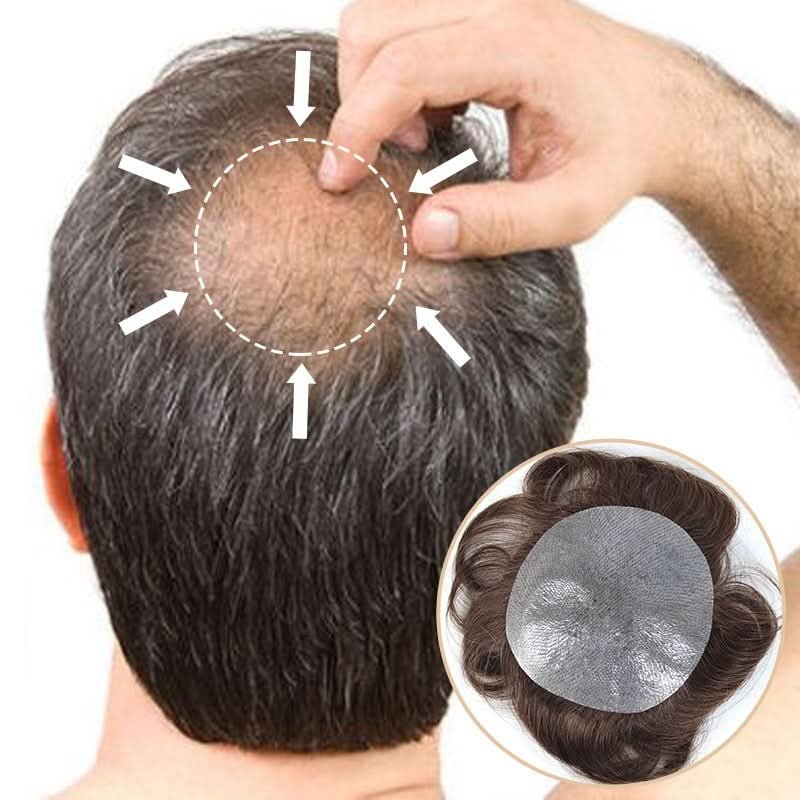
Temple Hair Patch
If the recession is mainly at the temples, a temple hair patch usually makes more sense. It blends into the hair on the sides, so it works well when the thinning is limited to that area.
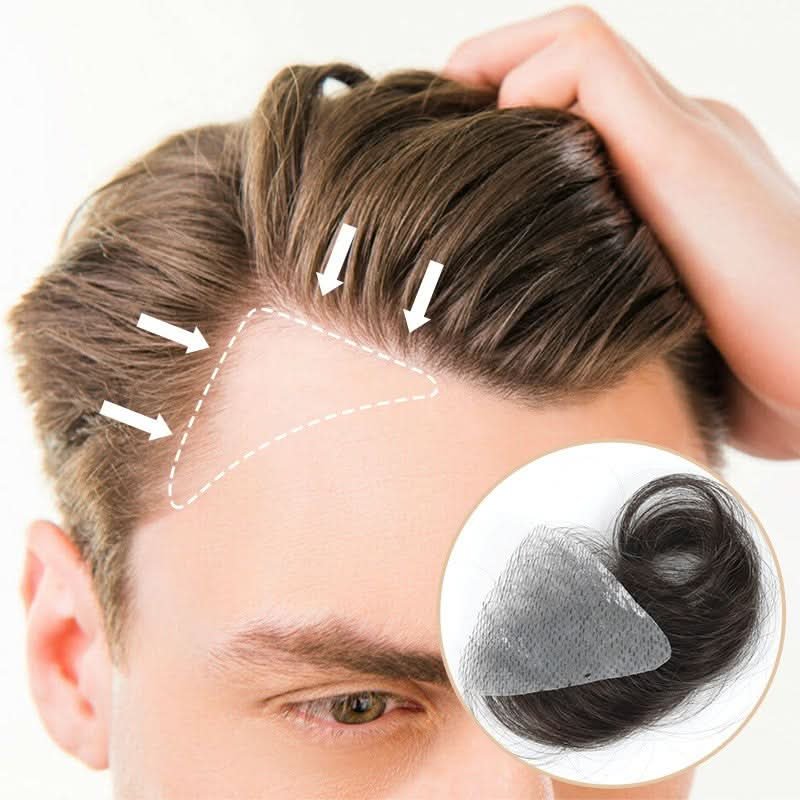
Hairline Lace Patch
If the biggest issue is the front hairline, a hairline lace patch can be a good option. It’s a thin lace piece that helps rebuild a natural-looking hairline without covering the whole scalp. If you only want to fix the front, this is often the cleaner choice.
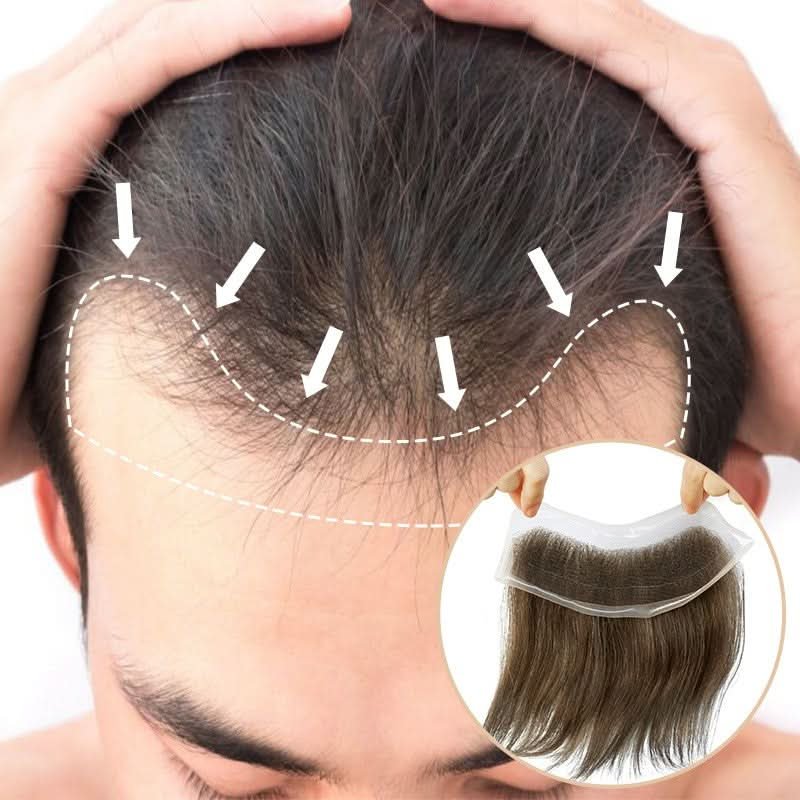
Diffuse Hair Loss on Top
If the whole top has become thin and sparse, a small patch may be harder to blend well. In that case, a toupee often gives a cleaner and more natural result.
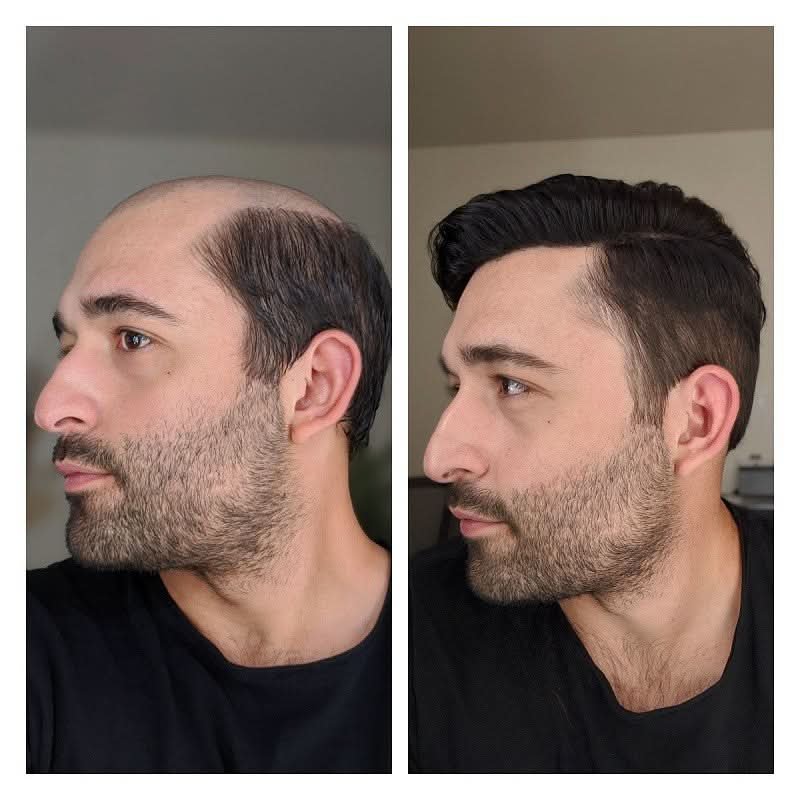
For most people, the best result usually comes from choosing the option that fits the actual area of hair loss.
Final Thoughts
The choice between a hair patch and a toupee is really about coverage. If you only need to fix one thinning area, a hair patch for men is often the better fit. If the thinning covers more of the top, a toupee for men usually makes more sense. The right option is the one that matches your hair loss and gives you the result you want.
If you’re still not sure which one suits you better, you can explore LaVivid hair patch and toupee options to see what fits your hair loss pattern best.


