

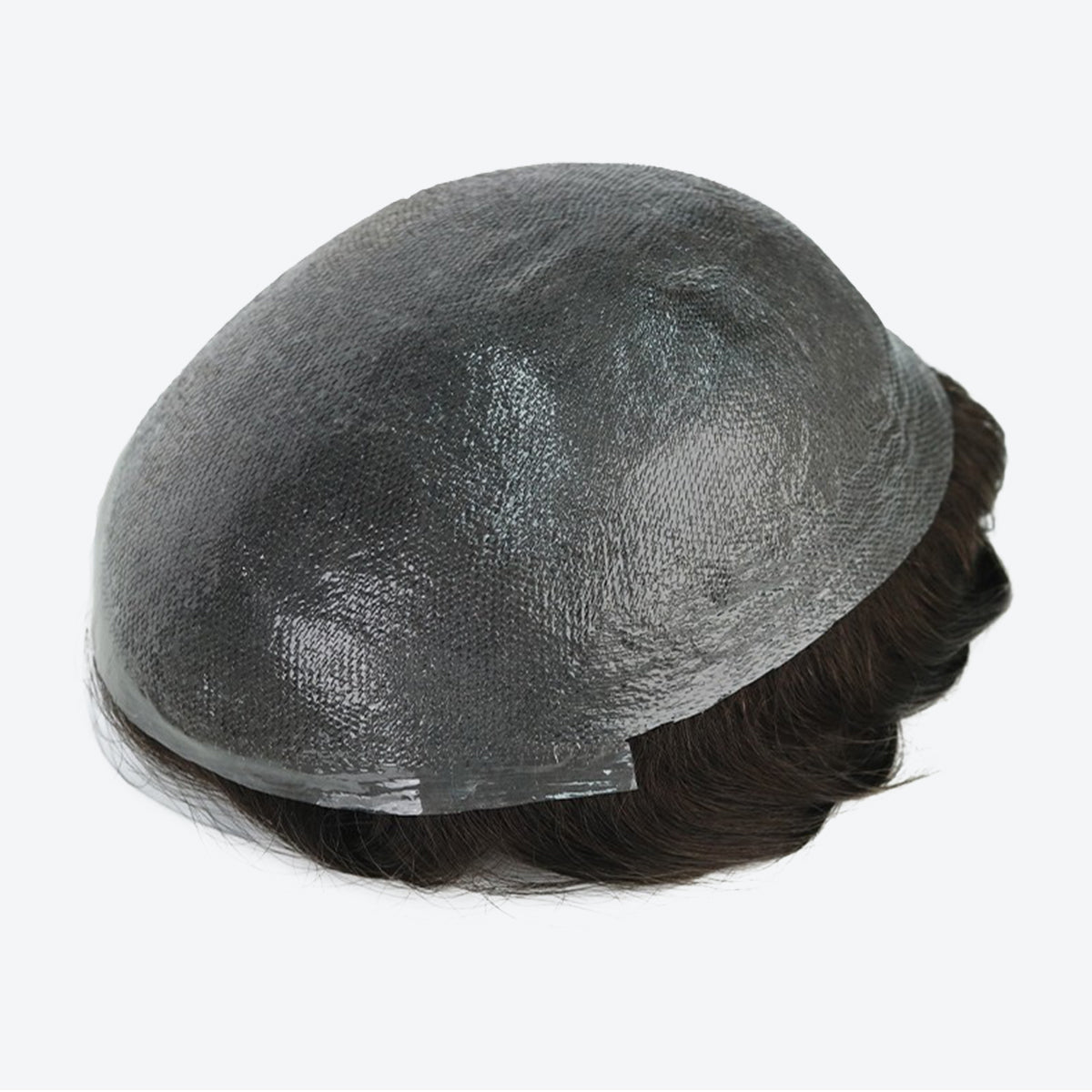
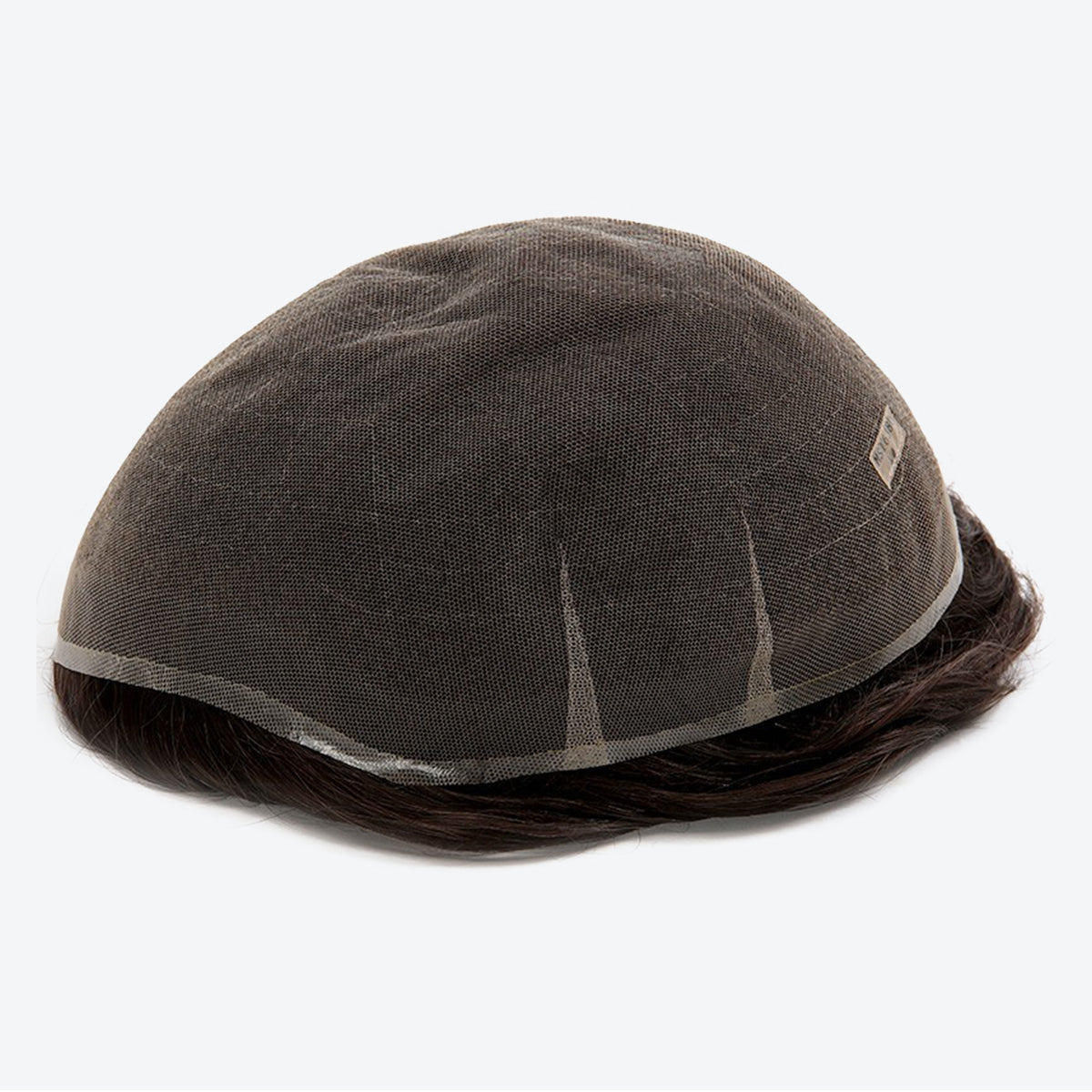
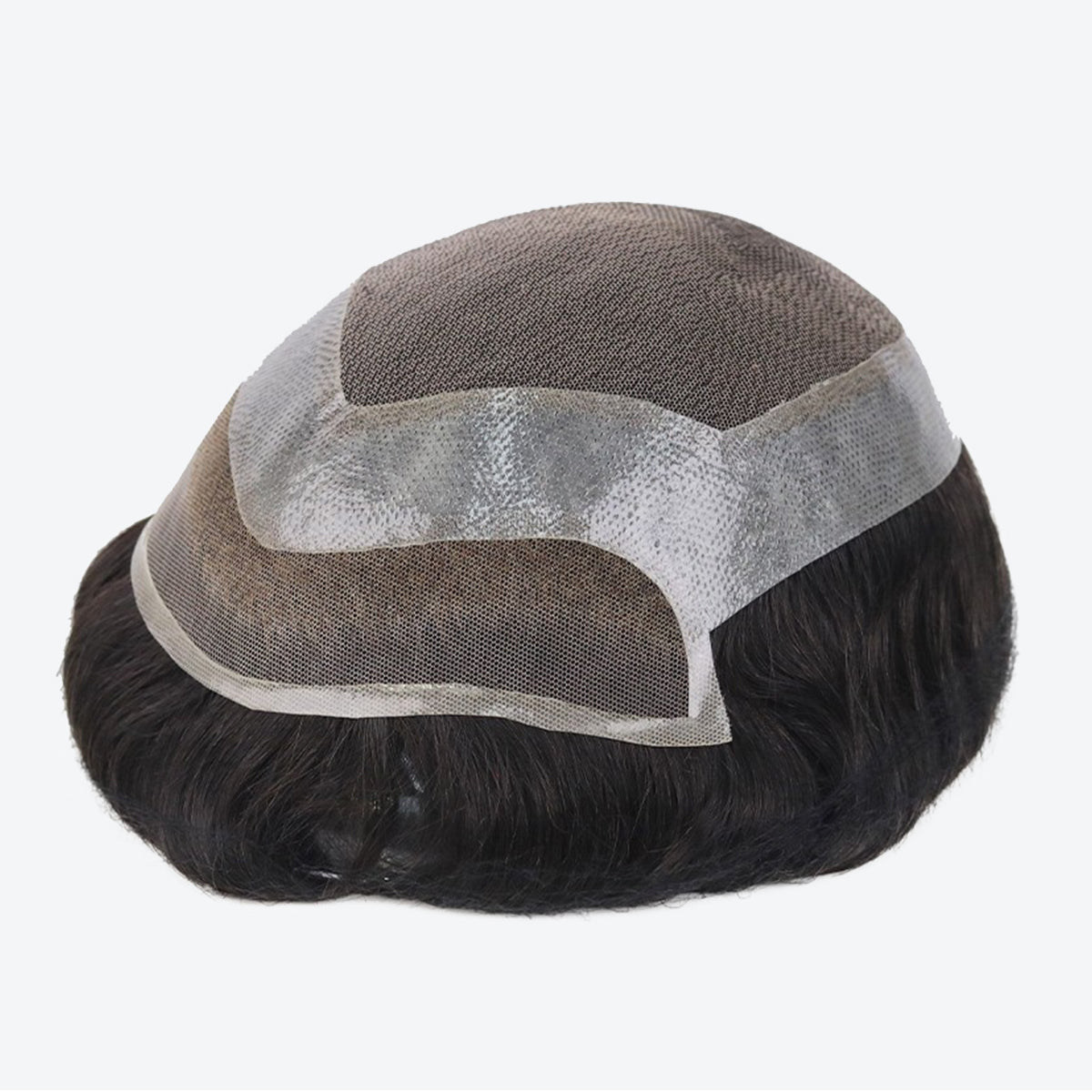

Hair system tape can look like a wall of similar rolls and curved pieces when you first shop for it. Many first-time wearers feel unsure at this stage; that is normal, and you are not behind. Take your time: the useful trade-off is not which tape sounds most powerful, but which option fits your base, placement pattern, maintenance routine, and removal plan.
Hair system tape is a double-sided attachment product placed between the scalp and a compatible hair-system zone. It is sold as rolls, tabs, strips, and pre-cut contours. This guide starts after tape has been confirmed as the right attachment family for that zone; it does not replace the separate glue-versus-tape decision.
Quick Answer
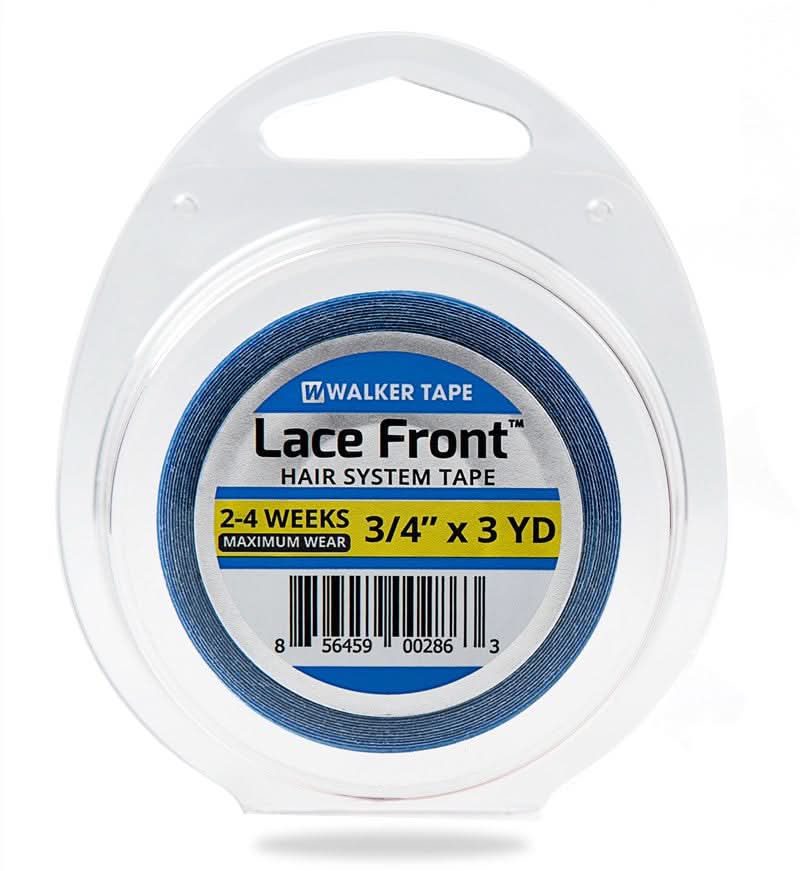
Choose hair system tape in this order: base or attachment zone, format, visibility, maintenance cadence, and removal. For a compatible lace zone, start with lace-compatible tape and buy its matching remover before the first application. Rolls give flexible sizing; tabs and strips reduce cutting; contours follow curved edges when the shape fits. A low-visibility or no-shine label is not an invisibility promise, so check carrier thickness, overlap, placement, and lighting. If your base is skin or poly, do not use tape as the first-install default. Hybrid and mono systems need a zone map, with tape only on documented lace areas.
Quick Takeaways
- Confirm the base and attachment zone before comparing tape format or maintenance labels.
- Choose rolls for custom sizing, tabs or strips for repeatable sections, and contours for compatible curved edges.
- Compare frequent-removal and longer-maintenance routines by cleanup tolerance, not by a universal wear-time promise.
- Treat low-visibility language as one input; placement, overlap, carrier, and lighting still affect what shows.
- Attachment tape and base-repair tape perform different jobs and are not interchangeable.
Which Hair System Tape Type Fits Your Routine?
Tape products can combine several dimensions. A contour can also be lace-compatible and intended for a particular maintenance style, for example. Use the table to identify the decision each label answers instead of treating every row as a separate product family.
| Tape category | Usually fits when | Main trade-off | Check before use |
|---|---|---|---|
| Roll tape | You need custom lengths or want to map several straight or gently curved sections. | More cutting and handling can create uneven edges or overlap. | Confirm the tape is intended for the lace zone and that you can trim it without exposing adhesive beyond the base. |
| Pre-cut tabs or strips | You want repeatable sections with less cutting during attachment. | A preset size may leave gaps, crowd a narrow edge, or require more pieces. | Dry-position the pieces with the liners still on and check the fit around the full perimeter. |
| Pre-cut contours | A listed curve matches the front, side, or back edge you are attaching. | The wrong curve can buckle, overlap, or sit too close to the visible edge. | Match the contour to the actual base outline, not only the name printed on the package. |
| Lace-compatible low-visibility or no-shine tape | The taped zone may be seen through open lace or near an exposed edge. | A lower-visibility label cannot correct poor placement, stacked pieces, or a carrier that does not suit the base. | Inspect the result in normal indoor and outdoor lighting before a full wear. |
| Frequent-removal tape routine | You intentionally release and clean often and the current label supports that routine. | More frequent service means more repeated handling of the lace and scalp. | Make sure the matching remover and release steps are manageable every time. |
| Longer-maintenance tape routine | You prefer fewer planned resets and the current label, scalp response, and base condition support that approach. | Residue and edge changes may require a more deliberate release and cleanup session. | Follow observable bond signals and the current label rather than waiting for a fixed calendar date. |
| Base-repair tape | A compatible base has a small area that has been assessed as appropriate for reinforcement. | It is not an attachment product and does not bond the system to the scalp. | Confirm the repair material and process suit the base before wearing the system again. |
Can You Use Hair System Tape on Every Base?
No. Base compatibility comes before format, visibility, or routine.
Path A: If Your Attachment Zone Is Lace
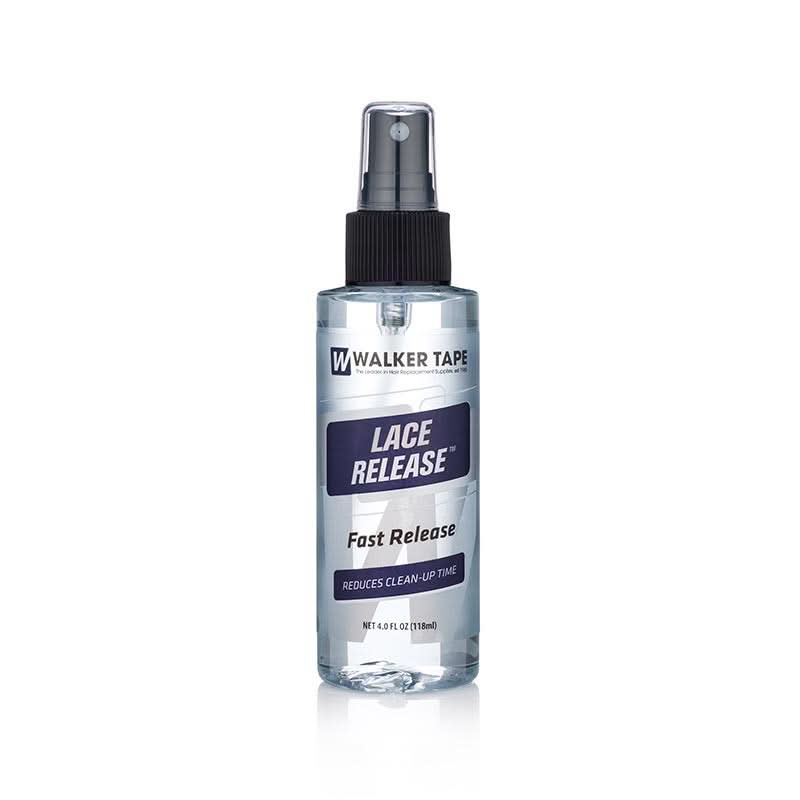
Start with one lace-compatible tape and its matching remover. Pre-cut tabs or contours can reduce cutting when their size and curve match the base. Keep liquid adhesive off the lace mesh, and do not bridge a tape piece from lace onto a different material without a zone-specific plan.
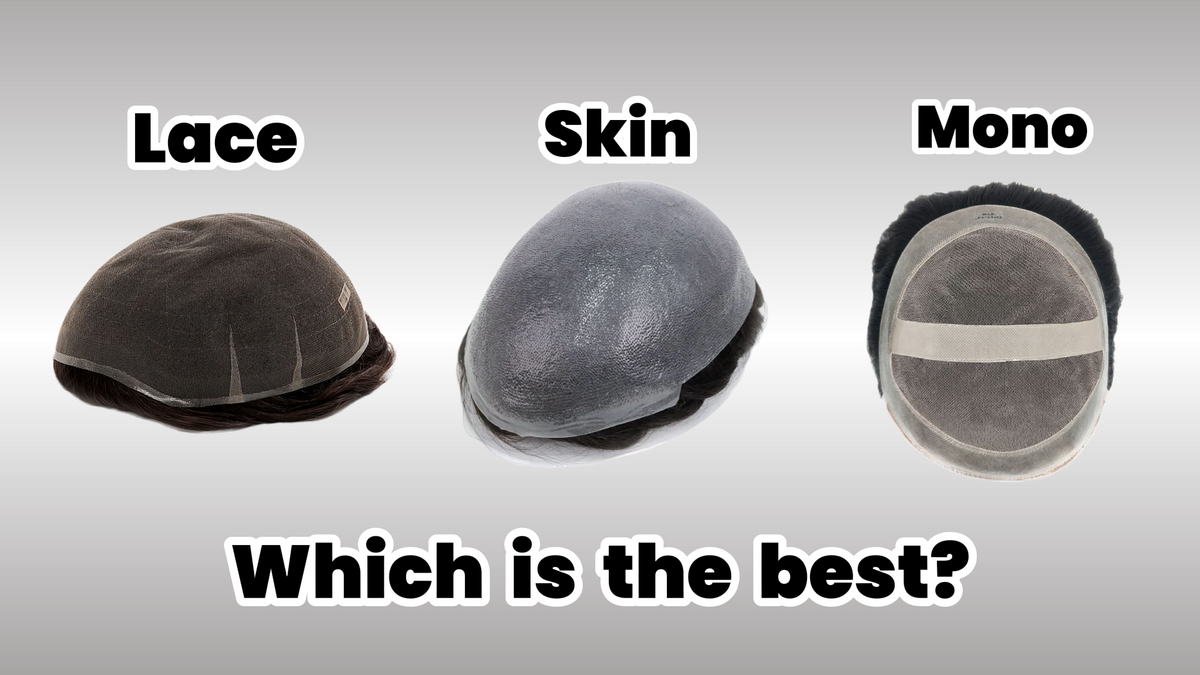
Path B: If Your Base Is Skin, Poly, or Thin Skin
Do not use tape as the first-install default. A beginner should start with a compatible liquid adhesive applied to clean, intact scalp in thin, even layers according to the current product directions. Removing bonded tape can stretch or tear delicate skin material. Use the separate glue-versus-tape guide to choose the method before returning to tape formats.
Path C: If Your System Is Hybrid or Mono
Map the actual materials rather than relying on the words hybrid or mono. Use compatible tape only on documented lace zones and compatible liquid adhesive only on supported skin/poly zones. Do not bridge zones with one method or layer tape and glue over the same area. This is an experienced setup; a first-time wearer should confirm the construction map with LaVivid support or a qualified hair-system professional.
The LaVivid Tapes & Adhesives collection is the parent product route, but the live label still has to confirm the intended surface, application, and matching remover.
Is a Roll, Tab, Strip, or Contour Easier to Use?
The easiest format is the one that follows your confirmed lace attachment zone with the fewest cuts, gaps, and overlaps. In our experience, many wearers value repeatability more than maximum customization once they find a pattern that works.
- Choose a roll when the perimeter length changes by section or a ready-made shape does not fit. The trade-off is extra measuring, cutting, and liner handling.
- Choose tabs or straight strips when their dimensions fit the zone and you want to repeat the same mapped placement. The trade-off is less control over each piece's length.
- Choose contours when a curve follows the actual front, side, or back outline. The trade-off is that a near match can still bunch or overlap.
Before exposing the adhesive, practice the layout with the liners on. First-time placement may take several attempts; slower handling is useful. Over time, a repeatable pattern can matter more than the format that initially seemed fastest.

How Should You Prepare and Handle Hair System Tape?
Before attachment, confirm the directions for the tape, matching remover, scalp, and base zone. Prepare clean, intact scalp and a clean, residue-free compatible lace zone as those directions require, then let every approved prep product and surface dry or settle before placement. Do not apply fresh tape over old adhesive or residue.
Dry-position each piece with its liners on. Handle the tape by the release liners or edges and avoid pressing fingers into exposed adhesive. Clean, dry hands reduce oil transfer; compatible powder-free disposable gloves can also help when the current product directions allow them. Peel and place one section at a time so hair, skin oil, lint, and personal-care residue do not reach the adhesive. Do not treat 99% alcohol or any other prep product as a universal step; use it only when the exact tape, prep product, scalp, and base directions support it.
The official LaVivid video below demonstrates roll tape and CC contour handling. Use it to compare formats, then follow the current product directions and the base-zone rules in this guide.
How Should You Judge No-Shine or Low-Visibility Tape?
Treat no-shine or low-visibility as a product category to investigate, not a guarantee that tape cannot be seen. The result can change with:
- the carrier's thickness, color, and finish;
- how open the lace is and how close the tape sits to an exposed edge;
- gaps, wrinkles, stacked pieces, or overlapping corners;
- contrast between the scalp, base, tape carrier, and lighting; and
- residue that remains after an incomplete cleanup.
Dry-position the format first, then inspect the attached edge in the lighting where you normally wear the system. Do not add another piece just to cover an alignment problem; release and reset the affected section according to the current directions.
Should You Choose Daily Removal or a Longer-Maintenance Routine?
Start with the routine you can release and clean consistently. A daily-removal or other frequent-removal routine is not automatically easier, and a longer-maintenance label is not automatically a better match.
| Decision | Daily or frequent removal | Longer-maintenance routine |
|---|---|---|
| What you prioritize | Regular access to the scalp and a frequently reset placement map. | Fewer planned full resets when the label and observed bond condition allow. |
| Handling demand | Repeated release can add handling to lace and skin even when each session is brief. | Each service may involve more residue and a more deliberate release. |
| What to monitor | Irritation, pulling at removal, residue, and whether the routine is realistic to repeat. | Edge lift, movement, tackiness, odor, residue migration, and scalp discomfort. |
| When to change course | The base resists release, the scalp does not recover comfortably, or the routine becomes rushed. | The bond changes, cleanup becomes harder, or the scalp/base shows a stop signal before the planned reset. |
Oil, sweat, heat, humidity, activity, and personal-care residue can change maintenance needs. Do not use this article to decide swimming, workout, or climate exposure for a specific tape; use the exact product's current directions and reassess the bond when your environment changes.
Is Hair System Tape Shelf Life the Same as Wear Time?
No. Shelf life describes how long unused tape remains suitable for use when it is stored under the package directions. Wear time begins after application and depends on the current label, bond condition, scalp response, environment, and maintenance. A storage date is not a promise for how long tape should stay on the scalp.
Check the package for storage and expiry guidance. Do not use tape if the liner or packaging is damaged, the adhesive is contaminated, or the carrier or adhesive has changed unexpectedly. Once tape is applied, follow the live directions and the release, residue, movement, odor, and scalp signals described in this guide rather than converting shelf life into a wear calendar.
What Is the Hair System Tape Choice Flow?
- Confirm the base and zone. Continue with tape only for a documented lace attachment area.
- Choose your service rhythm. Decide whether you intend to release frequently or prefer a longer-maintenance routine that you can still inspect and clean.
- Choose the format. Compare roll flexibility with the convenience of tabs, strips, or contours.
- Check the visible edge. Consider carrier, thickness, overlap, placement, and lighting instead of relying on one visibility label.
- Choose the remover at the same time. Confirm it matches the tape and every scalp/base surface it will contact.
- Patch-test on a separate wait day. Make the first full wear a later session so testing and placement are not combined.
If you are not sure, use this default: for a confirmed lace zone, begin with one lace-compatible pre-cut tab or contour format plus its matching remover. For skin/poly, stop the tape decision and start with compatible liquid adhesive. For hybrid/mono, confirm the zone map before choosing anything.
If you still need to decide between attachment methods, read Hair System Glue vs Tape: Which Is Right for Your Base?. It owns the full base-and-method comparison; this guide resumes after tape is the compatible choice.
How Do You Remove and Clean Hair System Tape?
Removal is part of tape selection, not an afterthought. We would rather see a wearer pause than turn a resistant edge into a rushed pull.
- Verify the release plan before attachment. Read the current tape and remover directions and confirm compatibility with the scalp and base.
- Begin at a serviceable edge. Support the lace close to the section you are releasing instead of lifting the whole base at once.
- Use the matching remover as directed. If the bond resists, pause and reapply only as the label permits. Do not pull harder.
- Lift slowly and section by section. Keep tension off the lace and hair.
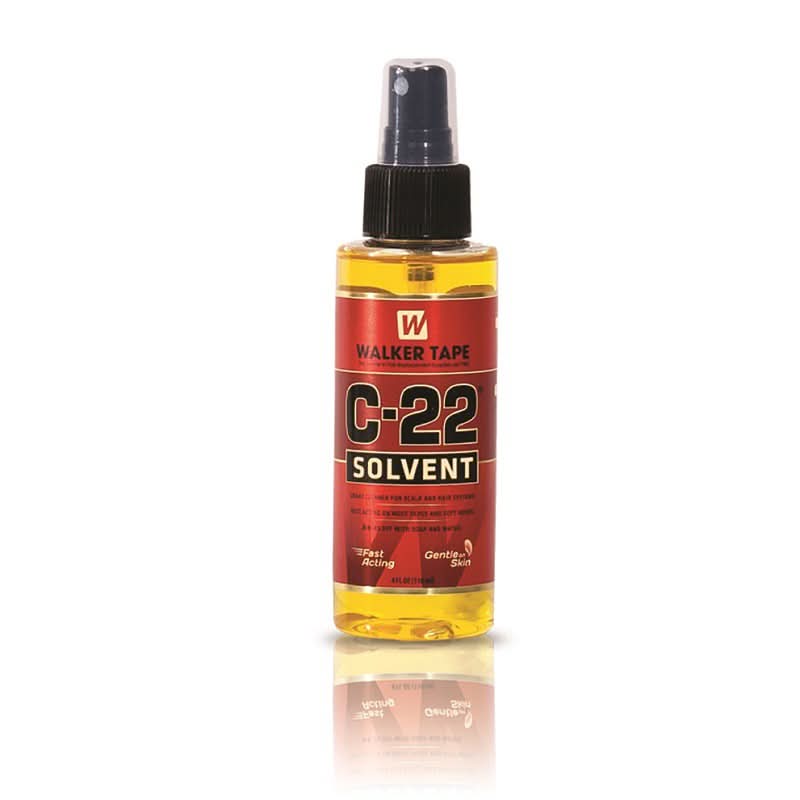
- Clean scalp and base as separate surfaces. Remove residue with the compatible process; do not scrape or attach fresh tape over old adhesive.
- Inspect before reattachment. Do not attach over persistent redness, broken skin, a stretched edge, or a tear.
Stop using the product if burning, persistent itching, redness, or broken skin develops. If a reaction is significant or does not settle, seek qualified medical guidance. If the base stretches, tears, or continues to resist release, stop and ask LaVivid support or a qualified hair-system professional to assess it.
Is Attachment Tape the Same as Base-Repair Tape?
No. Double-sided attachment tape is designed to bond a compatible hair-system zone to the scalp. Base-repair tape is typically a separate, single-sided reinforcement material for an appropriate base repair. It should not be used to attach the system, added as routine reinforcement to an undamaged base, or placed over scalp irritation. Confirm that a repair is suitable for the base before wearing it again.
FAQ
Is a roll, tab, or contour easier for a first hair system tape application?
A pre-cut tab or contour is often easier when its size and curve fit the lace attachment zone because it reduces cutting. A roll offers more custom sizing but adds measuring and trimming. Dry-position any format with the liners on before exposing the adhesive.
Can I use hair system tape on a skin or poly base?
Do not use tape as the first-install default for skin, poly, thin-skin, or full-skin bases. A beginner should start with a compatible liquid adhesive applied to the scalp according to the current directions because tape removal can stretch or tear delicate base material.
Is no-shine hair system tape invisible?
No visibility label guarantees that tape cannot be seen. Carrier thickness and finish, lace openness, placement, overlap, scalp/base contrast, lighting, and residue can all affect the result. Inspect the edge in your normal lighting and reset a poorly placed section instead of stacking tape.
Is hair system tape shelf life the same as wear time?
No. Shelf life applies to unused tape stored under its package directions; wear time begins after application. Follow the current tape directions and service the bond when you notice edge lift, movement, unexpected tackiness, residue migration, odor, scalp discomfort, or a release-and-clean routine that is no longer manageable.
Can base-repair tape attach a hair system to the scalp?
No. Base-repair tape reinforces an appropriate area of a compatible base; it is not a scalp attachment product. Use only a base-compatible attachment method for wear, and confirm any repair process before putting a damaged system back on.
Ready to compare tape categories and matching removal products? Browse LaVivid tapes and adhesives, then verify the live directions for the exact products you choose.


